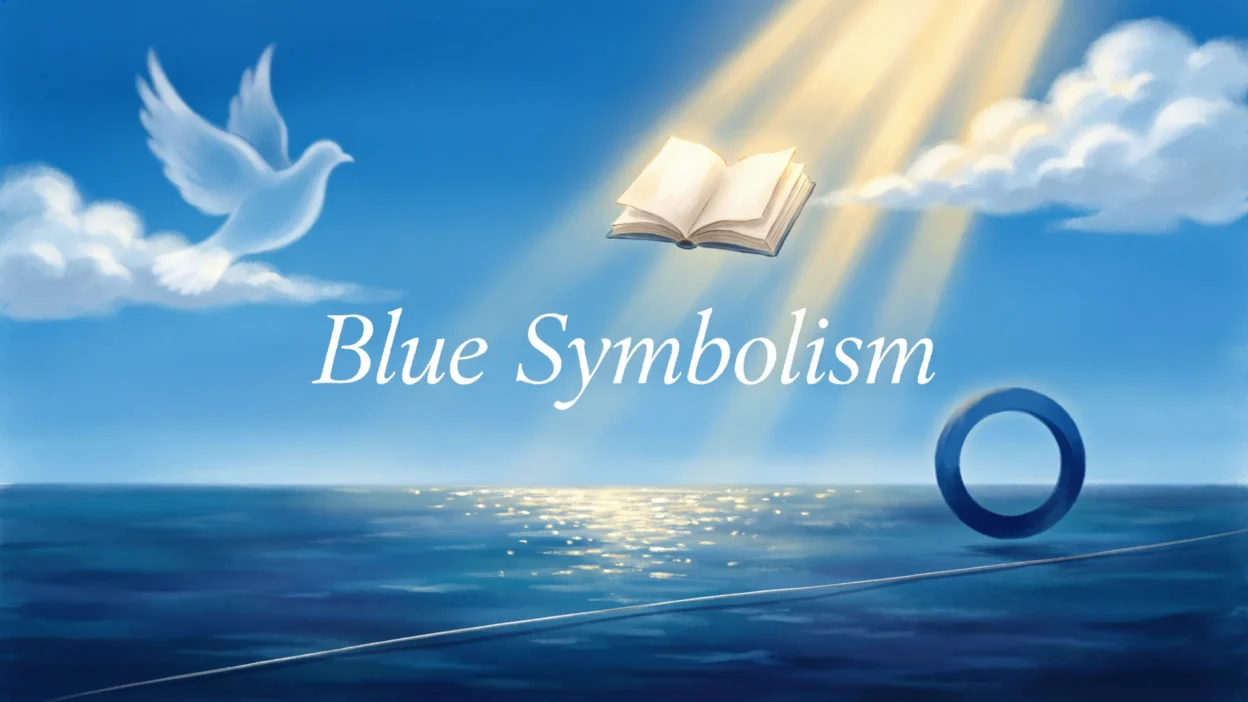
Blue symbolism has fascinated cultures, artists, and spiritual traditions for centuries. Often associated with calmness, wisdom, and depth, the color blue carries powerful emotional and symbolic meanings across the world.
From the vast sky and deep oceans to sacred art and modern design, blue represents peace, trust, and spiritual clarity.
Understanding blue symbolism helps reveal why this color is widely used in religion, art, psychology, and everyday life. Its meanings range from tranquility and loyalty to divine protection and introspection.
Blue Symbolism Meaning (Clear Definition)
Blue symbolism refers to the symbolic meanings associated with the color blue, including calmness, wisdom, trust, loyalty, and spiritual depth.
Because blue appears naturally in the sky and oceans, it often represents infinity, stability, and peace. Psychologically, blue is known for its soothing effect, helping create feelings of safety and relaxation.
In symbolic language, blue can also represent:
- Truth and honesty
- Spiritual awareness
- Emotional balance
- Loyalty and faithfulness
- Intellectual clarity
These qualities make blue one of the most universally positive symbolic colors.
What Does Blue Symbolism Represent?
Blue symbolism can express many ideas depending on cultural context, emotional tone, or artistic use.
Common Symbolic Meanings of Blue
| Symbolic Meaning | Explanation |
|---|---|
| Peace | Blue is calming and reduces emotional tension |
| Trust | Often used by institutions to symbolize reliability |
| Wisdom | Associated with intelligence and thoughtful reflection |
| Loyalty | Represents faithfulness in relationships |
| Stability | The steady nature of sky and sea symbolizes balance |
| Spiritual depth | Connected to higher awareness and inner peace |
Because of these meanings, blue is widely used in branding, meditation spaces, and spiritual symbolism.
Secondary keywords naturally related to blue symbolism include:
- color blue meaning
- blue spiritual meaning
- symbolism of blue color
- blue color psychology
- meaning of the color blue
- blue symbolism in culture
- blue meaning in dreams
Spiritual Meaning of Blue Symbolism
Spiritually, blue is often linked with inner peace, intuition, and divine connection. Many spiritual traditions associate blue with higher consciousness and emotional healing.
Blue is commonly connected to:
- The throat chakra, representing communication and truth
- Spiritual clarity and meditation
- Protection and divine guidance
- Emotional calm and balance
Light blue often symbolizes healing and serenity, while darker blue represents wisdom, mystery, and deep spiritual understanding.
In meditation practices, blue imagery is used to promote tranquility and mental clarity.
Biblical / Religious Meaning of Blue Symbolism
In biblical and religious traditions, blue symbolizes heaven, divine authority, and sacred truth.
In ancient religious texts and traditions:
- Blue garments were associated with holiness and divine service
- Blue threads in sacred clothing symbolized obedience to God
- Blue represented the heavenly realm and spiritual purity
Many religious artworks depict heavenly scenes using blue tones to emphasize divinity, peace, and spiritual elevation.
Because of its connection to the sky, blue often symbolizes God’s presence and eternal truth.
Blue Symbolism in History and Culture
Throughout history, blue symbolism has evolved across civilizations and cultures.
Ancient Egypt
Blue represented protection, fertility, and divine power. It was often used in jewelry, statues, and sacred decorations.
Medieval Europe
Blue became associated with royalty and purity, particularly in religious paintings and noble clothing.
Eastern Cultures
In some Asian traditions, blue symbolizes immortality, healing, and harmony.
Modern Western Culture
Today, blue represents trust, professionalism, and stability, which is why many institutions and companies use it in their visual identity.
The long historical use of blue highlights its enduring role as a symbol of wisdom, loyalty, and spiritual depth.
Blue Symbolism in Literature and Art
Artists and writers frequently use blue symbolism to evoke emotion and deeper meaning.
In literature, blue often represents:
- Melancholy or emotional reflection
- Peaceful solitude
- Wisdom and introspection
- Spiritual longing
In visual art, blue tones are used to create atmosphere, calmness, and emotional depth. Many famous paintings rely on blue to express quiet contemplation or dreamlike moods.
Blue backgrounds and skies also symbolize hope, infinity, and transcendence.
Dream Meaning of Blue Symbolism
Seeing blue in dreams can carry important emotional and spiritual messages.
Common Blue Dream Interpretations
- Bright blue – peace, clarity, or emotional healing
- Dark blue – wisdom, reflection, or hidden thoughts
- Blue sky – hope, freedom, and positive opportunities
- Blue water – emotional depth and inner awareness
Dreams involving blue often suggest a need for calm thinking, honesty, or spiritual insight.
Modern Meaning of Blue Symbolism
In modern society, blue continues to carry powerful symbolic meanings.
Blue in Psychology
Blue is known to:
- Reduce stress
- Promote concentration
- Create a sense of security
Because of this, it is commonly used in workspaces, hospitals, and technology branding.
Blue in Branding and Design
Many companies use blue to represent:
- Reliability
- Professionalism
- Intelligence
- Trustworthiness
Blue remains one of the most widely used colors in design because it conveys confidence and calm authority.
FAQs About Blue Symbolism
What does blue symbolize emotionally?
Blue often symbolizes calmness, trust, and emotional stability. It is commonly associated with peace and thoughtful reflection.
Is blue a spiritual color?
Yes. Blue is widely connected with spiritual awareness, intuition, and communication in many traditions.
What does blue mean in dreams?
Blue in dreams typically represents peace, emotional clarity, or spiritual insight, depending on the shade and dream context.
Why is blue associated with trust?
Blue’s calm and stable appearance creates feelings of reliability and security, which is why institutions frequently use it.
What does dark blue symbolize?
Dark blue often represents wisdom, authority, depth, and intellectual strength.
Conclusion
Blue symbolism reflects some of humanity’s most valued qualities—peace, wisdom, trust, and spiritual depth. From ancient cultures to modern design, the color blue continues to represent calm authority and emotional balance.
Whether seen in the sky, the ocean, art, or dreams, blue reminds us of the importance of clarity, truth, and inner peace.

Mike Poop is a dedicated writer at Symboliy.com, creating clear, practical content about language, communication, and everyday expressions to help readers understand meaning and usage confidently in professional contexts worldwide.