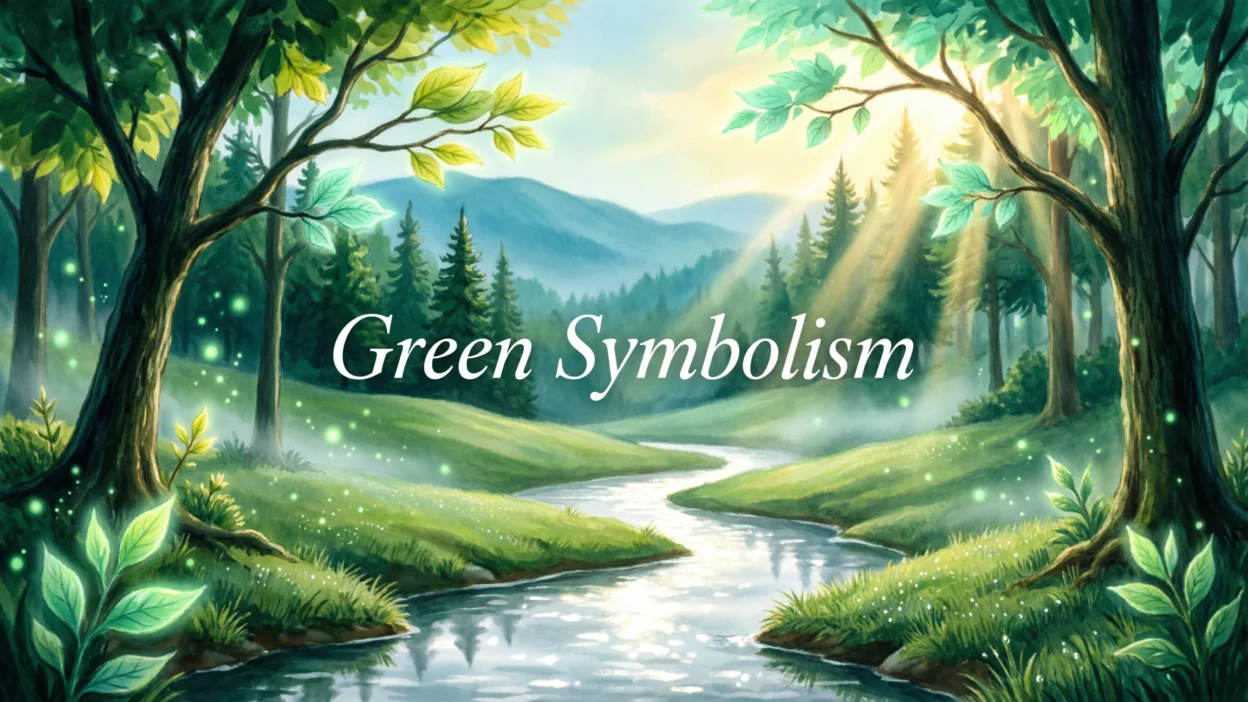
Green symbolism is deeply connected to nature, growth, renewal, and balance. As the color most associated with forests, plants, and life itself, green represents harmony and vitality in many cultures around the world.
From ancient traditions to modern psychology, the symbolic meaning of green often reflects ideas of healing, prosperity, and emotional balance.
Understanding green symbolism helps explain why this color appears in spiritual teachings, art, dreams, and everyday life. It represents renewal and hope while also symbolizing stability, abundance, and connection with nature.
Green Symbolism Meaning (Clear Definition)
Green symbolism refers to the symbolic meanings connected with the color green, including growth, renewal, health, prosperity, and harmony.
Because green dominates the natural world, it naturally represents life, fertility, and regeneration. Psychologically, green is considered one of the most calming and balanced colors.
Common meanings linked to green include:
- Growth and new beginnings
- Balance and harmony
- Healing and health
- Wealth and prosperity
- Nature and environmental connection
These associations make green one of the most positive and life-affirming symbolic colors.
What Does Green Symbolism Represent?
Green symbolism reflects several powerful themes depending on cultural or emotional context.
Common Symbolic Meanings of Green
| Symbolic Meaning | Explanation |
|---|---|
| Growth | Represents development, renewal, and progress |
| Nature | Strongly connected to forests, plants, and natural life |
| Healing | Often linked with restoration and physical well-being |
| Prosperity | Associated with wealth and financial success |
| Balance | Symbolizes emotional and mental stability |
| Hope | Represents optimism and positive change |
Because of these meanings, green is widely used in environmental movements, wellness spaces, and financial symbolism.
Secondary keywords related to green symbolism include:
- color green meaning
- green spiritual meaning
- symbolism of green color
- green color psychology
- meaning of green in culture
- green meaning in dreams
- green symbolism in nature
Spiritual Meaning of Green Symbolism
Spiritually, green symbolizes renewal, compassion, and inner balance. Many spiritual traditions see green as the color of healing energy and emotional harmony.
Green is often associated with:
- The heart chakra, representing love and compassion
- Emotional healing and forgiveness
- Spiritual growth and transformation
- Connection to nature and life energy
Light green often symbolizes fresh starts and hope, while deeper green represents stability, wisdom, and grounded spiritual energy.
Meditation practices sometimes use green imagery to encourage healing, harmony, and emotional clarity.
Biblical / Religious Meaning of Green Symbolism
In religious traditions, green frequently symbolizes life, renewal, and divine blessing.
Biblical symbolism often connects green with:
- New life and spiritual renewal
- God’s creation and natural beauty
- Hope and everlasting life
Green pastures mentioned in sacred texts symbolize peace, provision, and divine care. Because it reflects flourishing life, green is often seen as a sign of God’s sustaining presence.
In many religious traditions, green also represents paradise, eternal life, and spiritual abundance.
Green Symbolism in History and Culture
Across history, the symbolic meaning of green has evolved in different societies.
Ancient Civilizations
Many early cultures associated green with fertility, agriculture, and prosperity because of its connection to plant life.
Medieval Europe
Green symbolized love, youth, and rebirth, often appearing in art and clothing.
Eastern Traditions
In some Asian cultures, green represents harmony, healing, and vitality.
Modern Culture
Today, green is strongly linked with environmental awareness, sustainability, and health.
Its universal connection to nature makes green one of the most widely recognized symbols of life and renewal.
Green Symbolism in Literature and Art
Writers and artists often use green symbolism to represent emotional and natural themes.
In literature, green can symbolize:
- Growth and transformation
- Hope and renewal
- Youth and vitality
- Jealousy or envy (in certain contexts)
In visual art, green creates feelings of peace, freshness, and harmony. Landscapes, gardens, and natural scenes frequently use green tones to evoke life and serenity.
Artists also use green to suggest balance between human life and nature.
Dream Meaning of Green Symbolism
Seeing green in dreams often carries positive and encouraging messages.
Common Green Dream Interpretations
- Bright green – growth, healing, and new opportunities
- Dark green – stability, maturity, and grounded thinking
- Green plants or forests – personal development and vitality
- Green fields – hope, success, and abundance
Dreams featuring green often suggest a period of renewal, personal growth, or emotional healing.
Modern Meaning of Green Symbolism
In modern society, green symbolism continues to influence design, culture, and psychology.
Green in Psychology
Green is known to:
- Reduce stress and anxiety
- Promote relaxation and balance
- Encourage creativity and focus
Because of its calming qualities, green is frequently used in healthcare environments and natural spaces.
Green in Branding and Design
Many organizations use green to represent:
- Sustainability
- Growth and innovation
- Health and wellness
- Financial prosperity
Green has become the universal color of environmental responsibility and natural living.
FAQs About Green Symbolism
What does green symbolize emotionally?
Green symbolizes balance, calmness, and emotional renewal. It often represents healing, harmony, and personal growth.
Is green a spiritual color?
Yes. Green is strongly connected with the heart chakra and represents compassion, healing energy, and spiritual growth.
What does green mean in dreams?
Green in dreams usually symbolizes growth, healing, opportunity, and positive life changes.
Why is green associated with nature?
Green dominates plant life and natural landscapes, making it a natural symbol of life, vitality, and environmental balance.
What does dark green symbolize?
Dark green often represents stability, ambition, wealth, and mature wisdom.
Conclusion
Green symbolism reminds us of life’s constant cycles of growth, healing, and renewal. Across cultures and traditions, the color green represents harmony between humanity and nature.
Whether appearing in dreams, art, or spiritual teachings, green encourages us to embrace balance, hope, and new beginnings.

Shan Waston is a skilled writer at Symboliy.com, producing clear, engaging content on language, communication, and everyday expressions to help readers understand meaning and usage confidently in modern digital contexts.