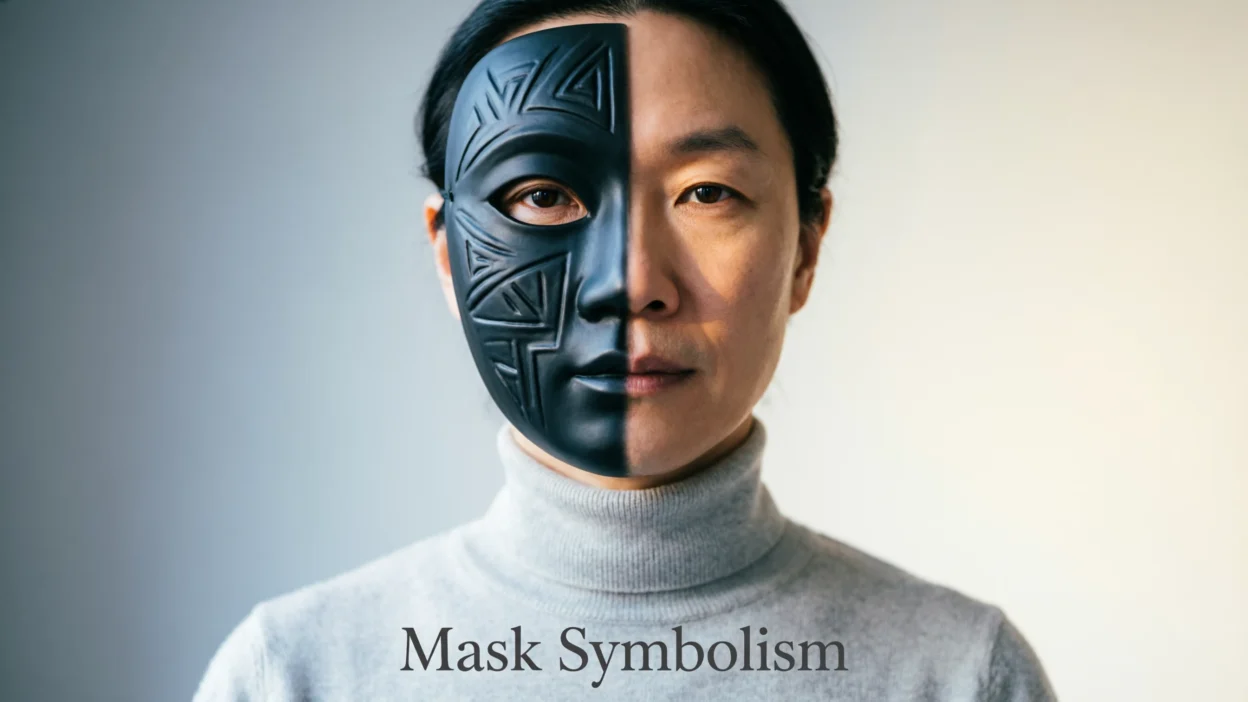
Mask symbolism represents identity, concealment, and transformation. A mask hides the face while revealing something deeper—emotion, role, or hidden truth.
Across cultures and traditions, masks are used in rituals, performances, and ceremonies, symbolizing both protection and expression.
Understanding mask symbolism helps explain why masks appear in psychology, art, religion, and dreams.
They reflect the dual nature of human identity—what we show to the world and what we keep hidden.
Mask Symbolism Meaning (Clear Definition)
Mask symbolism refers to the symbolic meanings associated with masks, including identity, concealment, transformation, and social roles.
Because masks cover the face, they often symbolize hidden emotions, alternate identities, or protection from vulnerability. At the same time, masks can represent expression, creativity, and transformation.
Common meanings connected to mask symbolism include:
- Hidden identity or emotions
- Protection and defense
- Transformation and change
- Social roles and behavior
- Deception or illusion
- Self-expression and creativity
These meanings make masks symbols of both concealment and revelation.
What Does Mask Symbolism Represent?
Mask symbolism can represent a wide range of ideas depending on context.
Common Symbolic Meanings of Masks
| Symbolic Meaning | Explanation |
|---|---|
| Identity | Masks represent different versions of the self |
| Concealment | Hide true emotions or intentions |
| Transformation | Symbolize change or becoming someone new |
| Protection | Shield from emotional or social exposure |
| Deception | Can represent illusion or false appearance |
| Expression | Allow creative or symbolic storytelling |
Because of these meanings, masks often appear in cultural rituals, theater, and psychological interpretations.
Secondary keywords related to mask symbolism include:
- mask spiritual meaning
- symbolism of mask
- mask meaning in dreams
- mask symbolism in culture
- mask symbolism in psychology
- mask meaning spiritually
- mask symbolism in art
Spiritual Meaning of Mask Symbolism
Spiritually, masks often symbolize the journey between the outer self and inner truth.
Mask symbolism is commonly associated with:
- The difference between ego and true self
- Spiritual transformation and awakening
- Letting go of false identity
- Revealing deeper truth through concealment
In some traditions, wearing a mask is believed to connect individuals with spiritual forces or higher consciousness.
Masks remind us that true identity lies beneath surface appearances.
Biblical / Religious Meaning of Mask Symbolism
In religious contexts, masks are often linked to hypocrisy, hidden intentions, or spiritual reflection.
They may represent:
- False appearances or deception
- The need for honesty and authenticity
- Inner versus outer identity
In many interpretations, masks symbolize the importance of removing illusions to discover truth.
Mask Symbolism in History and Culture
Masks have played a significant role in cultural traditions around the world.
Ancient Rituals
Masks were used to represent spirits, gods, or ancestors.
African Traditions
Masks symbolize spiritual connection, identity, and community roles.
Asian Theater
Masks represent specific characters, emotions, and archetypes.
Modern Culture
Today, masks symbolize identity, anonymity, and self-expression.
These cultural meanings highlight masks as symbols of transformation, storytelling, and spiritual connection.
Mask Symbolism in Literature and Art
Masks are powerful symbols in literature and visual arts.
In literature, masks may symbolize:
- Hidden identity
- Dual personality
- Deception or secrecy
- Emotional concealment
In art and theater, masks are used to express complex emotions and symbolic narratives.
They often reflect the theme of appearance versus reality.
Dream Meaning of Mask Symbolism
Seeing a mask in dreams often reflects issues related to identity or hidden emotions.
Common Mask Dream Interpretations
- Wearing a mask – hiding true feelings or identity
- Removing a mask – revealing truth or authenticity
- Seeing others in masks – distrust or uncertainty
- Broken mask – loss of identity or emotional exposure
Mask dreams often symbolize self-perception, secrecy, and emotional awareness.
Modern Meaning of Mask Symbolism
In modern society, mask symbolism is closely tied to identity and social interaction.
Masks in Psychology
Masks can symbolize:
- Social roles and expectations
- Emotional protection
- Hidden aspects of personality
They often represent the difference between public image and private self.
Masks in Media and Design
In films, fashion, and art, masks often represent:
- Mystery and anonymity
- Transformation and role-playing
- Rebellion or individuality
Mask imagery frequently symbolizes the complexity of identity in modern life.
FAQs About Mask Symbolism
What does a mask symbolize spiritually?
Spiritually, a mask symbolizes hidden identity, transformation, and the journey toward revealing one’s true self.
What does a mask represent emotionally?
Emotionally, masks represent concealment, protection, or the suppression of true feelings.
What does a mask mean in dreams?
Masks in dreams often symbolize hidden emotions, identity struggles, or the need for authenticity.
Why are masks associated with deception?
Masks hide the face, making them natural symbols of illusion, secrecy, or false appearances.
Do masks symbolize transformation?
Yes, masks often symbolize transformation, allowing individuals to adopt new identities or roles.
Conclusion
Mask symbolism reflects the powerful themes of identity, concealment, and transformation. Across cultures and traditions, masks reveal the balance between what is hidden and what is shown.
Whether appearing in dreams, art, or daily life, masks remind us that true understanding comes from looking beyond appearances to discover deeper truth.

Here is a professional 30-word author biography including your site name Symboliy.com:
Martin Hood is a professional writer at Symboliy.com, creating clear, informative content focused on language, communication, and meaningful expressions for everyday and professional use.