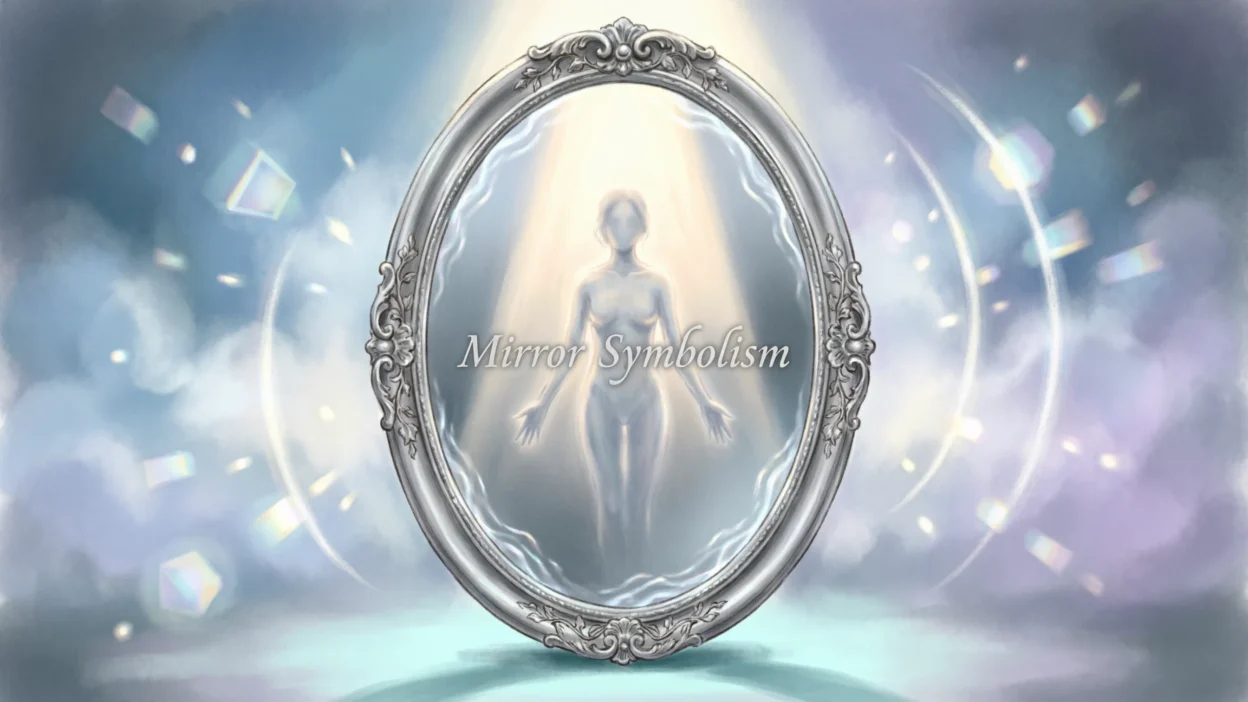
Mirror symbolism has fascinated people for centuries because mirrors reflect both appearance and deeper truth.
More than a simple object, mirrors often symbolize self-awareness, truth, perception, and personal reflection. Across cultures and traditions, mirrors represent the connection between the outer world and the inner self.
Understanding mirror symbolism helps explain why mirrors frequently appear in mythology, literature, spiritual teachings, and dreams.
They represent clarity, identity, and the search for deeper understanding.
Mirror Symbolism Meaning (Clear Definition)
Mirror symbolism refers to the symbolic meanings associated with mirrors, including self-reflection, truth, awareness, and perception.
Because mirrors reflect what stands before them, they often represent honesty, introspection, and the ability to see oneself clearly. They can also symbolize illusion or hidden truths depending on how the reflection is interpreted.
Common meanings connected to mirror symbolism include:
- Self-awareness and reflection
- Truth and clarity
- Identity and self-discovery
- Illusion and perception
- Transformation and insight
These meanings make mirrors powerful symbols of understanding oneself and revealing hidden realities.
What Does Mirror Symbolism Represent?
Mirror symbolism can represent many different ideas depending on the context and interpretation.
Common Symbolic Meanings of Mirrors
| Symbolic Meaning | Explanation |
|---|---|
| Self-reflection | Mirrors encourage looking inward and understanding oneself |
| Truth | They reveal what is truly present |
| Identity | Reflection symbolizes personal identity and awareness |
| Perception | Mirrors represent how reality is viewed or interpreted |
| Illusion | Reflections can also symbolize deception or hidden meaning |
| Transformation | Seeing oneself clearly can lead to personal change |
Because of these meanings, mirrors often appear in psychological symbolism, storytelling, and spiritual teachings.
Secondary keywords related to mirror symbolism include:
- mirror spiritual meaning
- symbolism of mirror
- mirror meaning in dreams
- mirror symbolism in literature
- mirror symbolism in culture
- mirror meaning spiritually
- mirror symbolism in psychology
Spiritual Meaning of Mirror Symbolism
Spiritually, mirrors often symbolize self-awareness, inner truth, and spiritual reflection.
Mirrors are commonly connected with:
- Self-discovery and personal growth
- Reflection of the soul or inner self
- Clarity and spiritual insight
- The balance between inner and outer reality
In many spiritual interpretations, mirrors represent the process of understanding one’s true nature.
They remind us that personal growth begins with honest self-reflection.
Biblical / Religious Meaning of Mirror Symbolism
In religious symbolism, mirrors often represent spiritual reflection and the search for truth.
Mirrors are sometimes associated with:
- Self-examination and moral reflection
- The difference between appearance and reality
- The pursuit of wisdom and understanding
In spiritual teachings, mirrors may symbolize the idea that people must reflect on their actions and inner character.
This symbolism emphasizes the importance of honesty, humility, and self-awareness.
Mirror Symbolism in History and Culture
Mirror symbolism has appeared throughout history in myths, folklore, and cultural traditions.
Ancient Cultures
Mirrors were sometimes believed to reflect the soul or spiritual essence.
Asian Traditions
In some traditions, mirrors symbolize truth, wisdom, and protection against negative energy.
European Folklore
Mirrors were sometimes associated with mystery, magic, and hidden worlds.
Modern Culture
Today, mirrors symbolize self-awareness, identity, and psychological reflection.
These cultural interpretations show how mirrors represent truth, perception, and personal discovery.
Mirror Symbolism in Literature and Art
Mirrors are powerful symbols in literature and art because they reflect both physical and emotional truths.
In literature, mirrors may symbolize:
- Self-discovery and identity
- Hidden truths
- Illusion versus reality
- Psychological reflection
In visual art and film, mirrors are often used to show inner conflict, transformation, or dual identity.
Mirror imagery frequently represents the moment when a character confronts their true self.
Dream Meaning of Mirror Symbolism
Seeing a mirror in dreams often reflects thoughts about identity and self-awareness.
Common Mirror Dream Interpretations
- Looking into a mirror – self-reflection or evaluation
- Broken mirror – insecurity or fear about identity
- Clear mirror reflection – honesty and self-understanding
- Distorted reflection – confusion or uncertainty about oneself
Dreams involving mirrors usually symbolize self-examination, identity, and personal awareness.
Modern Meaning of Mirror Symbolism
In modern life, mirror symbolism continues to represent identity, perception, and self-awareness.
Mirrors in Psychology
Mirrors can symbolize:
- Self-perception and identity
- Awareness of personal behavior
- Reflection on emotions and thoughts
They often represent the process of understanding how we see ourselves and how others see us.
Mirrors in Media and Design
In films, photography, and storytelling, mirrors often represent:
- Dual identity or hidden sides
- Self-discovery
- Emotional confrontation
Mirror imagery frequently symbolizes the search for truth and personal transformation.
FAQs About Mirror Symbolism
What does a mirror symbolize spiritually?
Spiritually, a mirror symbolizes self-awareness, reflection of the soul, and the search for inner truth.
What does a mirror represent emotionally?
Emotionally, mirrors represent identity, self-perception, and the process of understanding one’s thoughts and feelings.
What does a mirror mean in dreams?
A mirror in dreams often symbolizes self-reflection, personal awareness, or concerns about identity.
Why are mirrors associated with truth?
Mirrors reflect reality, which makes them symbols of honesty, clarity, and revealing what truly exists.
What does a broken mirror symbolize?
A broken mirror can symbolize insecurity, bad luck in folklore, or a fragmented sense of identity.
Conclusion
Mirror symbolism reflects the powerful themes of self-awareness, truth, and personal discovery. Across cultures and traditions, mirrors represent the ability to see both outward appearances and inner realities.
Whether appearing in dreams, literature, or spiritual teachings, mirrors remind us that understanding ourselves is the first step toward transformation and growth.

Shan Waston is a skilled writer at Symboliy.com, producing clear, engaging content on language, communication, and everyday expressions to help readers understand meaning and usage confidently in modern digital contexts.