
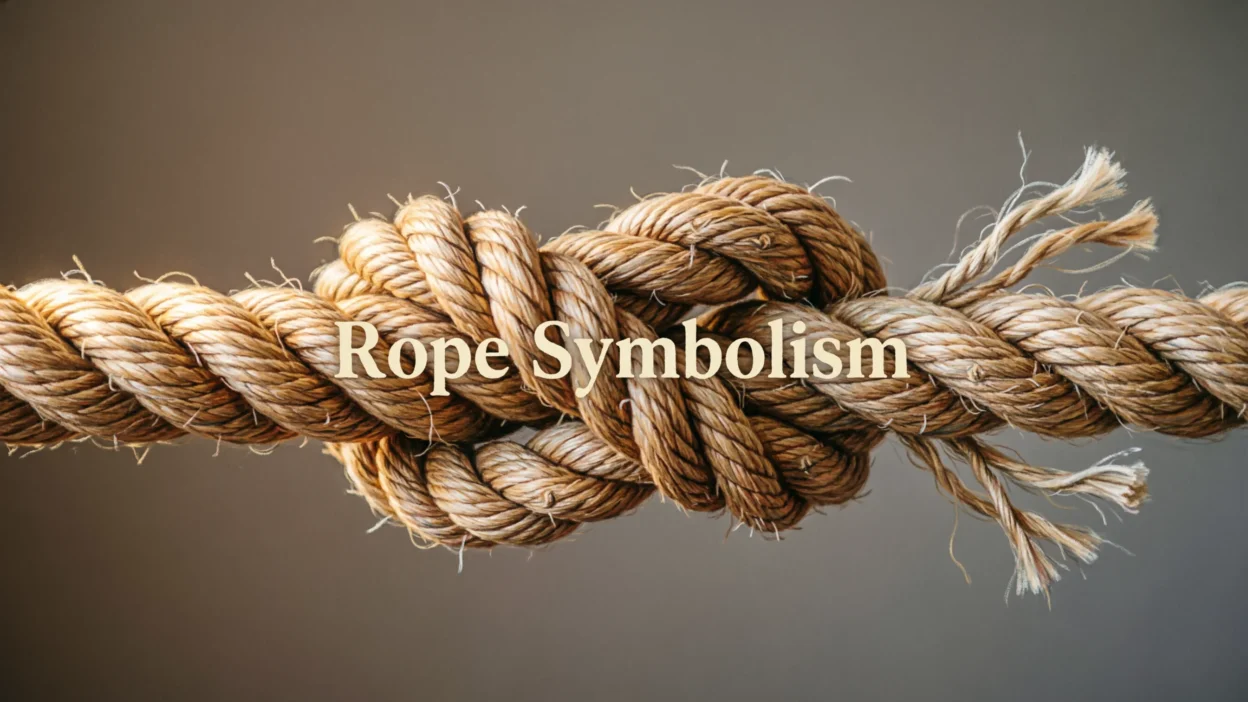
Rope symbolism represents connection, support, and control. A rope can bind, pull, lift, or secure, making it a powerful symbol of both unity and restriction.
Across cultures and traditions, ropes are associated with relationships, responsibility, strength, and the ties that connect or limit us.
Understanding rope symbolism helps explain why ropes appear in mythology, religion, literature, and dreams.
They reflect both the bonds that hold things together and the tension between freedom and control.
Rope Symbolism Meaning (Clear Definition)
Rope symbolism refers to the symbolic meanings associated with ropes, including connection, strength, restriction, and support.
Because ropes are made by twisting fibers together, they often symbolize unity, cooperation, and resilience. At the same time, ropes can tie or restrain, representing control, limitation, or obligation.
Common meanings connected to rope symbolism include:
- Connection and unity
- Support and stability
- Restriction and control
- Strength and resilience
- Responsibility and commitment
- Tension and pressure
These meanings make ropes symbols of both support and limitation.
What Does Rope Symbolism Represent?
Rope symbolism can represent different ideas depending on context.
Common Symbolic Meanings of Ropes
| Symbolic Meaning | Explanation |
|---|---|
| Connection | Ropes link or tie elements together |
| Support | Used to hold, lift, or secure |
| Restriction | Represent limitation or control |
| Strength | Twisted fibers create durability |
| Responsibility | Reflect obligations or duties |
| Tension | Symbolize pressure or conflict |
Because of these meanings, ropes often appear in symbolic storytelling, psychology, and cultural traditions.
Secondary keywords related to rope symbolism include:
- rope spiritual meaning
- symbolism of rope
- rope meaning in dreams
- rope symbolism in culture
- rope symbolism in literature
- rope meaning spiritually
- rope symbolism in psychology
Spiritual Meaning of Rope Symbolism
Spiritually, ropes often symbolize connection, attachment, and spiritual ties.
Rope symbolism is commonly associated with:
- Bonds between individuals or energies
- Spiritual connection or unity
- Attachment to material or emotional states
- The need to release or let go
Ropes may symbolize the importance of maintaining balance between connection and independence.
They remind us that what binds us can either support or restrict us.
Biblical / Religious Meaning of Rope Symbolism
In religious contexts, ropes can symbolize binding, support, and spiritual connection.
They may represent:
- Commitment and unity
- Restriction or discipline
- Holding onto faith or guidance
Ropes often symbolize both support and the need for release from limitations.
Rope Symbolism in History and Culture
Ropes have held symbolic meaning in many cultural traditions.
Ancient Civilizations
Ropes symbolized strength, construction, and survival.
Maritime Culture
Ropes represented connection, teamwork, and navigation.
Cultural Rituals
Ropes sometimes symbolized binding agreements or spiritual ties.
Modern Culture
Today, ropes symbolize support, tension, and connection.
These cultural meanings show how ropes symbolize both unity and control across time.
Rope Symbolism in Literature and Art
Ropes are powerful symbols in storytelling and visual art.
In literature, ropes may symbolize:
- Restriction or entrapment
- Support or rescue
- Emotional ties
- Conflict or tension
In art, ropes often represent connection, struggle, and balance.
They are frequently used to explore themes of freedom versus control.
Dream Meaning of Rope Symbolism
Seeing a rope in dreams often reflects connection, control, or emotional tension.
Common Rope Dream Interpretations
- Climbing a rope – progress or striving toward goals
- Being tied with rope – feeling restricted or controlled
- Holding a rope – control or responsibility
- Breaking a rope – freedom or release
Rope dreams often symbolize relationships, challenges, or personal limitations.
Modern Meaning of Rope Symbolism
In modern life, rope symbolism continues to represent connection and strength.
Ropes in Psychology
Ropes can symbolize:
- Emotional bonds and attachments
- Pressure or tension
- Support systems
They often represent what connects individuals or holds them back.
Ropes in Media and Design
In films, art, and design, ropes often represent:
- Survival and resilience
- Connection and teamwork
- Conflict and tension
Rope imagery frequently symbolizes balance between support and restriction.
FAQs About Rope Symbolism
What does a rope symbolize spiritually?
Spiritually, a rope symbolizes connection, attachment, support, and the balance between holding on and letting go.
What does a rope represent emotionally?
Emotionally, ropes represent relationships, responsibility, tension, or feelings of restriction.
What does a rope mean in dreams?
A rope in dreams often symbolizes connection, control, or progress depending on how it is used.
Why are ropes associated with restriction?
Ropes can bind or tie, making them natural symbols of limitation and control.
Do ropes symbolize strength?
Yes, ropes symbolize strength and resilience due to their durable and connected structure.
Conclusion
Rope symbolism reflects the powerful themes of connection, strength, and limitation. Across cultures and traditions, ropes represent both the bonds that support and the forces that restrict.
Whether appearing in dreams, art, or daily life, ropes remind us that balance between connection and freedom is essential for growth.

Here is a professional 30-word author biography including your site name Symboliy.com:
Martin Hood is a professional writer at Symboliy.com, creating clear, informative content focused on language, communication, and meaningful expressions for everyday and professional use.