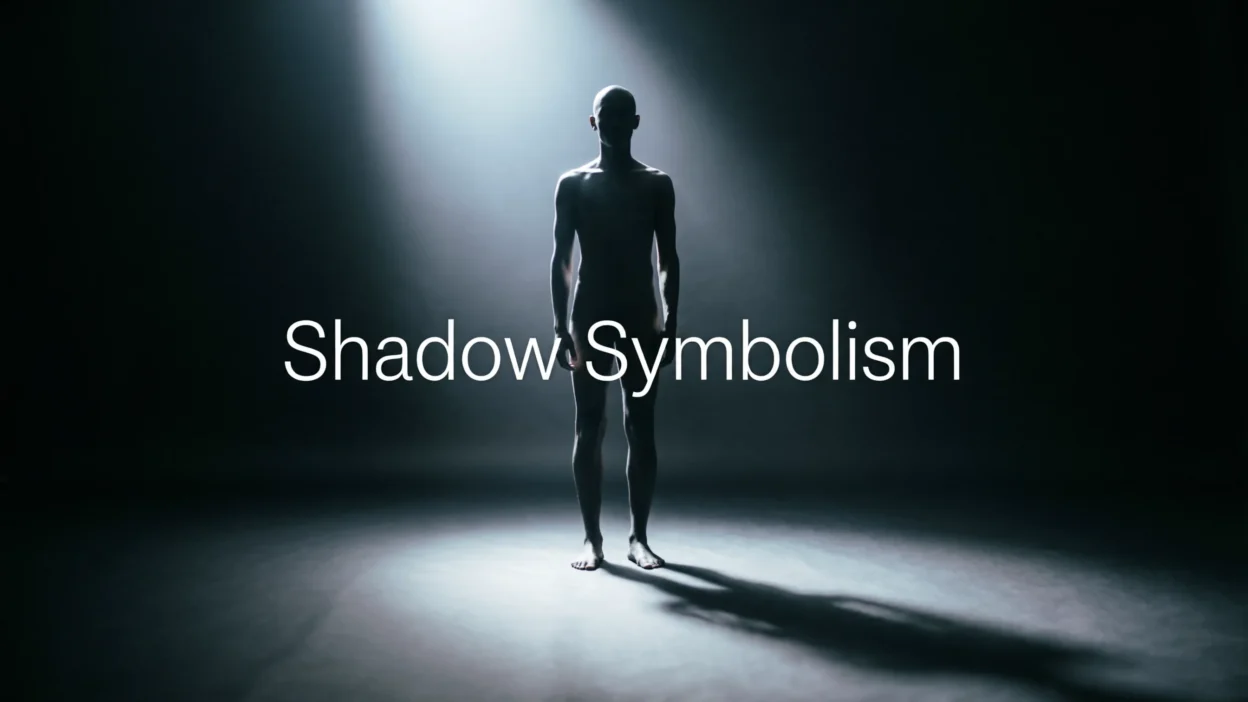
Shadow symbolism has long represented the hidden, mysterious, and often misunderstood aspects of life and the human psyche. A shadow forms when light is blocked, making it a powerful symbol of duality—light and dark, known and unknown.
Across cultures and traditions, shadows symbolize the unconscious mind, inner fears, and the parts of ourselves we do not always see clearly.
Understanding shadow symbolism helps explain why shadows frequently appear in psychology, literature, spiritual teachings, and dreams.
They represent both hidden truths and the potential for self-discovery and transformation.
Shadow Symbolism Meaning (Clear Definition)
Shadow symbolism refers to the symbolic meanings associated with shadows, including the unconscious mind, hidden aspects of identity, mystery, and duality.
Because shadows exist where light is absent, they often represent what is concealed, unacknowledged, or unknown. At the same time, shadows are a natural part of light, making them symbols of balance and wholeness.
Common meanings connected to shadow symbolism include:
- Hidden thoughts and emotions
- The unconscious or inner self
- Mystery and the unknown
- Fear and insecurity
- Duality and balance
- Self-discovery and growth
These meanings make shadows powerful symbols of inner depth and psychological awareness.
What Does Shadow Symbolism Represent?
Shadow symbolism can represent different ideas depending on emotional, cultural, and psychological context.
Common Symbolic Meanings of Shadows
| Symbolic Meaning | Explanation |
|---|---|
| The unconscious | Shadows represent hidden thoughts and feelings |
| Mystery | Their darkness symbolizes the unknown |
| Fear | Shadows can reflect anxiety or hidden fears |
| Duality | Represent the balance between light and dark |
| Identity | Shadows can symbolize hidden parts of oneself |
| Transformation | Facing the shadow leads to personal growth |
Because of these meanings, shadows often appear in psychology, storytelling, and spiritual reflection.
Secondary keywords related to shadow symbolism include:
- shadow spiritual meaning
- symbolism of shadow
- shadow meaning in dreams
- shadow symbolism in psychology
- shadow symbolism in literature
- shadow meaning spiritually
- shadow symbolism in culture
Spiritual Meaning of Shadow Symbolism
Spiritually, shadows often symbolize inner work, self-awareness, and transformation. Many traditions emphasize the importance of confronting one’s shadow to achieve growth.
Shadow symbolism is commonly associated with:
- Self-discovery and inner truth
- Confronting fears and insecurities
- Healing hidden emotional wounds
- Achieving balance between light and dark
Facing the shadow is often seen as a path toward greater awareness and personal transformation.
In spiritual teachings, shadows remind us that growth comes from acknowledging all parts of ourselves.
Biblical / Religious Meaning of Shadow Symbolism
In religious symbolism, shadows can represent both protection and uncertainty, depending on context.
Shadows are sometimes associated with:
- Shelter and divine protection
- Uncertainty or spiritual testing
- The contrast between light (good) and darkness (unknown)
In many interpretations, shadows symbolize the temporary nature of darkness before the return of light.
This dual meaning reflects both comfort and challenge within spiritual journeys.
Shadow Symbolism in History and Culture
Shadow symbolism has played an important role in myths, folklore, and cultural beliefs.
Ancient Traditions
Shadows were sometimes believed to represent a person’s soul or spiritual presence.
Eastern Philosophy
In some traditions, shadows symbolize balance between opposing forces.
European Folklore
Shadows were often linked to mystery, magic, and hidden worlds.
Modern Culture
Today, shadows symbolize psychological depth, identity, and self-exploration.
These cultural perspectives highlight shadows as symbols of mystery, identity, and transformation.
Shadow Symbolism in Literature and Art
Shadows are widely used in literature and art to create emotional depth and symbolic meaning.
In literature, shadows may symbolize:
- Hidden truths or secrets
- Inner conflict
- Fear or uncertainty
- Dual identity
In visual art and film, shadows are often used to represent mystery, tension, or psychological complexity.
Shadow imagery frequently reflects the unseen forces shaping characters and stories.
Dream Meaning of Shadow Symbolism
Seeing shadows in dreams often reflects subconscious thoughts or unresolved emotions.
Common Shadow Dream Interpretations
- Dark shadow figures – hidden fears or anxieties
- Following a shadow – exploring the unknown or inner self
- Being chased by a shadow – avoidance of problems or emotions
- Standing in shadow – uncertainty or lack of clarity
Dreams involving shadows usually symbolize inner conflict, hidden emotions, or the need for self-awareness.
Modern Meaning of Shadow Symbolism
In modern psychology and culture, shadow symbolism remains highly relevant.
Shadows in Psychology
Shadows can symbolize:
- The unconscious mind
- Repressed emotions
- Hidden personality traits
They often represent the parts of ourselves that we may ignore but must eventually understand.
Shadows in Media and Design
In films, photography, and storytelling, shadows often represent:
- Suspense and mystery
- Hidden identity
- Emotional depth
Shadow imagery frequently symbolizes complexity, tension, and inner transformation.
FAQs About Shadow Symbolism
What does a shadow symbolize spiritually?
Spiritually, a shadow symbolizes the inner self, hidden truths, and the process of personal growth through self-awareness.
What does a shadow represent emotionally?
Emotionally, shadows can represent fear, insecurity, hidden feelings, or unresolved thoughts.
What does a shadow mean in dreams?
Shadows in dreams often symbolize subconscious fears, hidden aspects of identity, or unresolved emotions.
Why are shadows associated with the unconscious?
Shadows exist in darkness, making them a natural symbol of the unseen and hidden parts of the mind.
What does facing your shadow symbolize?
Facing your shadow symbolizes self-awareness, acceptance, and personal transformation.
Conclusion
Shadow symbolism reflects the deep and complex nature of identity, mystery, and transformation. Across cultures and traditions, shadows represent the hidden aspects of life that shape our thoughts and experiences.
Whether appearing in dreams, psychology, or storytelling, shadows remind us that true growth comes from understanding both light and darkness within ourselves.

Here is a professional 30-word author biography including your site name Symboliy.com:
Martin Hood is a professional writer at Symboliy.com, creating clear, informative content focused on language, communication, and meaningful expressions for everyday and professional use.