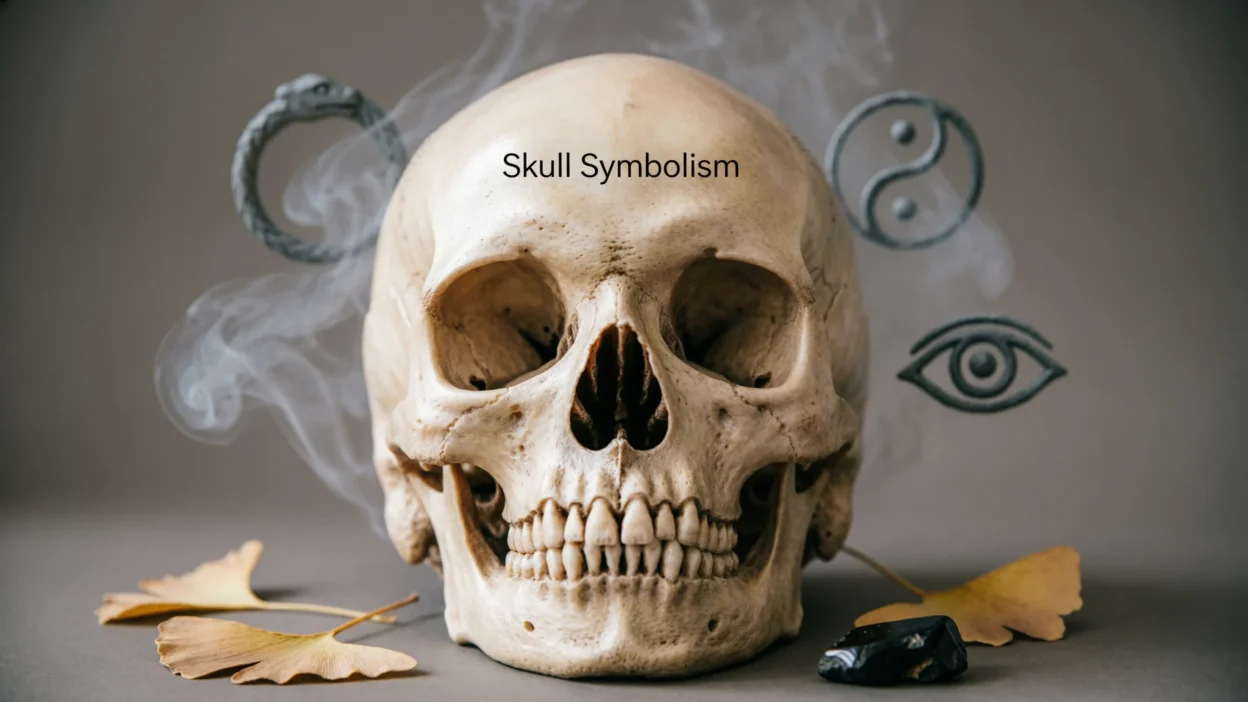
Skull symbolism has long represented mortality, transformation, and the deeper truths of existence. As the most recognizable part of the human skeleton, the skull symbolizes both the reality of death and the essence of identity.
Across cultures and traditions, skulls are not only linked to endings but also to rebirth, protection, and spiritual awareness.
Understanding skull symbolism helps explain why skulls appear in mythology, religion, art, and dreams.
They serve as powerful reminders of life’s fragility while also symbolizing wisdom, strength, and transformation.
Skull Symbolism Meaning (Clear Definition)
Skull symbolism refers to the symbolic meanings associated with skulls, including mortality, protection, transformation, and inner truth.
Because the skull houses the brain and protects the mind, it often represents intelligence, consciousness, and identity. At the same time, it is a clear symbol of death and the passage of time.
Common meanings connected to skull symbolism include:
- Mortality and impermanence
- Transformation and rebirth
- Protection and strength
- Wisdom and knowledge
- Truth and inner essence
These meanings make skulls symbols of both life’s limits and deeper awareness.
What Does Skull Symbolism Represent?
Skull symbolism can represent different ideas depending on cultural, spiritual, and emotional contexts.
Common Symbolic Meanings of Skulls
| Symbolic Meaning | Explanation |
|---|---|
| Mortality | Skulls remind us of life’s temporary nature |
| Protection | The skull protects the brain, symbolizing defense and strength |
| Transformation | Associated with cycles of death and rebirth |
| Wisdom | Linked to the mind and knowledge |
| Truth | Represents the core essence beneath appearances |
| Fear or power | Can symbolize danger or dominance |
Because of these meanings, skulls often appear in spiritual traditions, cultural rituals, and artistic expression.
Secondary keywords related to skull symbolism include:
- skull spiritual meaning
- symbolism of skull
- skull meaning in dreams
- skull symbolism in culture
- skull symbolism in art
- skull meaning spiritually
- skull symbolism in mythology
Spiritual Meaning of Skull Symbolism
Spiritually, skulls often symbolize transformation, awareness, and the eternal nature of the soul.
Skull symbolism is commonly associated with:
- Letting go of the physical world
- Spiritual awakening and insight
- Acceptance of life and death cycles
- Protection from negative energies
Rather than being purely negative, skulls can symbolize deep wisdom and spiritual strength.
They remind us that true understanding comes from recognizing both life and death.
Biblical / Religious Meaning of Skull Symbolism
In religious symbolism, skulls are often connected with mortality, humility, and reflection on life.
They may represent:
- The temporary nature of human life
- The importance of spiritual awareness
- Reflection on moral and spiritual choices
In some traditions, skull imagery emphasizes the idea that life is finite, encouraging wisdom and meaningful living.
Skull Symbolism in History and Culture
Skull symbolism has appeared across cultures with both positive and negative meanings.
Ancient Cultures
Skulls were sometimes used to represent ancestors and spiritual protection.
Latin American Traditions
Skulls symbolize celebration of life and remembrance of the dead.
European Traditions
Skulls often represented mortality and the inevitability of death.
Modern Culture
Today, skulls can symbolize rebellion, strength, individuality, or mystery.
These cultural meanings show how skulls reflect both fear and fascination with life’s deeper truths.
Skull Symbolism in Literature and Art
Skulls are powerful symbols in literature and visual art.
In literature, skulls may symbolize:
- Death and mortality
- Hidden truths
- The passage of time
- Reflection on life’s meaning
In art, skull imagery often represents contrast between life and death, beauty and decay.
Skulls are frequently used to provoke thought about existence and human nature.
Dream Meaning of Skull Symbolism
Seeing a skull in dreams often reflects deep thoughts about life, fear, or transformation.
Common Skull Dream Interpretations
- Seeing a skull – awareness of mortality or truth
- Holding a skull – reflection on life decisions
- Talking skull – confronting hidden truths
- Broken skull – vulnerability or fear
Skull dreams often symbolize transformation, awareness, or confronting reality.
Modern Meaning of Skull Symbolism
In modern society, skull symbolism remains highly visible in fashion, media, and design.
Skulls in Psychology
Skulls can symbolize:
- Awareness of mortality
- Deep reflection on identity
- Transformation and personal change
They often represent facing reality and understanding life’s deeper meaning.
Skulls in Media and Design
In fashion, art, and branding, skulls often represent:
- Strength and bold identity
- Rebellion and individuality
- Mystery and power
Skull imagery frequently symbolizes fearlessness and acceptance of life’s truths.
FAQs About Skull Symbolism
What does a skull symbolize spiritually?
Spiritually, a skull symbolizes transformation, awareness, mortality, and the eternal nature of the soul.
What does a skull represent emotionally?
Emotionally, skulls can represent fear, reflection, strength, or acceptance of life’s realities.
What does a skull mean in dreams?
A skull in dreams often symbolizes transformation, awareness of mortality, or confronting hidden truths.
Why are skulls associated with death?
Skulls remain after the body decays, making them natural symbols of mortality and the passage of time.
Do skulls symbolize protection?
Yes, in some cultures skulls symbolize protection, strength, and guarding against negative forces.
Conclusion
Skull symbolism reflects the powerful themes of mortality, transformation, and truth. Across cultures and traditions, skulls remind us of life’s temporary nature while also representing deeper awareness and strength.
Whether appearing in dreams, art, or spiritual teachings, skulls symbolize the balance between life, death, and the wisdom gained through understanding both.

Shan Waston is a skilled writer at Symboliy.com, producing clear, engaging content on language, communication, and everyday expressions to help readers understand meaning and usage confidently in modern digital contexts.