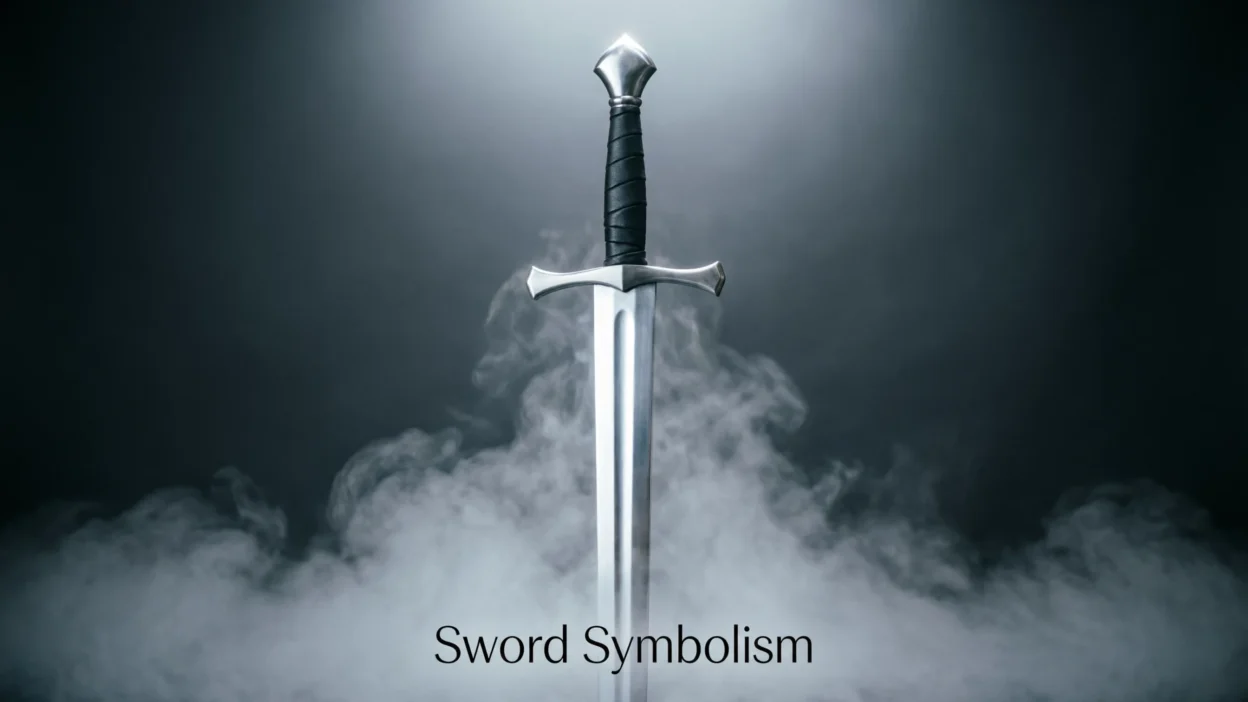
Sword symbolism represents power, truth, and protection. A sword is both a weapon and a symbol, often associated with strength, justice, and the ability to cut through illusion.
Across cultures and traditions, swords symbolize courage, authority, and decisive action.
Understanding sword symbolism helps explain why swords appear in mythology, religion, art, and dreams.
They reflect both physical strength and mental clarity, representing the power to defend, decide, and transform.
Sword Symbolism Meaning (Clear Definition)
Sword symbolism refers to the symbolic meanings associated with swords, including power, justice, truth, and protection.
Because a sword can both defend and attack, it often symbolizes balance between strength and responsibility. It is also a symbol of clarity, as it cuts through confusion and falsehood.
Common meanings connected to sword symbolism include:
- Power and strength
- Justice and fairness
- Truth and clarity
- Protection and defense
- Courage and bravery
- Authority and leadership
These meanings make swords symbols of both action and moral responsibility.
What Does Sword Symbolism Represent?
Sword symbolism can represent different ideas depending on context.
Common Symbolic Meanings of Swords
| Symbolic Meaning | Explanation |
|---|---|
| Power | Swords symbolize strength and control |
| Justice | Represent fairness and moral decisions |
| Truth | Cut through illusion and reveal clarity |
| Protection | Defend against danger or negativity |
| Courage | Represent bravery and bold action |
| Authority | Symbolize leadership and command |
Because of these meanings, swords often appear in mythology, spiritual traditions, and heroic narratives.
Secondary keywords related to sword symbolism include:
- sword spiritual meaning
- symbolism of sword
- sword meaning in dreams
- sword symbolism in culture
- sword symbolism in mythology
- sword meaning spiritually
- sword symbolism in art
Spiritual Meaning of Sword Symbolism
Spiritually, swords often symbolize truth, clarity, and protection from negativity.
Sword symbolism is commonly associated with:
- Cutting through illusion and false beliefs
- Spiritual strength and discipline
- Protection from negative energies
- Inner clarity and awareness
In many traditions, a sword represents the power of truth and wisdom.
It reminds us that clarity requires courage and decisive action.
Biblical / Religious Meaning of Sword Symbolism
In religious contexts, swords symbolize divine justice, truth, and authority.
They may represent:
- The power of truth and righteousness
- Spiritual warfare and protection
- Judgment and moral authority
Swords often symbolize the idea of truth cutting through deception.
Sword Symbolism in History and Culture
Swords have played a major role in history and cultural symbolism.
Ancient Civilizations
Swords symbolized warrior strength and honor.
Medieval Europe
Swords represented knighthood, justice, and loyalty.
Eastern Traditions
Swords symbolized discipline, precision, and spiritual balance.
Modern Culture
Today, swords represent power, heroism, and resilience.
These cultural meanings show how swords symbolize both strength and honor across time.
Sword Symbolism in Literature and Art
Swords are powerful symbols in storytelling and visual art.
In literature, swords may symbolize:
- Heroism and bravery
- Justice and moral conflict
- Power struggles
- Transformation and destiny
In art, swords often represent strength, action, and clarity.
They are frequently used to highlight conflict and resolution.
Dream Meaning of Sword Symbolism
Seeing a sword in dreams often reflects strength, conflict, or decision-making.
Common Sword Dream Interpretations
- Holding a sword – personal power or readiness
- Fighting with a sword – facing challenges or conflict
- Broken sword – loss of strength or confidence
- Receiving a sword – gaining authority or responsibility
Sword dreams often symbolize courage, conflict, and decisive action.
Modern Meaning of Sword Symbolism
In modern society, sword symbolism continues to represent strength and clarity.
Swords in Psychology
Swords can symbolize:
- Mental clarity and decision-making
- Personal strength and control
- Conflict resolution
They often represent the ability to face challenges with confidence.
Swords in Media and Design
In films, games, and design, swords often represent:
- Heroism and adventure
- Power and dominance
- Honor and bravery
Sword imagery frequently symbolizes strength, action, and determination.
FAQs About Sword Symbolism
What does a sword symbolize spiritually?
Spiritually, a sword symbolizes truth, clarity, protection, and the power to overcome illusion and negativity.
What does a sword represent emotionally?
Emotionally, swords represent strength, courage, conflict, and the ability to make decisive choices.
What does a sword mean in dreams?
A sword in dreams often symbolizes personal power, conflict, or the need to take action.
Why are swords associated with justice?
Swords are tools of authority and decision, making them symbols of fairness and moral judgment.
Do swords symbolize protection?
Yes, swords often symbolize protection, representing the ability to defend oneself and others.
Conclusion
Sword symbolism reflects the powerful themes of strength, truth, and justice. Across cultures and traditions, swords represent both the ability to act and the responsibility to act wisely.
Whether appearing in dreams, art, or history, swords remind us that true power comes from clarity, courage, and integrity.

Mike Poop is a dedicated writer at Symboliy.com, creating clear, practical content about language, communication, and everyday expressions to help readers understand meaning and usage confidently in professional contexts worldwide.