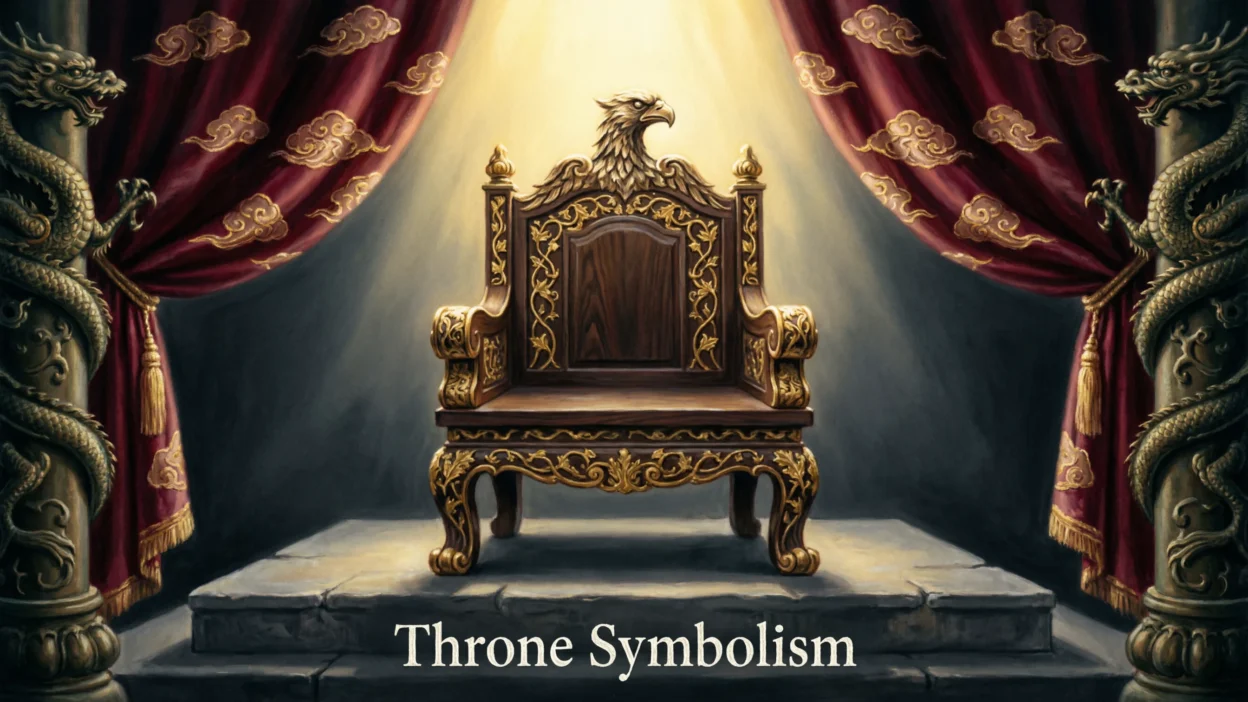
Throne symbolism represents authority, power, and rightful leadership. A throne is more than just a seat—it is a symbol of status, sovereignty, and the responsibility that comes with ruling.
Across cultures and traditions, thrones signify not only external power but also inner authority and judgment.
Understanding throne symbolism helps explain why thrones appear in history, religion, art, and dreams.
They reflect both control over others and mastery over oneself, making them powerful symbols of leadership and responsibility.
Throne Symbolism Meaning (Clear Definition)
Throne symbolism refers to the symbolic meanings associated with thrones, including authority, leadership, judgment, and sovereignty.
Because a throne is reserved for rulers, it often symbolizes ultimate power, legitimacy, and responsibility. It also represents stability and the right to lead.
Common meanings connected to throne symbolism include:
- Authority and control
- Leadership and governance
- Power and sovereignty
- Judgment and decision-making
- Honor and status
- Responsibility and duty
These meanings make thrones symbols of both privilege and accountability.
What Does Throne Symbolism Represent?
Throne symbolism can represent multiple ideas depending on context.
Common Symbolic Meanings of Thrones
| Symbolic Meaning | Explanation |
|---|---|
| Authority | Thrones symbolize ultimate leadership |
| Power | Represent control and dominance |
| Sovereignty | Indicate rightful rule and legitimacy |
| Judgment | Associated with decision-making and justice |
| Honor | Reflect status and prestige |
| Responsibility | Represent the burden of leadership |
Because of these meanings, thrones often appear in royal traditions, spiritual teachings, and symbolic storytelling.
Secondary keywords related to throne symbolism include:
- throne spiritual meaning
- symbolism of throne
- throne meaning in dreams
- throne symbolism in culture
- throne symbolism in religion
- throne meaning spiritually
- throne symbolism in history
Spiritual Meaning of Throne Symbolism
Spiritually, thrones symbolize higher authority, divine power, and inner mastery.
Throne symbolism is commonly associated with:
- Spiritual authority and divine presence
- Inner control and self-discipline
- Balance between power and wisdom
- Enlightenment and higher awareness
In many traditions, a throne represents the seat of ultimate truth and judgment.
It reminds us that true authority comes from wisdom and self-control.
Biblical / Religious Meaning of Throne Symbolism
In religious contexts, thrones are strongly associated with divine authority and judgment.
They may represent:
- The seat of divine power
- Judgment and justice
- Heavenly authority and sovereignty
Thrones often symbolize the presence of ultimate truth and moral authority.
Throne Symbolism in History and Culture
Thrones have been central symbols of power throughout history.
Ancient Civilizations
Thrones represented divine kingship and sacred rule.
Monarchies
Thrones symbolized royal authority and political power.
Eastern Traditions
Thrones often represented spiritual authority and enlightenment.
Modern Culture
Today, thrones symbolize leadership, influence, and success.
These cultural meanings show how thrones symbolize both power and responsibility across time.
Throne Symbolism in Literature and Art
Thrones are powerful symbols in storytelling and visual art.
In literature, thrones may symbolize:
- Power struggles and ambition
- Leadership and responsibility
- Justice and authority
- Rise or fall of rulers
In art, thrones often represent status, control, and divine or royal presence.
They are frequently used to emphasize importance and dominance.
Dream Meaning of Throne Symbolism
Seeing a throne in dreams often reflects power, ambition, or self-perception.
Common Throne Dream Interpretations
- Sitting on a throne – confidence, authority, or success
- Seeing an empty throne – opportunity or uncertainty
- Falling from a throne – fear of losing power or status
- Approaching a throne – desire for recognition or leadership
Throne dreams often symbolize ambition, responsibility, and personal power.
Modern Meaning of Throne Symbolism
In modern society, throne symbolism continues to represent authority and success.
Thrones in Psychology
Thrones can symbolize:
- Personal power and control
- Self-worth and confidence
- Leadership and responsibility
They often represent how individuals perceive their role and influence.
Thrones in Media and Design
In films, branding, and art, thrones often represent:
- Power and dominance
- Prestige and influence
- Leadership and control
Throne imagery frequently symbolizes authority, ambition, and high status.
FAQs About Throne Symbolism
What does a throne symbolize spiritually?
Spiritually, a throne symbolizes divine authority, higher power, and inner mastery.
What does a throne represent emotionally?
Emotionally, thrones represent ambition, control, responsibility, and self-confidence.
What does a throne mean in dreams?
A throne in dreams often symbolizes power, leadership, or a desire for recognition and authority.
Why are thrones associated with power?
Thrones are traditionally reserved for rulers, making them natural symbols of authority and control.
Do thrones symbolize responsibility?
Yes, thrones symbolize responsibility, as leadership always comes with duty and accountability.
Conclusion
Throne symbolism reflects the powerful themes of authority, leadership, and responsibility. Across cultures and traditions, thrones represent both the privilege of power and the duty that comes with it.
Whether appearing in dreams, art, or history, thrones remind us that true leadership requires wisdom, balance, and accountability.

Here is a professional 30-word author biography including your site name Symboliy.com:
Martin Hood is a professional writer at Symboliy.com, creating clear, informative content focused on language, communication, and meaningful expressions for everyday and professional use.