If you’ve ever typed “spicey” while writing about food, flavor, or personality, you’re not alone. The confusion between spicey vs spicy is extremely common, especially because English spelling rules can feel inconsistent. But when it comes to proper spelling, only one version is officially correct in modern English.
Whether you’re writing a blog post, social media caption, restaurant review, school assignment, or marketing copy, using the correct spelling helps your writing appear more professional and trustworthy.
In this guide, you’ll learn the real difference between spicey and spicy, why people mix them up, common mistakes to avoid, and how to remember the right spelling easily.
Quick Answer
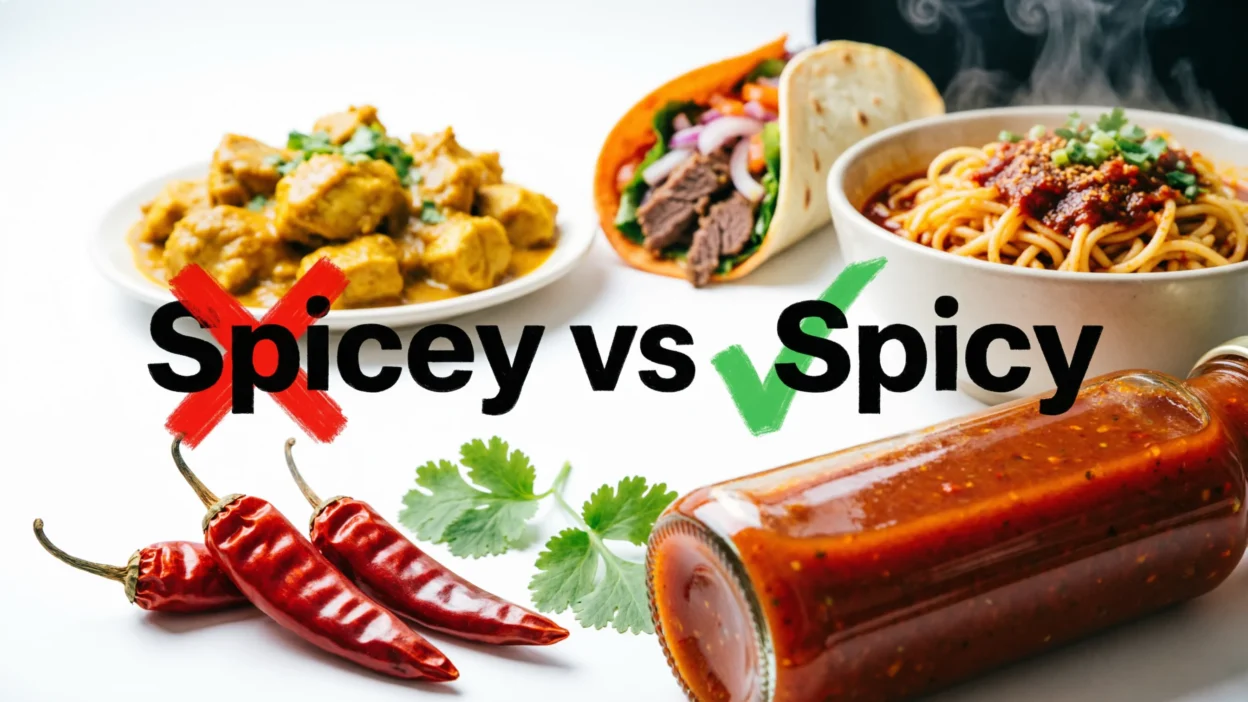
“Spicy” is the correct spelling.
“Spicey” is considered a misspelling in both American and British English.
- ✅ Correct: Spicy food
- ❌ Incorrect: Spicey food
The adjective spicy describes something with strong seasoning, heat, or exciting flavor. It can also describe bold personalities, dramatic stories, or exciting situations.
What Does “Spicy” Mean?
The word spicy comes from the noun spice, which refers to flavorful ingredients like chili, pepper, cinnamon, turmeric, or cloves. When something is spicy, it usually has:
- Heat or pungency
- Strong flavor
- Exciting or bold characteristics
Examples of “Spicy” in Sentences
- I love eating spicy noodles with extra chili sauce.
- That curry is too spicy for me.
- The movie includes some spicy humor.
- She shared a spicy opinion during the debate.
- Mexican food can be incredibly spicy and flavorful.
Today, the word is also commonly used online to describe:
- Bold fashion
- Dramatic gossip
- Romantic content
- Exciting trends
- Hot takes on social media
Is “Spicey” Ever Correct?
No. The spelling “spicey” is not recognized as standard English.
Even though many people type it accidentally, dictionaries and grammar experts consider it incorrect. Spell-check tools often flag it because the accepted spelling is spicy.
Why Do People Write “Spicey”?
People often spell it as “spicey” because of English words like:
- Ice → icy
- Juice → juicy
- Noise → noisy
These patterns make some writers assume “spice” becomes “spicey.” However, English spelling rules are not always predictable.
The correct transformation is:
- Spice → Spicy
Not:
- Spice → Spicey
Spicey vs Spicy: Side-by-Side Comparison
| Feature | Spicy | Spicey |
|---|---|---|
| Correct spelling | Yes | No |
| Recognized in dictionaries | Yes | No |
| Used in professional writing | Yes | No |
| Accepted in American English | Yes | No |
| Accepted in British English | Yes | No |
| Recommended for SEO writing | Yes | No |
Why Correct Spelling Matters
Using the right spelling may seem minor, but it can affect:
1. Credibility
Readers trust content that looks polished and accurate. Misspellings can make articles appear rushed or unprofessional.
2. SEO Performance
Search engines understand spelling variations, but properly spelled keywords generally perform better for rankings, readability, and user trust.
3. User Experience
Correct grammar and spelling improve readability and keep visitors engaged longer.
4. Brand Image
If you run a blog, food website, restaurant business, or social media page, proper spelling helps maintain authority and professionalism.
American vs British English Differences
When comparing spicey vs spicy, there is no difference between American and British English.
Both varieties use:
- ✅ Spicy
- ❌ Spicey
Unlike words such as:
- Color vs Colour
- Flavor vs Flavour
- Analyze vs Analyse
The spelling of spicy remains the same worldwide.
Common Mistakes People Make
Here are some frequent errors related to the word “spicy.”
Incorrect Verb Forms
❌ The soup tastes spicey.
✅ The soup tastes spicy.
Social Media Captions
❌ This taco is so spicey!
✅ This taco is so spicy!
Product Descriptions
❌ Spicey chicken wings
✅ Spicy chicken wings
Informal Typing Habits
Many users type “spicey” quickly because it visually feels correct. Autocorrect may also fail to catch it depending on the device or platform.
Easy Trick to Remember the Correct Spelling
A simple memory trick:
Another easy reminder:
- Spice + y = Spicy
Not:
- Spice + ey
The more you read and write the correct form, the more natural it becomes.
How “Spicy” Is Used Beyond Food
The word “spicy” has evolved beyond describing hot foods. Today, it appears in many modern conversations and internet slang.
Spicy Personality
Someone bold, daring, or outspoken.
Example:
- She has a spicy sense of humor.
Spicy Content
Used online for dramatic, romantic, or controversial material.
Example:
- The interview got surprisingly spicy.
Spicy Fashion
Refers to bold or eye-catching style choices.
Example:
- Her spicy outfit grabbed everyone’s attention.
Spicy Opinions
Strong or controversial viewpoints.
Example:
- He shared a spicy take on the latest trend.
Synonyms for “Spicy”
Using related terms can improve writing variety and SEO naturally.
Food-Related Synonyms
- Hot
- Peppery
- Zesty
- Flavorful
- Tangy
- Fiery
- Piquant
Personality or Style Synonyms
- Bold
- Exciting
- Dramatic
- Provocative
- Sassy
- Intense
These related terms help enrich content while keeping it natural and engaging.
Examples in Real-Life Contexts
Restaurant Review
“The spicy ramen had rich broth, fresh noodles, and the perfect level of heat.”
Social Media Post
“This salsa is spicy enough to wake up your taste buds!”
Product Marketing
“Our spicy chips deliver bold flavor in every bite.”
Casual Conversation
“I can handle spicy food better than my friends.”
Why “Spicey” Still Appears Online
Even though it’s incorrect, “spicey” still appears frequently because:
- Typing habits spread online
- People rely on phonetics
- Social media encourages casual spelling
- Some users never learn the corrected version
Search engines recognize that users often mean “spicy” when typing “spicey,” but professionally written content should always use the correct form.
Should You Ever Use “Spicey” for SEO?
Some marketers intentionally include common misspellings to capture search traffic. However, overusing incorrect spellings can hurt readability and trust.
A balanced approach is best:
- Use the correct spelling naturally throughout your article
- Mention the misspelling once or twice for clarification
- Focus primarily on high-quality, readable content
That’s exactly why articles comparing spicey vs spicy perform well in search results.
FAQs About Spicey vs Spicy
Is “spicey” a real word?
No. “Spicey” is considered a misspelling of “spicy.”
Which is correct: spicey or spicy?
The correct spelling is spicy.
Why do people spell spicy as spicey?
People assume the spelling follows patterns seen in words like “juicy” or “noisy,” but English spelling rules differ.
Does British English use “spicey”?
No. British English also uses the spelling spicy.
Is “spicy” only used for food?
No. It can also describe bold personalities, dramatic situations, exciting content, or strong opinions.
Can using “spicey” hurt SEO?
It may reduce professionalism and readability. Using the correct spelling is generally better for user trust and content quality.
Is “spicy” formal or informal?
It can be both. The word works in casual conversations, restaurant menus, reviews, blogs, and professional food writing.
Why does autocorrect sometimes miss “spicey”?
Some devices or apps may not aggressively flag uncommon spelling mistakes, especially in informal typing environments.
Final Thoughts on Spicey vs Spicy
The debate around spicey vs spicy is actually very simple once you know the rule. The correct spelling is always spicy, regardless of whether you’re writing in American English or British English. While “spicey” appears online due to typing habits and confusion, it is not considered standard English.
Using accurate spelling improves readability, professionalism, SEO performance, and audience trust. Whether you’re describing hot wings, bold opinions, or exciting content, sticking with “spicy” keeps your writing polished and credible.
Actionable Takeaway
Before publishing any content, quickly proofread for common spelling mistakes like “spicey.” Small corrections can make a big difference in how readers and search engines perceive your writing.

Here is a professional 30-word author biography including your site name Symboliy.com:
Martin Hood is a professional writer at Symboliy.com, creating clear, informative content focused on language, communication, and meaningful expressions for everyday and professional use.