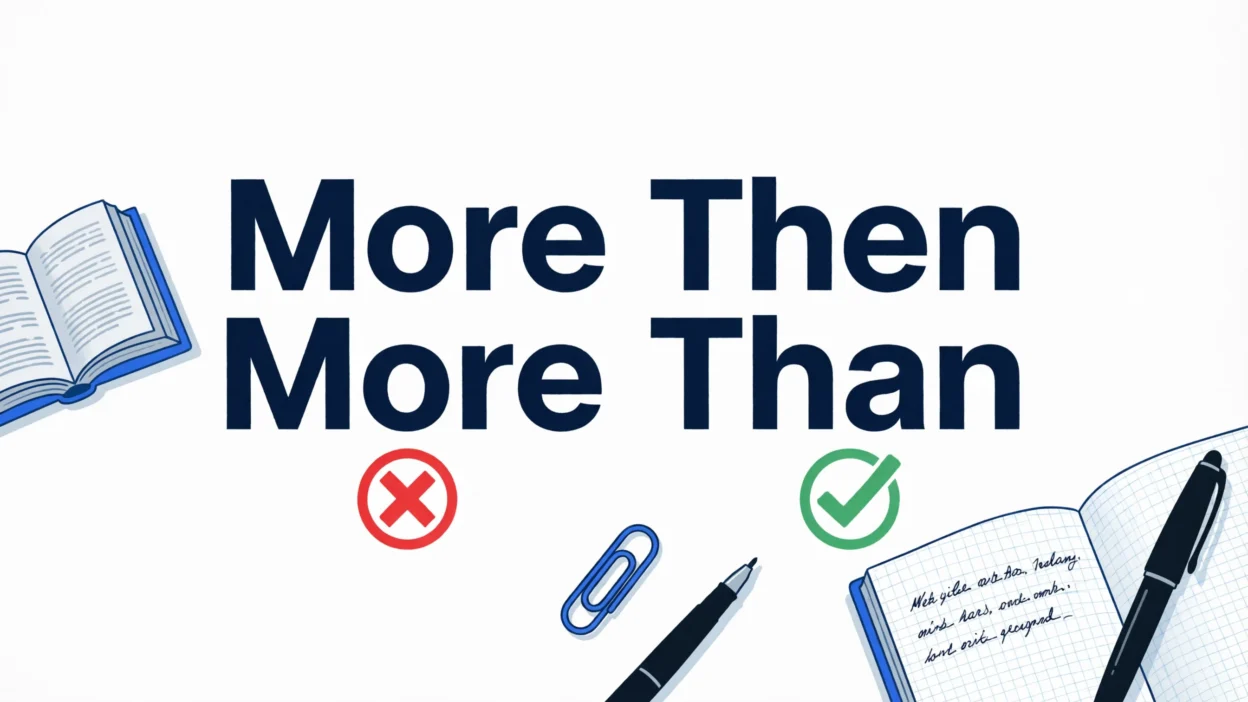
The confusion between more then vs more than is one of the most common grammar mistakes in English writing.
Since the words then and than sound somewhat similar, many people accidentally use the wrong one in emails, essays, blog posts, and everyday conversations.
If you’ve ever paused while typing “more then” or “more than,” you are not alone. The good news is that the difference is easy to understand once you learn the role each word plays in a sentence.
In this guide, you’ll discover the correct usage, meanings, examples, grammar rules, common mistakes, and simple tricks to remember the difference forever.
Quick Answer
✅ “More than” is the correct phrase when making comparisons or referring to quantities.
❌ “More then” is usually incorrect in standard English grammar.
Examples:
- She has more than 10 books.
- I love you more than words can say.
The word than is used for comparisons, while then relates to time or sequence.
What Does “More Than” Mean?
The phrase more than is used to compare amounts, numbers, sizes, levels, or qualities. It means:
- Greater than
- In excess of
- Beyond
- Additional to
Examples of “More Than”
- He earns more than his brother.
- The movie lasted more than three hours.
- She is more than capable of handling the project.
- We sold more than 500 products last month.
In all these examples, the phrase compares quantity, ability, or degree.
Why “More Then” Is Incorrect
The word then relates to:
- Time
- Order
- Sequence of events
- What happens next
Because of this meaning, using “then” in comparisons creates a grammar mistake.
Incorrect Examples
❌ She has more then me.
❌ The bag weighs more then five pounds.
❌ He works more then anyone else.
Correct Versions
✅ She has more than me.
✅ The bag weighs more than five pounds.
✅ He works more than anyone else.
More Then vs More Than: Side-by-Side Comparison
| Feature | More Than | More Then |
|---|---|---|
| Grammatically correct | ✅ Yes | ❌ Usually no |
| Used for comparison | ✅ Yes | ❌ No |
| Refers to quantity | ✅ Yes | ❌ No |
| Refers to time sequence | ❌ No | “Then” alone does |
| Professional writing | ✅ Recommended | ❌ Avoid |
| Common mistake | No | Yes |
Understanding “Than” vs “Then”
The confusion becomes easier when you understand the individual meanings.
What Does “Than” Mean?
Than is used for comparisons.
Examples:
- Taller than
- Faster than
- Better than
- More than
What Does “Then” Mean?
Then refers to time or sequence.
Examples:
- We ate dinner, and then we watched a movie.
- Finish your homework, then go outside.
- Back then, life was simpler.
Easy Trick to Remember the Difference
Another helpful tip:
- Than has the letter “A” → think “comparison”
- Then has the letter “E” → think “event” or “next”
Examples of “More Than” in Sentences
Here are natural examples showing the correct usage.
Comparing Numbers
- The company hired more than 50 employees.
- More than 1,000 people attended the concert.
Comparing Qualities
- She is more than intelligent enough for the role.
- This laptop is more than sufficient for gaming.
Expressing Emotion or Emphasis
- I miss you more than ever.
- He cares more than people realize.
Comparing Objects or People
- Cats sleep more than dogs.
- She studies more than her classmates.
Common Mistakes People Make
1. Typing “Then” Instead of “Than”
This is usually caused by fast typing or autocorrect habits.
Incorrect:
- I have more then enough food.
Correct:
- I have more than enough food.
2. Confusing Time and Comparison
Remember:
- “Then” = next
- “Than” = compare
3. Using “Then” in Formal Writing
Even small grammar mistakes can reduce credibility in:
- Academic writing
- SEO content
- Business communication
- Professional emails
Is “More Then” Ever Correct?
In almost all standard grammar situations, “more then” is incorrect.
However, there are extremely rare cases where the words appear next to each other naturally but separately in meaning.
Example:
- We needed more, then left the store.
Here, “more” and “then” are not functioning as a phrase together.
American vs British English Differences
There is no major difference between American and British English regarding this phrase.
Both use:
- ✅ More than
And both reject:
- ❌ More then
So the grammar rule stays the same worldwide.
Why Correct Grammar Matters
Using the correct phrase improves:
- Writing clarity
- Reader trust
- Professionalism
- SEO quality
- Communication accuracy
Grammar mistakes may seem small, but readers notice them quickly. Correct wording helps your content appear polished and authoritative.
Similar Comparison Phrases
Here are related comparison phrases using than correctly.
- Less than
- Better than
- Greater than
- Smaller than
- Faster than
- Older than
- More important than
Examples
- This phone is better than the old one.
- She arrived earlier than expected.
- The task was harder than we imagined.
Common Expressions With “More Than”
More Than Enough
Meaning:
- Plenty or sufficient quantity
Example:
- We have more than enough chairs for the guests.
More Than Ever
Meaning:
- Greater intensity than before
Example:
- People rely on technology more than ever.
More Than Meets the Eye
Meaning:
- Something is more complex than it appears
Example:
- There is more than meets the eye in that situation.
Frequently Asked Questions
Which is correct: more then or more than?
More than is correct for comparisons and quantities.
Why is “more then” wrong?
Because “then” refers to time or sequence, not comparison.
What does “more than” mean?
It means greater than, exceeding, or beyond a certain amount or level.
Is “more then” ever acceptable?
Only in very rare sentence structures where the words function separately, not as a phrase.
How do I remember than vs then?
Use this rule:
- Than = comparison
- Then = time
Do British and American English use different spellings?
No. Both use more than.
Can I use “than” after comparative words?
Yes. Comparative words like better, more, and faster usually use than.
Is “more than enough” grammatically correct?
Yes. It is a very common and correct English expression.
Final Thoughts on More Then vs More Than
The difference between more then vs more than becomes simple once you understand the roles of then and than. The phrase more than is the correct choice whenever you are comparing amounts, qualities, or quantities.
Meanwhile, then is only used for time, sequence, or what happens next. Mixing them up is a common typo, but learning this grammar rule helps make your writing clearer, stronger, and more professional.
Actionable Takeaway
This quick rule will help you avoid one of the most common English grammar mistakes permanently.

Shan Waston is a skilled writer at Symboliy.com, producing clear, engaging content on language, communication, and everyday expressions to help readers understand meaning and usage confidently in modern digital contexts.