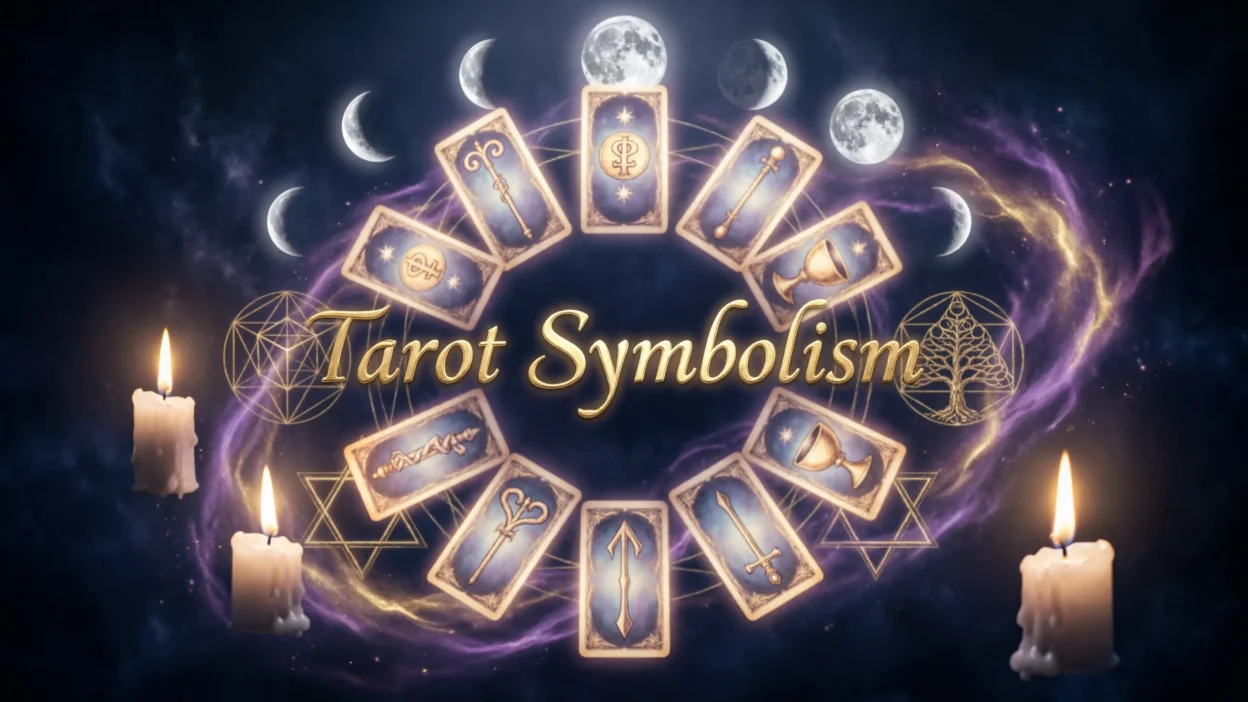
Tarot symbolism has fascinated spiritual seekers, artists, and mystics for centuries. Every tarot card contains layered symbols that reveal emotional truths, spiritual lessons, personal transformation, and deeper insight into human experiences.
From mysterious imagery and sacred archetypes to colors, numbers, and elemental signs, tarot symbolism creates a visual language designed to guide intuition and self-discovery.
Whether you are learning tarot meanings, exploring spiritual symbolism, or seeking personal clarity, understanding tarot symbolism can unlock profound wisdom hidden within the cards.
Tarot Symbolism Meaning (Clear Definition)
Tarot symbolism refers to the symbolic imagery, archetypes, colors, numbers, and spiritual elements found within tarot cards that represent life experiences, emotions, spiritual growth, and human consciousness.
Each tarot card tells a symbolic story. The Fool often represents new beginnings and innocence, while Death symbolizes transformation and renewal rather than physical endings. Symbols within tarot help readers interpret energy, challenges, opportunities, and inner emotions.
Common Tarot Symbols and Their Meanings
| Tarot Symbol | Symbolic Meaning |
|---|---|
| The Sun | Success, joy, enlightenment |
| The Moon | Illusion, intuition, mystery |
| The Star | Hope, healing, inspiration |
| The Tower | Sudden change, awakening |
| Water | Emotions, intuition, subconscious |
| Sword | Intellect, truth, conflict |
| Rose | Spiritual growth, purity |
| Wheel | Fate, cycles, destiny |
These symbolic elements combine to create deeper interpretations during tarot readings.
What Does Tarot Symbolism Represent?
Tarot symbolism represents the journey of human life, emotional evolution, spiritual awakening, and inner wisdom. Many people see tarot as a mirror reflecting subconscious thoughts and personal truths.
Tarot card symbolism commonly represents:
- Self-discovery and awareness
- Transformation and rebirth
- Emotional healing
- Spiritual lessons
- Life challenges and opportunities
- Balance between intuition and logic
- Destiny and personal growth
Through symbolic imagery, tarot encourages reflection and deeper understanding of life experiences.
Spiritual Meaning of Tarot Symbolism
The spiritual meaning of tarot symbolism centers on intuition, transformation, and soul guidance. Tarot is often viewed as a symbolic map of spiritual growth and inner awakening.
Many tarot symbols connect with universal spiritual concepts. Light symbolizes truth and clarity, while darkness often represents mystery, fear, or hidden emotions. The Major Arcana especially reflects the soul’s journey through life lessons and enlightenment.
Spiritual Interpretations of Tarot Symbols
- The Fool symbolizes spiritual beginnings and trust.
- The Hermit represents wisdom and inner reflection.
- The High Priestess symbolizes intuition and hidden knowledge.
- The Star reflects hope, divine guidance, and healing.
- The World represents completion and spiritual fulfillment.
Tarot symbolism encourages people to trust intuition and embrace personal transformation.
Biblical / Religious Meaning of Tarot Symbolism
The religious interpretation of tarot symbolism varies widely. Some spiritual traditions view tarot as symbolic storytelling and self-reflection, while others discourage divination practices.
Certain tarot symbols overlap with religious imagery found in Christianity, mysticism, and ancient spiritual traditions.
Religious Connections in Tarot Symbolism
- Angels symbolize protection and divine messages.
- Judgment imagery reflects resurrection and awakening.
- Light symbolizes truth and spiritual clarity.
- The Devil card often represents temptation or attachment.
- Crossroads symbolize moral and spiritual choices.
Historically, tarot imagery has been influenced by medieval religion, mythology, alchemy, and sacred symbolism.
Tarot Symbolism in History and Culture
Tarot symbolism originated in Europe during the 15th century as illustrated playing cards before evolving into spiritual and mystical tools.
Historical Development of Tarot Symbolism
Renaissance Europe
Early tarot decks featured symbolic artwork inspired by religion, philosophy, and social hierarchy.
Occult Traditions
Mystical groups later connected tarot symbolism with astrology, numerology, and esoteric teachings.
Modern Spiritual Culture
Today, tarot symbolism is widely used in spiritual practices, psychology, meditation, and creative inspiration.
Across cultures, tarot has become a symbolic system for understanding human emotions and spiritual journeys.
Tarot Symbolism in Literature and Art
Tarot symbolism has deeply influenced literature, film, visual arts, and modern storytelling. Writers and artists often use tarot imagery to represent fate, mystery, transformation, and archetypal characters.
In literature, tarot cards may foreshadow events or symbolize a character’s inner conflict. In visual art, tarot symbolism frequently appears through celestial imagery, sacred geometry, and mythological archetypes.
Artistic Themes Linked to Tarot Symbolism
- Transformation and rebirth
- Fate and destiny
- Light versus darkness
- Spiritual awakening
- Inner conflict
- Emotional healing
Modern fantasy novels, films, and digital art continue to draw inspiration from tarot card meanings and mystical symbolism.
Dream Meaning of Tarot Symbolism
Dreaming about tarot symbolism often reflects intuition, emotional insight, or a search for guidance during uncertain situations.
Common Tarot Dreams and Interpretations
| Dream Symbol | Possible Meaning |
|---|---|
| Drawing tarot cards | Seeking answers or clarity |
| Seeing The Tower | Sudden life changes |
| The Star appearing | Hope and healing |
| Shuffling cards | Confusion or decision-making |
| The Fool card | New beginnings and opportunities |
Tarot-related dreams may reveal subconscious emotions, spiritual lessons, or personal fears needing attention.
Modern Meaning of Tarot Symbolism
In modern culture, tarot symbolism has expanded beyond traditional readings into wellness, creativity, fashion, and personal development.
Today, people use tarot symbolism for:
- Self-reflection
- Spiritual exploration
- Meditation practices
- Emotional awareness
- Creative inspiration
- Relationship guidance
Social media and modern spirituality have made tarot symbolism more accessible to people seeking insight and personal growth.
Key Symbols in Tarot and Their Interpretations
Major Arcana
Represents major life lessons, spiritual growth, and transformative experiences.
Minor Arcana
Reflects everyday situations, emotions, and practical challenges.
Elements
Cups, swords, wands, and pentacles symbolize emotional, intellectual, spiritual, and material energies.
Numbers
Tarot numbers often symbolize cycles, progression, and personal development.
Colors
Different colors in tarot imagery represent emotions, energy, spirituality, and psychological states.
FAQs About Tarot Symbolism
What is tarot symbolism?
Tarot symbolism is the use of symbolic imagery and archetypes within tarot cards to represent emotions, spirituality, and life experiences.
Why is tarot symbolism important?
It helps people explore intuition, emotional patterns, personal growth, and spiritual understanding through symbolic interpretation.
Are tarot symbols spiritual?
Many people consider tarot symbols spiritual because they reflect inner wisdom, transformation, and universal archetypes.
What does The Fool symbolize in tarot?
The Fool symbolizes new beginnings, innocence, curiosity, and trust in life’s journey.
Can tarot symbolism appear in dreams?
Yes. Tarot symbols in dreams often reflect subconscious emotions, spiritual guidance, or personal transformation.
Conclusion
Tarot symbolism continues to captivate people because it combines art, spirituality, psychology, and storytelling into one powerful symbolic system.
From ancient archetypes to modern self-discovery practices, tarot symbols offer insight into emotions, destiny, and transformation. Whether used spiritually or reflectively, tarot symbolism remains a timeless language of intuition and personal growth.

Shan Waston is a skilled writer at Symboliy.com, producing clear, engaging content on language, communication, and everyday expressions to help readers understand meaning and usage confidently in modern digital contexts.