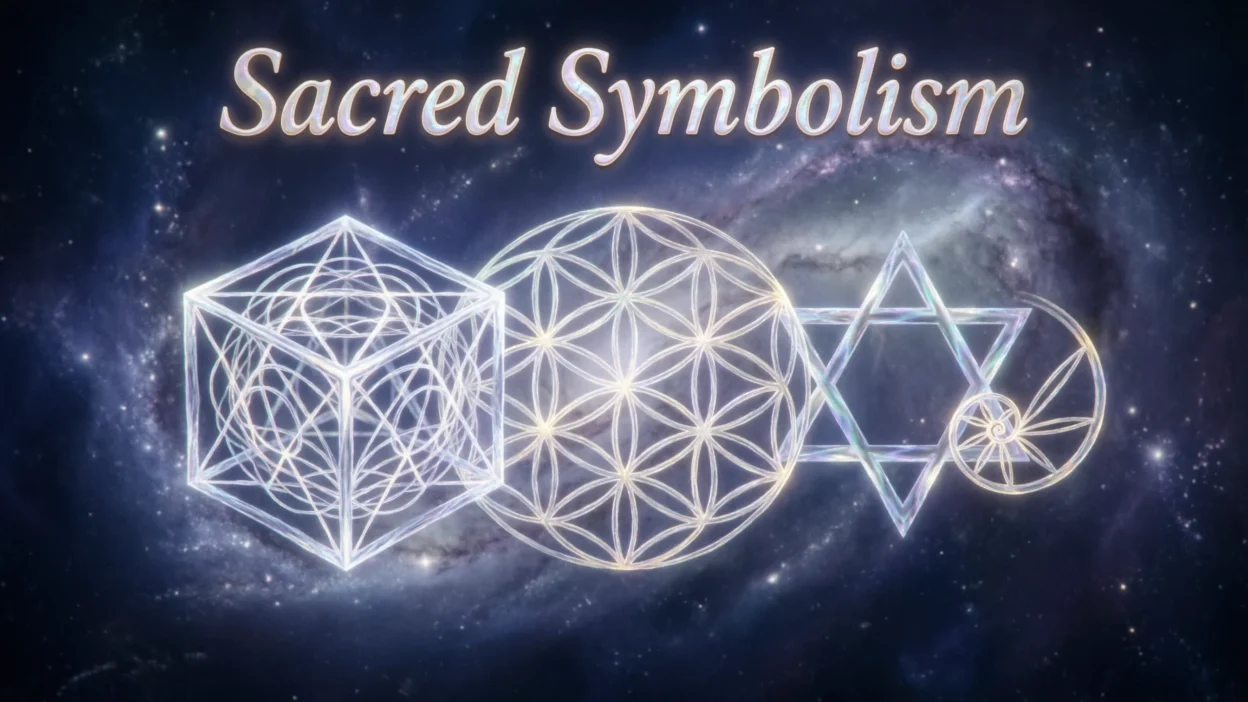
Sacred symbolism is a powerful way humans express spiritual truths, universal wisdom, and divine connections. From ancient carvings to modern spiritual practices, sacred symbolism carries layered meanings that go beyond words—offering insight into life, purpose, and the unseen forces that shape our reality.
Whether found in religious traditions, art, or personal beliefs, sacred symbolism helps people connect with something greater than themselves.
Sacred Symbolism Meaning (Clear Definition)
Sacred symbolism refers to symbols that hold spiritual, religious, or divine significance. These symbols are used to represent higher truths, cosmic principles, and the connection between the physical and spiritual worlds.
In simple terms, sacred symbols are visual representations of deeper spiritual meanings and universal truths.
What Does Sacred Symbolism Represent?
Sacred symbolism can represent many aspects of existence and spirituality, including:
- Divine Presence: Connection to a higher power or universal energy
- Unity and Balance: Harmony between mind, body, and spirit
- Creation and Life: The cycle of birth, death, and rebirth
- Protection: Spiritual safety and guidance
- Enlightenment: Awakening and higher consciousness
Common Sacred Symbol Meanings
| Symbol Type | Meaning |
|---|---|
| Circle | Unity, eternity, wholeness |
| Triangle | Balance, divine trinity, transformation |
| Light | Truth, awareness, spiritual awakening |
| Lotus | Purity, rebirth, enlightenment |
| Spiral | Growth, evolution, cosmic energy |
Spiritual Meaning of Sacred Symbolism
Spiritually, sacred symbolism acts as a bridge between the visible and invisible worlds.
These symbols often:
- Guide meditation and inner reflection
- Represent spiritual journeys and awakening
- Channel energy or intention
- Help individuals align with higher consciousness
Sacred symbols are not just images—they are tools for spiritual growth and self-discovery.
Biblical / Religious Meaning of Sacred Symbolism
In many religions, sacred symbolism plays a central role in conveying divine messages.
- In Christianity, symbols like the cross represent sacrifice, redemption, and faith
- In Islam, geometric patterns symbolize unity, infinity, and divine order
- In Hinduism and Buddhism, symbols like the lotus and mandala represent enlightenment and cosmic balance
Across religions, sacred symbolism serves as a visual language for spiritual teachings and beliefs.
Sacred Symbolism in History and Culture
Sacred symbols have been used throughout human history in nearly every culture:
- Ancient Egypt: Symbols like the ankh represented life and immortality
- Indigenous Cultures: Sacred patterns and totems connected people with nature and ancestors
- Eastern Traditions: Mandalas and yantras reflected the structure of the universe
- Medieval Europe: Religious art used symbolism to teach spiritual lessons
These symbols were often considered powerful and were treated with deep respect.
Sacred Symbolism in Literature and Art
In literature and art, sacred symbolism adds depth and meaning beyond the surface.
- Represents spiritual journeys and inner transformation
- Expresses abstract ideas like faith, truth, and destiny
- Enhances storytelling with hidden layers of meaning
Artists and writers use sacred symbols to communicate what words alone cannot.
Dream Meaning of Sacred Symbolism
Seeing sacred symbols in dreams often carries positive and insightful meanings:
- Guidance: You may be receiving spiritual direction
- Awakening: A sign of personal or spiritual growth
- Healing: Emotional or inner balance is developing
- Connection: A deeper link to your inner self or higher power
These dreams often leave a strong emotional impact and sense of clarity.
Modern Meaning of Sacred Symbolism
Today, sacred symbolism continues to evolve while maintaining its spiritual roots.
- Used in mindfulness and meditation practices
- Seen in tattoos representing personal beliefs and journeys
- Incorporated into design, fashion, and self-expression
- Represents personal spirituality beyond organized religion
Modern interpretations focus on personal meaning while still honoring ancient wisdom.
FAQs About Sacred Symbolism
What is sacred symbolism in simple terms?
It is the use of symbols to represent spiritual truths, divine ideas, or deeper meanings beyond the physical world.
Are sacred symbols the same in every culture?
No, but many share similar themes like unity, life, and spiritual growth across different cultures.
Can sacred symbols have personal meanings?
Yes, individuals often interpret sacred symbols based on their own beliefs and experiences.
Why are sacred symbols important?
They help express complex spiritual ideas and create a connection between humans and the divine.
Do sacred symbols have power?
Many believe they hold symbolic or energetic power, especially when used with intention or belief.
Conclusion
Sacred symbolism is a timeless language of the soul—connecting humanity to deeper truths, spiritual awareness, and universal meaning. Whether ancient or modern, these symbols continue to guide, inspire, and transform those who seek to understand them.

Shan Waston is a skilled writer at Symboliy.com, producing clear, engaging content on language, communication, and everyday expressions to help readers understand meaning and usage confidently in modern digital contexts.