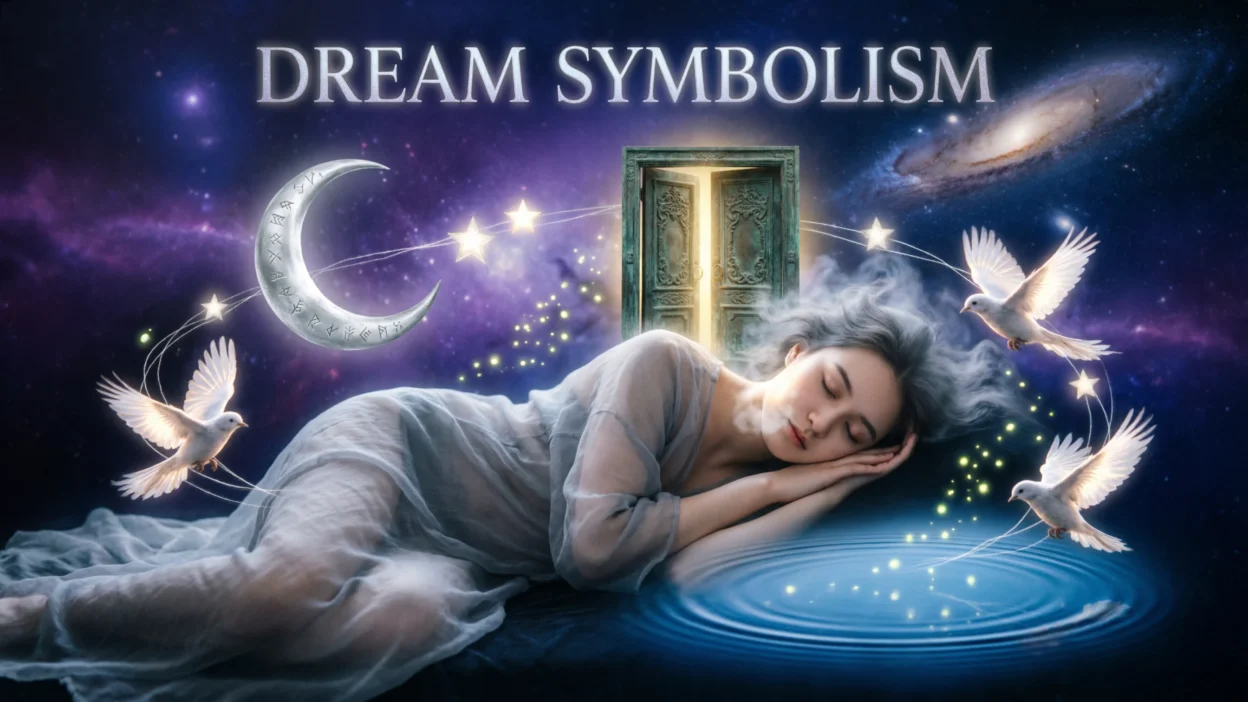
Dream symbolism has fascinated humanity for centuries because dreams often feel deeply personal, mysterious, and emotionally powerful.
Many people believe that symbols appearing in dreams carry hidden meanings connected to emotions, memories, fears, desires, or spiritual insight.
From flying and falling to water, animals, and light, dream symbolism helps people interpret the subconscious messages behind nighttime visions.
Understanding dream symbolism can offer clarity, emotional awareness, and a deeper connection to personal growth. Whether viewed psychologically, spiritually, or culturally, dreams continue to be one of the most intriguing parts of human experience.
Dream Symbolism Meaning (Clear Definition)
Dream symbolism refers to the use of symbols, images, people, places, or events in dreams that represent deeper emotional, psychological, or spiritual meanings rather than literal reality.
Quick Definition of Dream Symbolism
| Dream Symbol | Common Meaning |
|---|---|
| Water | Emotions and subconscious thoughts |
| Flying | Freedom, ambition, spiritual growth |
| Falling | Fear, insecurity, loss of control |
| Snakes | Transformation, fear, hidden wisdom |
| Light | Hope, truth, enlightenment |
| Death | Change, endings, new beginnings |
| Doors | Opportunities or transitions |
Dream symbolism often reflects inner thoughts, unresolved feelings, personal transformation, and subconscious communication.
What Does Dream Symbolism Represent?
Dream symbolism represents the hidden language of the subconscious mind. Dreams may reveal emotions, desires, fears, memories, and spiritual messages that are difficult to recognize during waking life.
Dream symbols commonly represent:
- Emotional struggles
- Personal growth
- Fear or anxiety
- Spiritual awakening
- Life transitions
- Healing and transformation
- Hidden desires or instincts
Because every individual has unique experiences, dream symbols can carry both universal and personal meanings.
Spiritual Meaning of Dream Symbolism
Spiritually, dream symbolism is often viewed as a bridge between the conscious and spiritual worlds. Many traditions believe dreams provide divine guidance, intuition, or insight into life’s deeper purpose.
Spiritual interpretations of dreams may involve:
- Messages from higher consciousness
- Inner healing and emotional release
- Warnings or guidance
- Awakening intuition
- Symbolic transformation
Certain symbols such as light, angels, sacred animals, or glowing colors are frequently connected with spiritual growth and enlightenment.
Common Spiritual Dream Symbols
| Symbol | Spiritual Interpretation |
|---|---|
| White light | Divine protection and peace |
| Birds | Freedom and spiritual elevation |
| Mountains | Challenges and spiritual strength |
| Fire | Purification and transformation |
| Stars | Hope, destiny, guidance |
Many people use meditation, journaling, or prayer to better understand spiritual dream symbolism.
Biblical / Religious Meaning of Dream Symbolism
Dreams play an important role in many religions and sacred traditions. In the Bible, dreams are often portrayed as messages, warnings, or visions carrying divine meaning.
Biblical Symbolism in Dreams
Common biblical dream themes include:
- Guidance from God
- Prophetic visions
- Spiritual testing
- Protection and wisdom
- Faith and transformation
Famous biblical figures such as Joseph and Daniel were known for interpreting dreams symbolically. Religious traditions across the world similarly view dreams as channels of spiritual insight.
In many faiths, dream symbolism is interpreted carefully, focusing on wisdom, discernment, and personal reflection.
Dream Symbolism in History and Culture
Dream symbolism has existed throughout human history across nearly every civilization. Ancient cultures believed dreams connected humans to gods, ancestors, or spiritual dimensions.
Historical and Cultural Perspectives
- Ancient Egypt — Dreams were considered divine messages
- Greek civilization — Dreams were linked with prophecy and healing
- Chinese traditions — Dreams reflected balance between spiritual energies
- Native traditions — Dreams guided personal and tribal decisions
- Medieval cultures — Dreams were often interpreted religiously
During the modern era, psychology expanded dream symbolism through theories about the subconscious mind and emotional processing.
Dream Symbolism in Literature and Art
Dream symbolism has long inspired writers, poets, filmmakers, and artists because dreams allow imagination to move beyond ordinary reality.
In Literature
Dream symbolism is often used to explore:
- Hidden fears
- Emotional conflict
- Destiny and prophecy
- Fantasy and surrealism
- Personal transformation
Classic and modern literature frequently use symbolic dreams to reveal deeper truths about characters and themes.
In Art
Artists use dream imagery to create:
- Surreal visual experiences
- Emotional symbolism
- Mystical atmospheres
- Psychological depth
Movements like surrealism especially embraced dream symbolism to explore the unconscious mind.
Dream Meaning of Dream Symbolism
Dreaming about symbols themselves may suggest that the subconscious is trying to communicate an important message. Repeating symbols often indicate unresolved emotions or ongoing personal growth.
Common Dream Symbol Interpretations
| Dream Experience | Possible Meaning |
|---|---|
| Repeating dreams | Unresolved emotions or lessons |
| Lucid dreams | Increased self-awareness |
| Nightmares | Anxiety, fear, emotional stress |
| Peaceful dreams | Emotional healing or balance |
| Unknown places | Exploration of the subconscious |
Dream interpretation is often most meaningful when connected to real-life emotions and experiences.
Modern Meaning of Dream Symbolism
Today, dream symbolism is commonly associated with psychology, self-discovery, spirituality, and emotional wellness. Many people analyze dreams to better understand stress, relationships, goals, and personal identity.
Modern interpretations focus on:
- Mental health awareness
- Emotional processing
- Creativity and inspiration
- Spiritual mindfulness
- Personal transformation
Dream journals, therapy practices, and mindfulness techniques have made dream interpretation increasingly popular in modern life.
Most Common Dream Symbols and Their Meanings
Frequently Seen Dream Symbols
- Water — Emotional depth and intuition
- Teeth falling out — Anxiety or insecurity
- Flying — Freedom and ambition
- Being chased — Avoidance or fear
- Snakes — Change, healing, or hidden fear
- Houses — Different parts of the self
- Mirrors — Self-reflection and identity
These symbols may vary in meaning depending on personal experiences and emotions.
FAQs About Dream Symbolism
What is dream symbolism?
Dream symbolism is the interpretation of symbols and images in dreams that represent deeper emotional, psychological, or spiritual meanings.
Why do dreams use symbols?
Dreams often communicate through symbols because the subconscious mind expresses emotions and ideas in imaginative, indirect ways.
Can dream symbolism predict the future?
Some spiritual traditions believe dreams can offer guidance or warnings, but most interpretations focus on emotional and symbolic meaning rather than literal prediction.
Are dream symbols universal?
Certain symbols appear across cultures, but personal experiences and emotions also shape individual dream meanings.
How can I better understand my dreams?
Keeping a dream journal, reflecting on emotions, and identifying repeating symbols can help reveal patterns and deeper meanings.
Conclusion
Dream symbolism remains one of the most powerful ways humans explore emotion, spirituality, and the subconscious mind.
Whether dreams reflect hidden fears, personal transformation, or spiritual insight, their symbols encourage deeper self-awareness and reflection.
By understanding dream symbolism, people can uncover meaningful connections between their inner world and everyday life.

Shan Waston is a skilled writer at Symboliy.com, producing clear, engaging content on language, communication, and everyday expressions to help readers understand meaning and usage confidently in modern digital contexts.