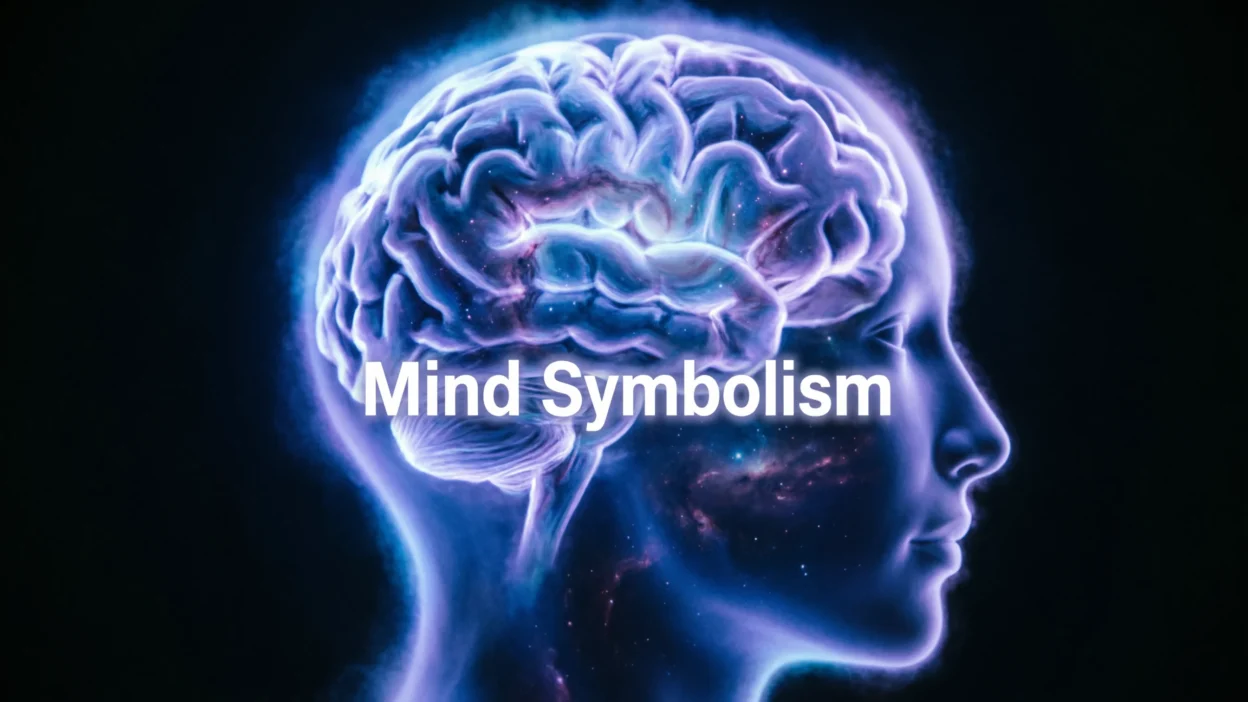
Mind symbolism goes beyond simple thinking—it represents awareness, perception, imagination, and the invisible force shaping our reality. From philosophy to spirituality, the mind is often seen as the control center of human experience.
Understanding mind symbolism can help you decode your thoughts, emotions, and the deeper patterns guiding your life.
Mind Symbolism Meaning (Clear Definition)
Mind symbolism refers to the representation of thought, consciousness, awareness, and mental processes. It reflects how we interpret the world and respond to it internally.
In symbolic terms, the mind stands for:
- Awareness and perception
- Thinking and reasoning
- Imagination and creativity
- Memory and knowledge
- Inner dialogue and self-reflection
At its essence, mind symbolism is about the unseen power behind every decision and belief.
What Does Mind Symbolism Represent?
Mind symbolism carries layered meanings depending on context. It often highlights the balance between logic, emotion, and awareness.
Key Representations of Mind Symbolism
- Consciousness – The mind symbolizes being aware and present.
- Perception of Reality – How we see and interpret the world.
- Inner Power – Thoughts that shape actions and outcomes.
- Imagination – The ability to create beyond physical limits.
- Mental Conflict – Struggles between different thoughts or beliefs.
Quick Symbolism Summary
| Symbol Aspect | Meaning |
|---|---|
| Awareness | Consciousness, presence |
| Thought | Logic, reasoning |
| Imagination | Creativity, vision |
| Control | Mental discipline, focus |
| Conflict | Doubt, overthinking |
Spiritual Meaning of Mind Symbolism
Spiritually, the mind is often seen as both a tool and a barrier.
It symbolizes:
- Higher awareness and enlightenment
- The bridge between ego and soul
- The power to transcend illusion
Many spiritual teachings suggest that mastering the mind leads to inner peace. A quiet, focused mind allows deeper connection with truth and consciousness.
Biblical / Religious Meaning of Mind Symbolism (if applicable)
In religious teachings, the mind is closely tied to wisdom, faith, and transformation.
Mind symbolism in this context includes:
- Renewal and transformation of thoughts
- Discernment between right and wrong
- Focus on spiritual truth over worldly distractions
The mind is often viewed as something to guide and discipline in order to align with higher principles.
Mind Symbolism in History and Culture
Across history, the mind has been interpreted in fascinating ways.
- Ancient Philosophy: Thinkers explored the mind as the source of knowledge and truth.
- Eastern Traditions: The mind is seen as something to master through meditation.
- Modern Psychology: The mind is studied as a system of thoughts, emotions, and behaviors.
Culturally, mind symbolism has evolved into a central concept for identity, intelligence, and self-awareness.
Mind Symbolism in Literature and Art
In literature and art, the mind is often portrayed as complex and mysterious.
Common symbolic themes include:
- Inner conflict and duality
- Stream of consciousness and thought flow
- Madness vs genius
- Dream-like imagination and altered reality
Artists use mind symbolism to explore identity, perception, and the limits of human understanding.
Dream Meaning of Mind Symbolism
Dreaming about the mind or mental activity can reveal important insights.
Common Interpretations
- Overthinking – Your mind may be overwhelmed or restless.
- Search for clarity – You need to better understand a situation.
- Self-awareness – A growing understanding of your inner world.
- Mental stress – Pressure or anxiety affecting your thoughts.
Such dreams often encourage reflection and mental balance.
Modern Meaning of Mind Symbolism
Today, mind symbolism is deeply connected to personal growth and mental health.
It reflects:
- Mindset and success
- Self-awareness and emotional intelligence
- Mental health and well-being
- Focus and productivity
In modern life, the mind symbolizes the idea that your thoughts shape your reality and future.
FAQs About Mind Symbolism
What does mind symbolism mean in simple terms?
Mind symbolism represents thinking, awareness, imagination, and the internal processes that shape how we experience life.
Is mind symbolism always positive?
Not always. It can represent clarity and creativity, but also confusion, overthinking, or mental conflict.
What does dreaming about the mind mean?
It often suggests deep thinking, self-reflection, or mental stress that needs attention.
How is mind symbolism different from brain symbolism?
Mind symbolism focuses on abstract thought and awareness, while brain symbolism relates more to the physical organ and logic.
Why is the mind important in symbolism?
Because it controls perception, beliefs, and decisions, making it central to understanding human behavior and consciousness.
Conclusion
Mind symbolism highlights the incredible power of thought, awareness, and perception. It reminds us that the way we think shapes how we live. By understanding the deeper meaning of the mind, you can gain clarity, improve focus, and create a more intentional life.

Mike Poop is a dedicated writer at Symboliy.com, creating clear, practical content about language, communication, and everyday expressions to help readers understand meaning and usage confidently in professional contexts worldwide.