
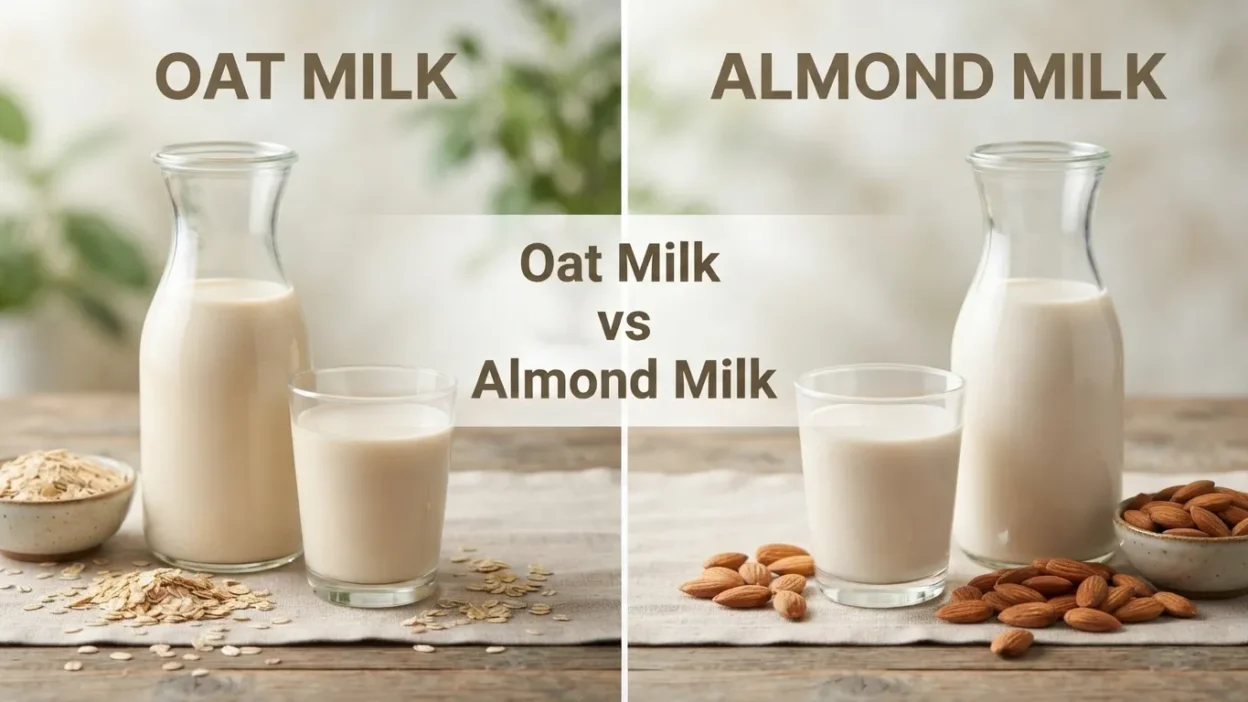
Choosing between oat milk and almond milk can feel confusing. Both are plant-based drinks, both can be used in coffee and cereal, and both are common alternatives to dairy milk. However, they are made from different ingredients and have different tastes, textures, and nutrition.
The easiest way to understand them is to look at where they come from and how they are used. Oat milk is made mainly from oats and water. Almond milk is made mainly from almonds and water. After that, the differences become easier to understand.
Your best choice depends on what you like, how you use it, and what nutrients you want from your drink.
Quick Answer:
Here is the simple difference:
- Oat milk is made from oats and water.
- Almond milk is made from almonds and water.
- Oat milk usually has a creamier and thicker texture.
- Almond milk is usually lighter and more watery.
- Oat milk often has a mild, slightly sweet taste.
- Almond milk usually has a light nutty taste.
- Unsweetened almond milk is often lower in calories and carbohydrates.
- Oat milk often provides more carbohydrates and can feel more filling.
- Both can be good choices for people who avoid dairy.
- Almond milk is not suitable for people with tree-nut allergies.
- For either drink, checking the package label is important because products can differ.
Where Do Oat Milk and Almond Milk Come From?
Oat milk and almond milk are both plant-based drinks, but they start with different foods.
Oat Milk
Oat milk is made using oats and water. The oats are mixed with water and processed to create a smooth liquid. The drink is then usually filtered and may contain added vitamins, minerals, oil, or other ingredients.
Oats have a natural mild flavor, so oat milk often tastes slightly sweet even when it does not contain much added sugar.
Because oats contain carbohydrates, oat milk commonly has more carbohydrates than unsweetened almond milk.
Almond Milk
Almond milk is made from almonds and water. The almonds are processed with water, and the mixture is filtered to make a smooth drink.
Almond milk usually has a light nutty flavor. Some products contain very little almond because the drink is mostly water, so the exact taste and nutrition can vary between brands.
Many almond milk products are fortified with nutrients such as calcium and vitamin D.
What Is the Main Difference?
The biggest difference is the ingredient used to make each drink.
Oat milk comes from oats, while almond milk comes from almonds.
This simple difference affects several things.
1. Taste
Oat milk usually has a mild, slightly sweet taste. It can taste more like a creamy drink.
Almond milk often has a light nutty flavor. Unsweetened versions may taste less sweet and lighter.
2. Texture
Oat milk is usually thicker and creamier. This makes it popular in coffee, smoothies, and recipes where a rich texture is wanted.
Almond milk is usually thinner. It works well in cereal, drinks, smoothies, and cooking when you do not need a thick texture.
3. Nutrition
Nutrition depends heavily on the product. Sweetened and flavored versions can contain more sugar, while unsweetened versions usually contain less.
Many commercial plant-based milks are also fortified with nutrients. For this reason, two products that look similar can have different nutrition labels.
4. Allergies
Almond milk contains almonds, which are tree nuts. People with tree-nut allergies should avoid almond milk unless a qualified medical professional has told them otherwise.
Oat milk does not contain almonds, but people with allergies or special dietary needs should still check the ingredient label because products can contain other ingredients or be made in facilities that handle allergens.
Oat Milk vs Almond Milk: Easy Comparison
| Feature | Oat Milk | Almond Milk |
|---|---|---|
| Main ingredient | Oats | Almonds |
| Taste | Mild and slightly sweet | Light and nutty |
| Texture | Usually creamy | Usually light and thin |
| Calories | Often higher | Often lower |
| Carbohydrates | Usually higher | Usually lower |
| Protein | Usually modest | Usually modest |
| Natural sugar | Small amount from ingredients | Usually very low |
| Added sugar | Depends on product | Depends on product |
| Calcium | Often added | Often added |
| Vitamin D | Often added | Often added |
| Dairy-free | Yes | Yes |
| Vegan | Usually yes | Usually yes |
| Tree-nut allergy friendly | Generally, but check label | No |
| Good for coffee | Very good | Good |
| Good for cereal | Very good | Very good |
| Creaminess | Higher | Lower |
Important: This table describes common differences, not every product. Always check the nutrition and ingredient labels because recipes vary.
Which One Should You Use and When?
There is no single winner for everyone. The better choice depends on what you want.
Choose Oat Milk When You Want:
- A creamy drink
- A richer texture in coffee
- A mild and slightly sweet flavor
- A plant-based option for cereal
- A thicker smoothie
- A milk substitute for recipes that need a creamy texture
Oat milk is especially popular in coffee because its creamy texture blends well with espresso and other coffee drinks.
Choose Almond Milk When You Want:
- A lighter drink
- Fewer calories from an unsweetened option
- A mild nutty flavor
- A thinner texture
- A plant-based drink for cereal
- A simple base for smoothies
Unsweetened almond milk can be useful when you want a low-calorie drink, but it may not provide as much carbohydrate or energy as oat milk.
What About Protein?
Neither oat milk nor regular almond milk is usually a major source of protein. If protein is important to you, look for a product specifically labeled as high-protein and compare the nutrition labels.
Do not assume that every plant-based milk has the same amount of protein.
Common Mistakes People Make
Mistake 1: Thinking All Plant Milks Are the Same
They are not. Oat, almond, soy, coconut, and other plant-based drinks have different ingredients and nutrition.
Mistake 2: Ignoring Added Sugar
A flavored or sweetened product may contain more sugar than an unsweetened version.
If you want less sugar, look for the words “unsweetened” on the package and check the nutrition label.
Mistake 3: Assuming “Healthy” Means the Same Thing for Everyone
A food can be a good choice for one person and less suitable for another. Your needs, allergies, diet, and taste preferences all matter.
Mistake 4: Not Checking the Label
Two oat milk products can have different amounts of calories, sugar, protein, fat, and added nutrients.
The front of the package does not tell the whole story. Check the ingredient list and nutrition facts.
Mistake 5: Choosing Only by Calories
Calories are only one part of nutrition. You should also consider protein, carbohydrates, added sugar, vitamins, minerals, and how the drink fits into your overall diet.
Everyday Real-Life Examples
Understanding the difference becomes easier when you see how people use these drinks every day.
Example 1: Morning Coffee
Imagine you make coffee before school or work.
You add oat milk and notice that the coffee becomes creamy and smooth. If you prefer a richer coffee, oat milk may be a good choice.
If you use almond milk, the coffee may feel lighter and have a mild nutty taste.
Example 2: Breakfast Cereal
You pour cereal into a bowl and add milk.
Both options can work. Almond milk gives you a lighter bowl, while oat milk can make the cereal taste creamier.
Example 3: A Smoothie
You are making a banana and berry smoothie.
Oat milk can make the smoothie thicker and creamier. Almond milk can give you a lighter texture.
Neither choice is automatically better. It depends on the texture and taste you want.
Example 4: Reading a News Article
You might see a sentence such as:
“Oat milk has become a popular dairy-free choice.”
This means oat milk is being used instead of traditional dairy milk. It does not mean oat milk and dairy milk have exactly the same nutrition.
Example 5: Social Media
A social media post might say:
“Almond milk is healthier than oat milk.”
That statement is too simple. The answer depends on the specific products and what “healthier” means for the person.
For example, someone may care about calories, while another person may care more about carbohydrates, protein, taste, or allergies.
Example 6: Reading an Email
Suppose a school or workplace email says:
“Please bring a dairy-free milk option.”
Both oat milk and almond milk may fit that request because they are normally dairy-free. However, you should check the product label if there are allergy concerns.
A Short Learning Section for Students and Beginners
If you are learning English, remember this simple sentence:
Oat milk is made from oats. Almond milk is made from almonds.
You can also learn these useful words:
- Oat — a grain used to make foods and drinks.
- Almond — a type of tree nut.
- Plant-based — made mainly from plants.
- Dairy-free — does not contain milk from animals.
- Unsweetened — no sugar has been added.
- Creamy — smooth and rich in texture.
- Nutty — having a taste similar to nuts.
- Nutrition — the food value a food or drink provides.
- Fortified — nutrients have been added to a food or drink.
A simple memory trick can help:
Oat = creamy and oat-based.
Almond = light and nut-based.
When comparing food products, also remember to ask three questions:
- What is it made from?
- What does the nutrition label say?
- Does it fit my needs and preferences?
These questions can help you make better choices without becoming confused by product advertisements or popular opinions.
Frequently Asked Questions
1. Is oat milk better than almond milk?
Not necessarily. Both can be useful choices. Oat milk is usually creamier and higher in carbohydrates, while unsweetened almond milk is often lighter and lower in calories.
2. Which tastes sweeter, oat milk or almond milk?
Oat milk often tastes naturally sweeter because of the way oats contribute to its flavor. However, sweetened products can contain added sugar, so check the label.
3. Which is creamier?
Oat milk is usually creamier and thicker than almond milk. This is one reason many people like it in coffee.
4. Is almond milk dairy-free?
Yes. Almond milk is made from almonds and water rather than animal milk. However, people with tree-nut allergies should avoid it.
5. Is oat milk dairy-free?
Yes. Oat milk is normally made from oats and water rather than dairy milk. People with certain allergies or dietary restrictions should still read the product label.
6. Which is better for coffee?
Oat milk is often preferred when someone wants a creamy coffee. Almond milk can also work well if you prefer a lighter drink with a mild nutty flavor.
7. Can I use oat milk and almond milk in cooking?
Yes. Both can be used in many recipes. Oat milk may work better when you want a creamy result, while almond milk can be useful when you want a lighter texture.
8. Which one should I buy?
Choose the one that matches your taste, dietary needs, and nutrition goals. If you want fewer calories, compare unsweetened products. If you want creaminess, oat milk may be more appealing. Always check the label before buying.
Conclusion
Oat milk and almond milk are both popular plant-based alternatives to dairy milk, but they are not the same.
Oat milk is made from oats and is usually creamy, mild, and slightly sweet. Almond milk is made from almonds and is usually lighter with a mild nutty taste. Unsweetened almond milk often has fewer calories and carbohydrates, while oat milk commonly provides more carbohydrates and a richer texture.
The best choice depends on what you want from your drink. For creamy coffee and a thicker texture, oat milk may be a better fit. For a light drink with an unsweetened option, almond milk may be appealing.
Most importantly, do not judge a product only by its name. Check the nutrition facts, ingredients, added sugar, and allergy information. Once you understand these simple differences, choosing between oat milk and almond milk becomes much easier.