Many English learners struggle with boys or boy’s because the only visible difference is an apostrophe.
However, that small punctuation mark completely changes the meaning of the word. Knowing when to use boys and boy’s correctly is essential for clear, grammatically correct writing.
In this guide, you’ll learn the difference between boys or boy’s, their meanings, practical examples, common mistakes, and a simple memory trick. By the end, you’ll know exactly when to use each form with confidence.
Quick Answer
The difference between boys and boy’s is simple:
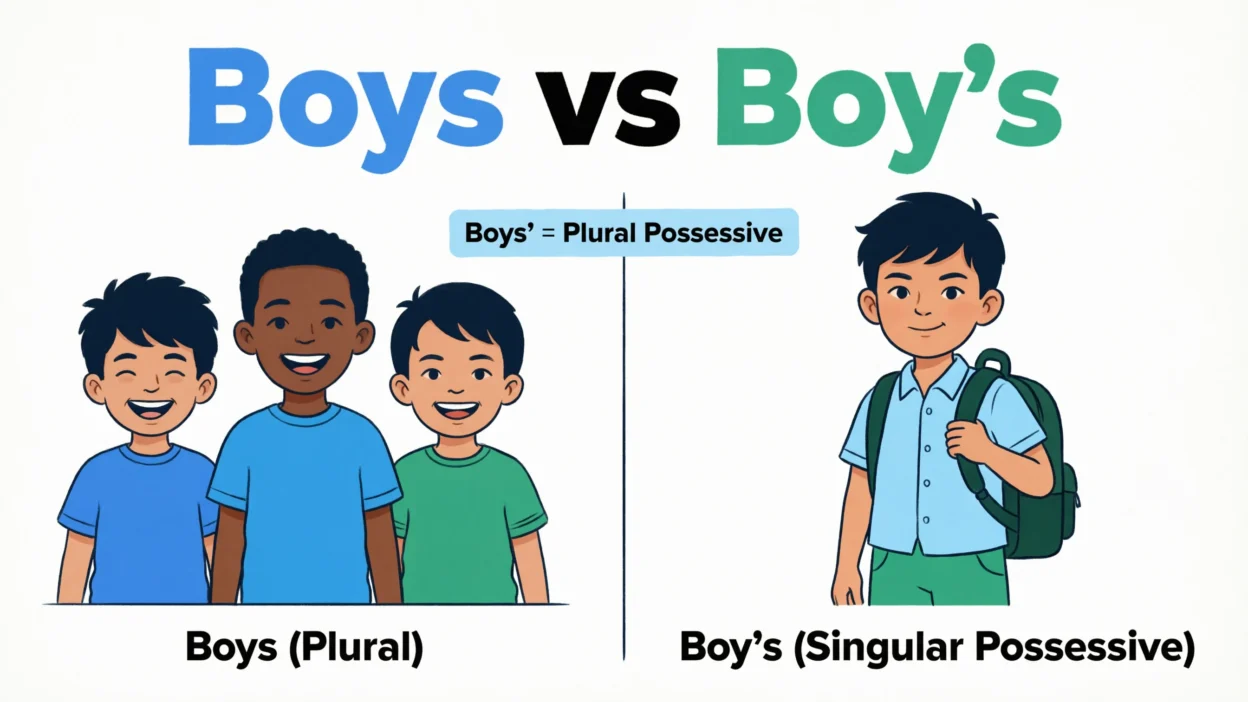
- Boys is the plural form of boy, meaning more than one boy.
- Boy’s is the singular possessive form, meaning something belongs to one boy.
Examples:
- ✅ The boys are playing soccer.
- ✅ The boy’s backpack is on the chair.
- ❌ The boys backpack is on the chair.
- ❌ The boy’s are playing soccer.
What Does “Boys” Mean?
Boys is the plural noun of boy. It simply refers to two or more boys.
There is no ownership or possession involved.
Examples
- The boys are waiting outside.
- Three boys volunteered for the project.
- The boys laughed at the joke.
- Those boys play basketball every weekend.
In each sentence, boys refers to more than one boy.
When to Use Boys
Use boys when:
- Talking about two or more boys.
- No ownership is being shown.
- The word simply names a group.
LSI Keywords:
- plural of boy
- boys meaning
- plural noun
- multiple boys
- English plurals
What Does “Boy’s” Mean?
Boy’s is the singular possessive form of boy.
It shows that one boy owns or is associated with something.
Examples
- The boy’s bicycle is new.
- I found the boy’s notebook.
- The boy’s jacket is hanging by the door.
- Everyone admired the boy’s artwork.
Here, the apostrophe shows ownership.
When to Use Boy’s
Choose boy’s when referring to:
- Something owned by one boy.
- Something connected to one boy.
- Singular possession.
Related Keywords:
- singular possessive
- apostrophe rules
- possessive noun
- boy’s meaning
- grammar punctuation
Boys vs Boy’s: Comparison Table
| Feature | Boys | Boy’s |
|---|---|---|
| Part of Speech | Plural noun | Singular possessive noun |
| Meaning | More than one boy | Belonging to one boy |
| Apostrophe | No | Yes |
| Shows Ownership? | No | Yes |
| Example | The boys are singing. | The boy’s shoes are dirty. |
Easy Examples to Remember
Boys
- The boys are swimming.
- Five boys joined the team.
- The boys finished their homework.
- Those boys live next door.
Boy’s
- The boy’s phone rang.
- The boy’s lunch is on the table.
- The boy’s toy broke yesterday.
- I borrowed the boy’s pencil.
Common Mistakes People Make
Many writers misuse the apostrophe.
Mistake 1
❌ The boy’s are playing outside.
✅ The boys are playing outside.
The sentence is plural, not possessive.
Mistake 2
❌ The boys backpack is missing.
✅ The boy’s backpack is missing.
One boy owns the backpack.
Mistake 3
❌ Those boy’s are noisy.
✅ Those boys are noisy.
No ownership means no apostrophe.
Mistake 4
❌ The boys bicycle is red.
✅ The boy’s bicycle is red.
The bicycle belongs to one boy.
Memory Trick
Here’s an easy way to remember the difference:
- Boys = More than one boy.
- Boy’s = One boy owns something.
A simple question helps:
Can you replace the phrase with “belongs to the boy”?
- If yes, use boy’s.
- If no, use boys.
Boys or Boy’s in Everyday Writing
At School
- The boys won the spelling competition.
- The boy’s homework earned full marks.
At Home
- The boys cleaned their room.
- The boy’s shoes are by the front door.
In Sports
- The boys celebrated their victory.
- The boy’s helmet needs replacing.
In Everyday Conversations
- The boys are waiting for the bus.
- The boy’s mother is here.
American vs British English
There is no difference between American English and British English in the grammar rules for boys and boy’s.
In both varieties:
- Boys is the plural noun.
- Boy’s is the singular possessive form.
The apostrophe rules are exactly the same.
What About “Boys'”?
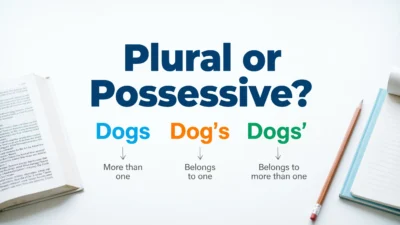
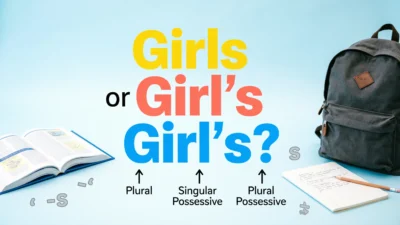
Many learners also ask about boys’, which is different from both boys and boy’s.
- Boy’s = Something belongs to one boy.
- Boys’ = Something belongs to more than one boy.
- Boys = Simply more than one boy, with no possession.
Examples
- The boy’s backpack is blue. (One boy)
- The boys’ locker room is downstairs. (Several boys)
- The boys are practicing football. (Plural only)
Understanding all three forms helps you avoid apostrophe mistakes.
Why Choosing the Right Word Matters
Using the correct form makes your writing clearer and grammatically correct.
For example:
Incorrect:
The boy’s are playing football.
Correct:
The boys are playing football.
Or:
Incorrect:
The boys bicycle was stolen.
Correct:
The boy’s bicycle was stolen.
A correctly placed apostrophe immediately shows whether you’re talking about ownership or simply more than one boy.
Related Grammar Terms
Learning these grammar concepts can also help:
- Singular nouns
- Plural nouns
- Possessive nouns
- Apostrophe rules
- Singular possessive
- Plural possessive
- English punctuation
Frequently Asked Questions
1. What is the difference between boys and boy’s?
Boys is the plural form of boy, while boy’s shows that something belongs to one boy.
2. Is “boys” plural?
Yes. Boys means two or more boys.
3. Is “boy’s” possessive?
Yes. It indicates ownership by one boy.
4. Which is correct: “boys school” or “boy’s school”?
It depends on the meaning. If referring to a school for boys in general, the common form is boys’ school, showing possession by multiple boys.
5. When should I use an apostrophe with boy?
Use an apostrophe only when showing possession.
Example:
- The boy’s backpack.
6. What does “boys'” mean?
Boys’ is the plural possessive form, meaning something belongs to multiple boys.
7. Is there any difference between American and British English?
No. Both American and British English follow the same rules for boys, boy’s, and boys’.
Summary
Understanding boys or boy’s becomes easy once you know what the apostrophe does. Boys is simply the plural form of boy, referring to more than one boy without showing ownership. Boy’s, however, is the singular possessive form and indicates that something belongs to one boy. It’s also helpful to remember boys’, which shows possession by more than one boy.
Whenever you’re unsure, ask yourself whether you’re talking about ownership. If not, use boys. If something belongs to one boy, use boy’s. If it belongs to several boys, use boys’. Mastering these simple apostrophe rules will make your writing more accurate and professional.
Actionable Takeaway
Remember this easy rule: “No ownership, no apostrophe.” Use boys for a group of boys, boy’s for one boy’s possession, and boys’ when something belongs to multiple boys.

Here is a professional 30-word author biography including your site name Symboliy.com:
Martin Hood is a professional writer at Symboliy.com, creating clear, informative content focused on language, communication, and meaningful expressions for everyday and professional use.