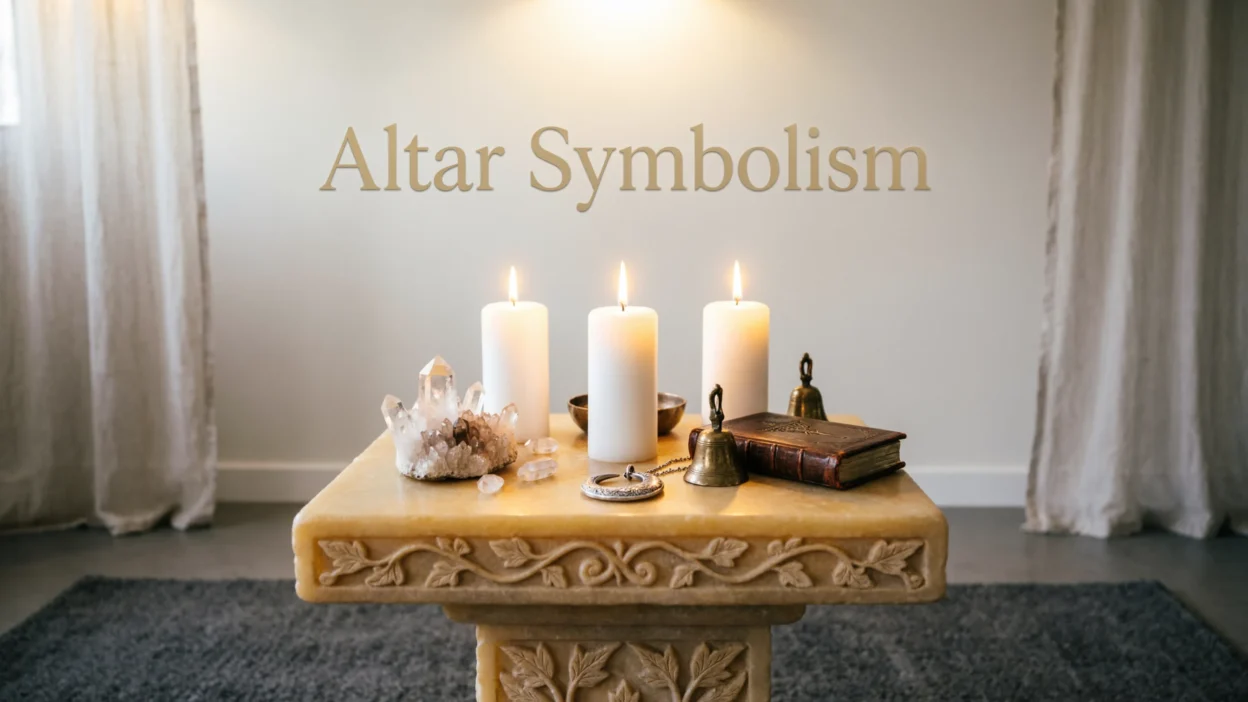
Altar symbolism represents one of the most profound expressions of human connection with the divine. Across cultures and religions, altars serve as sacred spaces where offerings, prayers, and rituals take place.
Understanding altar symbolism reveals how these structures embody devotion, sacrifice, transformation, and spiritual focus in both ancient traditions and modern life.
Altar Symbolism Meaning (Clear Definition)
Altar symbolism refers to the deeper spiritual and cultural meanings associated with altars as sacred places of offering, worship, and divine connection.
At its core, altar symbolism represents:
- A meeting point between the human and the divine
- Sacrifice and surrender
- Sacred intention and ritual practice
- A space for transformation and renewal
Altars are not just physical structures—they symbolize intention, reverence, and spiritual presence.
What Does Altar Symbolism Represent?
Altar symbolism carries rich meanings that reflect both personal and collective spirituality.
Key Representations:
- Sacrifice: Offering something valuable as a sign of devotion
- Connection: Bridging the earthly and the divine
- Focus: A dedicated space for prayer and intention
- Transformation: Letting go of the old to welcome the new
- Reverence: Honoring higher powers or sacred beliefs
Summary Table of Symbolic Meanings
| Element | Symbolic Meaning |
|---|---|
| Fire/Candles | Divine presence and illumination |
| Offerings | Sacrifice and gratitude |
| Stone/Wood Base | Stability and grounding |
| Sacred Objects | Spiritual focus and intention |
| Elevated Surface | Rising toward the divine |
Spiritual Meaning of Altar Symbolism
Spiritually, altar symbolism reflects inner transformation and sacred awareness.
It represents:
- Surrender: Letting go of ego and control
- Devotion: A consistent commitment to spiritual practice
- Energy focus: A place where intentions are concentrated
- Inner change: A symbolic space for renewal and healing
Creating or visiting an altar often brings a sense of calm, grounding, and spiritual clarity.
Biblical / Religious Meaning of Altar Symbolism
Altars hold deep significance across many religious traditions, especially in biblical contexts.
In Biblical Tradition:
- Altars were used for sacrifices and offerings to God
- They symbolized covenants and divine encounters
- Figures like Abraham and Noah built altars to honor God
In Other Religions:
- In Christianity, altars represent communion and remembrance
- In Hinduism and Buddhism, altars serve as spaces for offerings and meditation
- Across traditions, they symbolize devotion, respect, and sacred interaction
Altar Symbolism in History and Culture
Historically, altar symbolism has played a central role in rituals and community life.
- Ancient civilizations used altars for sacrifices and ceremonies
- Medieval churches placed altars at the center of worship
- Cultural traditions adapted altars for festivals, ancestors, and daily rituals
Altars have functioned as:
- Spiritual centers
- Cultural symbols
- Ritual focal points
Their design and use vary widely, but their symbolic purpose remains consistent.
Altar Symbolism in Literature and Art
In literature and art, altar symbolism often represents deep emotional and spiritual themes.
Common Interpretations:
- Sacrifice: Characters giving up something meaningful
- Transformation: Moments of change or rebirth
- Devotion: Loyalty to a cause, belief, or love
- Conflict: Inner struggles between desire and duty
Artists frequently depict altars to express sacredness, intensity, and spiritual depth.
Dream Meaning of Altar Symbolism
Seeing altar symbolism in dreams can carry powerful personal messages.
Possible Interpretations:
- Praying at an altar: Seeking guidance or clarity
- Building an altar: Creating space for new intentions
- Broken altar: Loss of faith or inner conflict
- Offering something: Letting go or making an important decision
Such dreams often reflect emotional transitions or spiritual awakening.
Modern Meaning of Altar Symbolism
Today, altar symbolism has expanded beyond traditional religion.
In Modern Life:
- Personal altars: Used for mindfulness, meditation, and intention-setting
- Home decor: Symbolizing peace and spiritual identity
- Wellness practices: Supporting emotional healing and focus
- Cultural expression: Reflecting heritage and personal beliefs
Modern altars are often deeply personal, blending tradition with individual meaning.
FAQs About Altar Symbolism
What does altar symbolism mean?
It represents a sacred space for offering, devotion, and connection with the divine or higher purpose.
Why are altars important in spirituality?
They provide a focused place for rituals, prayer, and intention, helping deepen spiritual awareness.
What does an altar symbolize in dreams?
It often symbolizes transformation, sacrifice, or a need for guidance and reflection.
Are altars only religious?
No, many people use personal altars for meditation, mindfulness, and emotional healing.
What is the purpose of an altar?
Its purpose is to create a dedicated space for spiritual focus, offerings, and connection.
Conclusion
Altar symbolism reflects humanity’s timeless desire to connect, offer, and transform. Whether in ancient rituals or modern personal practices, altars remain powerful symbols of devotion, intention, and spiritual growth.

Mike Poop is a dedicated writer at Symboliy.com, creating clear, practical content about language, communication, and everyday expressions to help readers understand meaning and usage confidently in professional contexts worldwide.