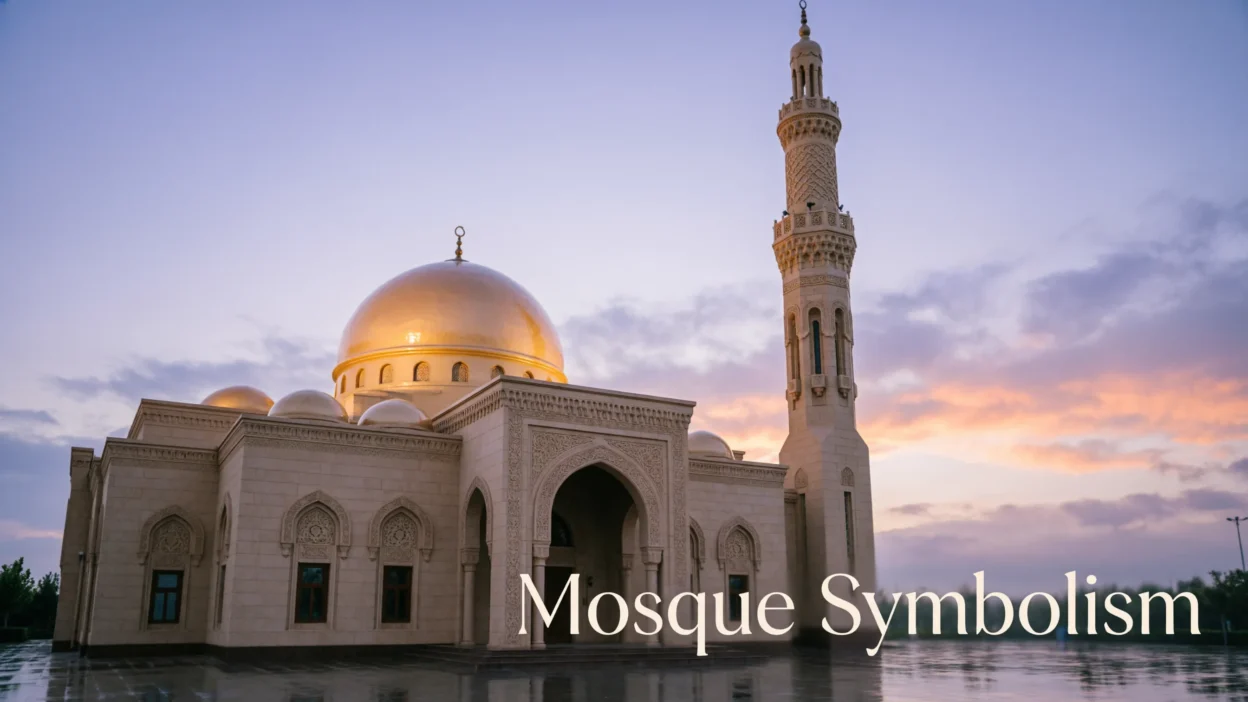
Mosque symbolism goes far beyond architecture—it reflects faith, unity, peace, and a deep connection between humanity and the divine.
Across cultures and centuries, mosques have stood not only as places of worship but also as powerful symbols of spiritual discipline, community harmony, and sacred space.
Understanding mosque symbolism helps reveal how physical structures can embody profound inner beliefs and shared values.
Mosque Symbolism Meaning (Clear Definition)
Mosque symbolism refers to the spiritual, cultural, and emotional meanings associated with mosques as sacred Islamic spaces.
At its core, mosque symbolism represents:
- Devotion to God
- Unity of the Muslim community (Ummah)
- Spiritual purity and discipline
- A place for reflection, prayer, and guidance
Mosques are designed to direct attention toward the divine, emphasizing simplicity, humility, and order.
What Does Mosque Symbolism Represent?
Mosque symbolism carries layered meanings that resonate both spiritually and socially.
Key Representations:
- Unity and Equality: Worshippers stand shoulder-to-shoulder, symbolizing equality before God.
- Direction and Purpose: The prayer direction (Qibla) reflects focus and spiritual alignment.
- Peace and Serenity: The calm atmosphere promotes inner tranquility.
- Sacred Space: A separation from worldly distractions into a place of devotion.
Summary Table of Symbolic Meanings
| Element | Symbolic Meaning |
|---|---|
| Dome | Vastness of heaven |
| Minaret | Call to spiritual awareness |
| Prayer Hall | Unity and collective worship |
| Mihrab | Direction and divine focus |
| Ablution Area | Purification and readiness |
Spiritual Meaning of Mosque Symbolism
Spiritually, mosque symbolism reflects the journey of the soul toward divine connection.
It represents:
- Inner purification: Just as worshippers cleanse themselves physically, they seek spiritual cleansing.
- Surrender to God: Bowing and prostration symbolize humility and submission.
- Divine presence: A reminder that God is always near.
For many, entering a mosque feels like stepping into a space where time slows and the heart becomes more aware.
Biblical / Religious Meaning of Mosque Symbolism
While mosques are central to Islam, their symbolism aligns with broader religious themes found across traditions.
In Islamic Context:
- Mosques are considered houses of God (Bayt Allah)
- They serve as centers for prayer, learning, and community life
- The emphasis is on monotheism, discipline, and remembrance of God (Dhikr)
Cross-Religious Parallels:
- Like churches and temples, mosques symbolize sacred gathering spaces
- They reflect humanity’s universal need for connection with the divine
Mosque Symbolism in History and Culture
Historically, mosque symbolism has evolved alongside Islamic civilization.
- Early mosques were simple, emphasizing humility and function
- Golden Age architecture introduced intricate geometric patterns symbolizing infinity and divine order
- Cultural variations reflect local traditions while preserving core spiritual meanings
Mosques have also served as:
- Educational centers
- Community hubs
- Symbols of cultural identity and resilience
Mosque Symbolism in Literature and Art
In literature and art, mosque symbolism often represents peace, introspection, and spiritual awakening.
Common Themes:
- Sanctuary: A refuge from chaos
- Divine beauty: Expressed through calligraphy and geometric art
- Journey: Characters often experience transformation within mosque settings
Artists frequently use mosque imagery to convey harmony, balance, and sacred geometry.
Dream Meaning of Mosque Symbolism
Seeing mosque symbolism in dreams often carries positive and reflective meanings.
Possible Interpretations:
- Entering a mosque: Seeking guidance or spiritual clarity
- Praying in a mosque: Inner peace and alignment
- Empty mosque: A call for self-reflection or reconnection with faith
- Hearing the call to prayer: Awakening or important realization
Dreams involving mosques often encourage mindfulness and spiritual awareness.
Modern Meaning of Mosque Symbolism
Today, mosque symbolism continues to evolve while maintaining its core essence.
In Modern Context:
- Community and belonging: Mosques bring people together in diverse societies
- Cultural identity: They represent heritage and continuity
- Interfaith dialogue: Increasingly seen as bridges between cultures
- Peace and resilience: Symbols of hope in challenging times
Modern mosques blend traditional symbolism with contemporary design, reflecting both past and future.
FAQs About Mosque Symbolism
What is the main meaning of mosque symbolism?
Mosque symbolism primarily represents devotion, unity, and a sacred connection between humans and God.
Why are mosques considered symbolic spaces?
They are designed to reflect spiritual values like purity, focus, and humility, making them deeply meaningful beyond their physical structure.
What does a mosque symbolize in dreams?
It often symbolizes guidance, peace, spiritual awakening, or a need for reflection.
How does mosque architecture reflect symbolism?
Elements like domes, minarets, and geometric patterns represent divine order, infinity, and spiritual elevation.
Is mosque symbolism relevant today?
Yes, it continues to symbolize community, faith, identity, and peaceful coexistence in modern societies.
Conclusion
Mosque symbolism beautifully merges physical space with spiritual meaning. It reflects unity, devotion, and the timeless human search for peace and divine connection.
Whether experienced in reality, art, or dreams, the symbolism of a mosque continues to inspire reflection, humility, and harmony.

Here is a professional 30-word author biography including your site name Symboliy.com:
Martin Hood is a professional writer at Symboliy.com, creating clear, informative content focused on language, communication, and meaningful expressions for everyday and professional use.