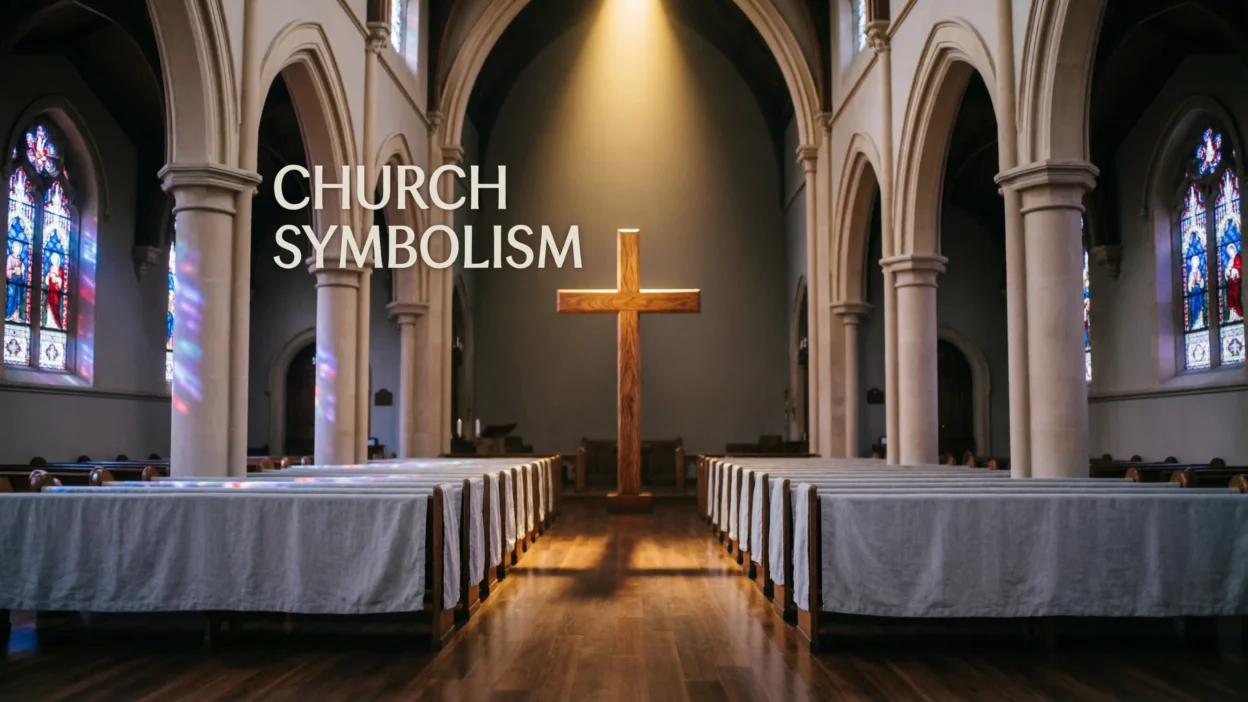
Church symbolism plays a powerful role in expressing faith, belief, and the presence of the divine. From architecture to rituals, church symbolism helps people understand spiritual truths through visual and physical forms.
These symbols are not just decorative—they carry deep meanings that connect worshippers to tradition, community, and a higher purpose.
Church Symbolism Meaning (Clear Definition)
Church symbolism refers to the use of sacred signs, images, structures, and rituals within a church to represent spiritual ideas, religious beliefs, and divine truths.
In simple terms, it is a visual and symbolic language used to communicate faith and connect people with God.
What Does Church Symbolism Represent?
Church symbolism represents key elements of Christian belief and spiritual life. These include:
- Faith and devotion
- Sacrifice and salvation
- Hope and resurrection
- Divine presence
- Community and unity
- Guidance and protection
Common Church Symbols and Their Meanings
| Symbol | Meaning |
|---|---|
| Cross | Sacrifice, salvation |
| Altar | Worship, offering |
| Candle | Light of Christ, hope |
| Bread and Wine | Body and blood, communion |
| Bell | Call to worship, divine presence |
| Dove | Peace, Holy Spirit |
Spiritual Meaning of Church Symbolism
Spiritually, church symbolism helps believers deepen their connection with the divine. It creates an atmosphere where people can reflect, pray, and feel spiritually uplifted.
Each symbol acts as a reminder of spiritual truths, encouraging:
- Inner peace and reflection
- Strength in times of difficulty
- A sense of belonging and purpose
- Connection to something greater than oneself
Church symbols often guide individuals on their spiritual journey, offering comfort and clarity.
Biblical / Religious Meaning of Church Symbolism
In Christianity, church symbolism is deeply rooted in biblical teachings.
- The cross represents the sacrifice and resurrection of Jesus Christ.
- Bread and wine symbolize the Last Supper and the covenant between God and humanity.
- Light represents God’s presence and truth.
These symbols are used in worship, sacraments, and teachings to help believers understand complex spiritual ideas in a meaningful way.
Church Symbolism in History and Culture
Church symbolism has evolved over centuries, shaping religious architecture, traditions, and cultural identity.
Medieval churches, for example, were designed with symbolic layouts—such as the shape of a cross—to reflect theological beliefs. Stained glass windows told biblical stories through imagery, making them accessible even to those who could not read.
Across cultures, church symbolism blends with local traditions, creating unique expressions of faith while preserving core spiritual meanings.
Church Symbolism in Literature and Art
Church symbolism has been a central theme in literature and art for centuries.
- In literature, churches often symbolize refuge, morality, or divine judgment.
- In art, religious symbols are used to depict spiritual narratives and inspire devotion.
From paintings to poetry, these symbols help convey complex ideas about faith, redemption, and the human experience.
Dream Meaning of Church Symbolism
Dreaming of church symbolism can carry deep personal and spiritual meaning. It often suggests:
- A need for guidance or clarity
- Spiritual awakening or renewal
- Seeking forgiveness or peace
- A desire for connection and belonging
The emotional tone of the dream plays a key role in understanding its message.
Modern Meaning of Church Symbolism
Today, church symbolism continues to hold relevance, even beyond traditional religious settings.
People connect with these symbols through:
- Personal spirituality and reflection
- Art, tattoos, and jewelry
- Cultural traditions and ceremonies
- Meditation and mindfulness practices
Modern interpretations often make church symbolism more personal, allowing individuals to find their own meaning within traditional symbols.
FAQs About Church Symbolism
What is church symbolism?
Church symbolism is the use of sacred signs and objects in churches to represent spiritual truths and religious beliefs.
Why is symbolism important in churches?
It helps communicate complex spiritual ideas in a visual and meaningful way.
What is the most important church symbol?
The cross is widely considered the most important symbol, representing sacrifice and salvation.
Do all churches use the same symbols?
No, symbols can vary depending on denomination, culture, and tradition.
What does dreaming about a church mean?
It often reflects a need for spiritual guidance, peace, or personal reflection.
Conclusion
Church symbolism remains a powerful expression of faith, connecting people to spiritual truths through meaningful signs and traditions. Whether in ancient cathedrals or modern spaces, these symbols continue to inspire reflection, unity, and a deeper understanding of the divine.

Mike Poop is a dedicated writer at Symboliy.com, creating clear, practical content about language, communication, and everyday expressions to help readers understand meaning and usage confidently in professional contexts worldwide.