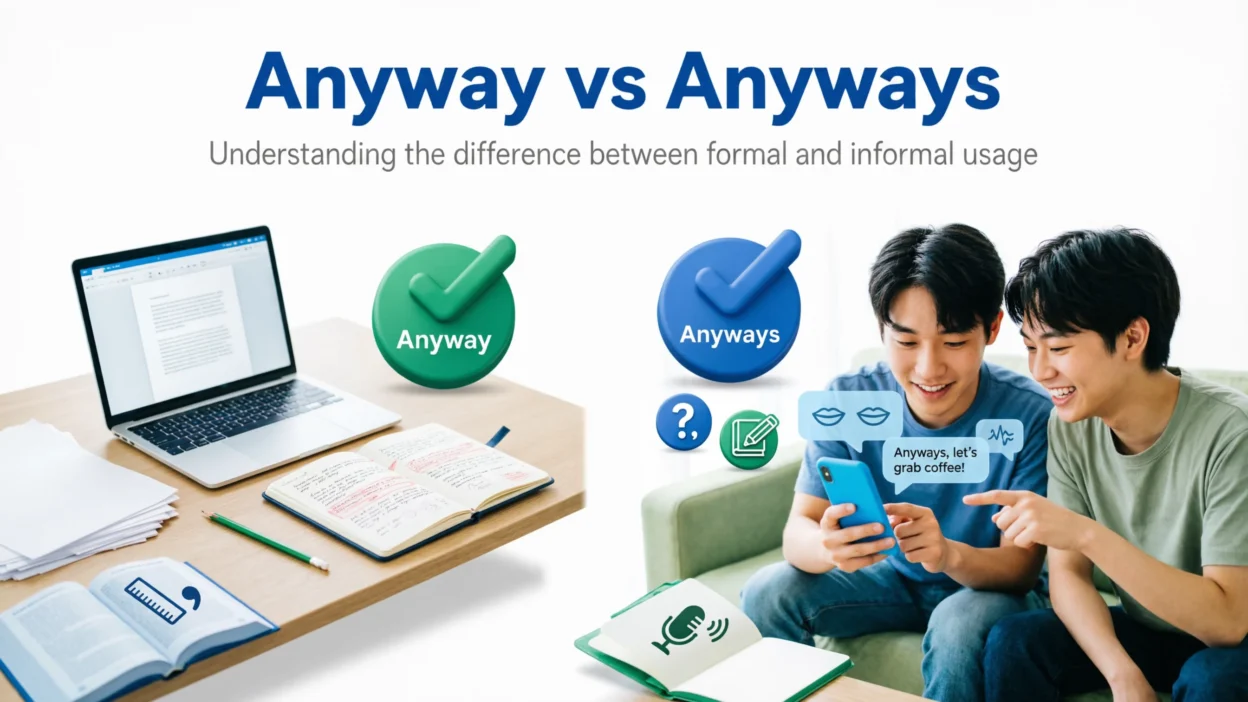
Have you ever wondered whether you should write anyway or anyways? These two words are often used in everyday conversations, but many people aren’t sure which one is grammatically correct.
While they look almost identical, there’s an important difference in how they’re used, especially in formal and professional writing.
In this guide, you’ll learn the difference between anyway vs anyways, their meanings, usage, grammar rules, real-life examples, common mistakes, and when it’s appropriate to use each one. By the end, you’ll know exactly which word fits your writing and conversations.
Quick Answer
The difference between anyway and anyways is simple:
- Anyway is the standard and grammatically accepted form used in both formal and informal English.
- Anyways is considered informal, conversational, and dialectal. While it’s common in casual speech, it’s generally avoided in formal writing.
Examples:
- Anyway, let’s continue the meeting.
- Anyways, I’ll see you tomorrow. (Informal conversation)
What Does “Anyway” Mean?
Anyway is an adverb that means regardless, in any case, despite that, or returning to the main topic. It is the preferred choice in standard English.
Common Uses of “Anyway”
- To continue after an interruption
- To indicate that something happens despite another fact
- To change or return to a topic
- To conclude a discussion
Examples of “Anyway”
- It was raining, but we went hiking anyway.
- Anyway, let’s get back to work.
- I wasn’t feeling well, but I attended the meeting anyway.
- Thanks for your help anyway.
In all of these examples, anyway is the standard and correct choice.
What Does “Anyways” Mean?
Anyways has essentially the same meaning as anyway, but it is considered informal and is mostly heard in casual conversations or regional dialects.
Although many native speakers use anyways naturally in speech, it is generally not recommended for academic, business, or professional writing.
Examples of “Anyways”
- Anyways, what are your plans for the weekend?
- I didn’t like the movie. Anyways, let’s grab dinner.
- Anyways, I’ll talk to you later.
These examples sound natural in conversation but would usually be edited to anyway in formal writing.
Anyway vs Anyways: Comparison Table
| Feature | Anyway | Anyways |
|---|---|---|
| Part of Speech | Adverb | Adverb |
| Meaning | In any case, regardless, returning to a topic | Same meaning as “anyway” |
| Formal Writing | ✅ Recommended | ❌ Generally avoided |
| Informal Conversation | ✅ Common | ✅ Very common |
| Professional Use | ✅ Yes | ❌ Usually not recommended |
How to Remember the Difference
A simple memory trick can help:
- Anyway = Always Safe
- Anyways = Casual Speech
If you’re writing an email, essay, report, blog post, or business document, choose anyway.
If you’re chatting with friends or speaking casually, you’ll often hear anyways, but remember that it’s considered informal.
Examples in Everyday Conversations
Using “Anyway”
- Anyway, let’s finish the project.
- We decided to go anyway despite the weather.
- Thanks anyway for trying.
- Anyway, what were we discussing?
Using “Anyways”
- Anyways, I’m heading home.
- I didn’t buy it. Anyways, it wasn’t expensive.
- Anyways, let’s watch another movie.
- I’ll call you later. Anyways, take care!
Common Mistakes
Many writers use anyways in situations where anyway is expected.
Incorrect (Formal Writing)
- Anyways, thank you for your application.
Correct
- Anyway, thank you for your application.
Incorrect
- We completed the assignment anyways.
Better (Formal English)
- We completed the assignment anyway.
Acceptable in Casual Conversation
- Anyways, see you tomorrow!
This is acceptable in informal speech but not ideal for professional writing.
Anyway vs Anyways in Sentences
Here are more examples to show the difference.
Anyway
- She finished the race anyway.
- Anyway, let’s move on.
- We’ll help you anyway.
- He apologized anyway.
Anyways
- Anyways, I need to leave now.
- I wasn’t interested. Anyways, thanks for asking.
- Anyways, that’s all I wanted to say.
- Anyways, have a great day!
Synonyms and Related Words
Synonyms for Anyway
- Regardless
- In any case
- Nevertheless
- Still
- Nonetheless
- Even so
Related Informal Expressions
- Besides
- Well then
- So
- Moving on
- In any event
Using these alternatives can make your writing more varied while maintaining clarity.
Anyway vs Anyways in American and British English
There is no spelling difference between American English and British English regarding anyway.
However, usage differs slightly:
- Anyway is the preferred and standard form in both American and British English.
- Anyways appears more frequently in informal North American speech and some regional dialects but is still considered nonstandard in formal contexts.
If you’re writing for an international audience, anyway is the safest and most widely accepted choice.
Grammar Tips
Keep these simple grammar rules in mind:
Use “Anyway” in Formal Writing
Examples:
- Anyway, let’s continue.
- Thank you anyway.
Reserve “Anyways” for Informal Speech
Examples:
- Anyways, I’ll see you later.
- Anyways, what happened next?
When in doubt, choose anyway. It’s always grammatically acceptable.
Why Do People Confuse Anyway and Anyways?
These words are commonly confused because:
- They have nearly identical spellings.
- They sound very similar.
- Many native speakers say anyways in casual conversation.
- Social media and everyday speech have made anyways more common.
Despite its popularity in speech, anyway remains the preferred form in standard English.
Real-Life Examples
At Work
- Anyway, let’s review the report.
- Thanks for your effort anyway.
At School
- Anyway, let’s begin today’s lesson.
- I studied hard anyway.
Casual Conversations
- Anyways, how have you been?
- Anyways, I’m off to bed.
Online Messages
- Anyway, here’s the link you requested.
- Anyways, talk soon!
Frequently Asked Questions (FAQs)
1. What is the difference between anyway and anyways?
Anyway is the standard and grammatically accepted form, while anyways is an informal variation mainly used in casual speech.
2. Is “anyways” grammatically correct?
Anyways is accepted in informal conversation and some dialects, but it is generally considered nonstandard in formal writing.
3. Should I use anyway or anyways in an email?
Use anyway. It is the preferred choice for professional, academic, and business communication.
4. Is anyways wrong?
Not necessarily. It’s common in casual spoken English, but many style guides recommend avoiding it in formal writing.
5. Which is more common in formal English?
Anyway is much more common and widely accepted in formal English.
6. Is there a difference between American and British English?
Both varieties prefer anyway in standard writing. Anyways is heard more often in informal North American speech but is not considered standard.
7. Can I use anyways in text messages?
Yes. In casual texts and conversations, anyways is perfectly natural, although anyway is still correct.
8. How can I remember the difference?
Use this simple rule:
- Anyway = Formal and Safe
- Anyways = Informal Conversation
Summary
Understanding anyway vs anyways is simple once you know the context. Anyway is the standard form used in both formal and informal English, making it the best choice for essays, emails, business writing, and professional communication. Anyways, while widely heard in casual speech, is considered informal and is generally avoided in polished writing.
Whenever you’re unsure, choose anyway. It works in virtually every situation and is accepted by grammar experts and style guides. Save anyways for relaxed conversations if it suits your personal speaking style.
Actionable Takeaway
Before using these words, ask yourself one question:
- Am I writing something formal or professional? → Use anyway.
- Am I speaking casually with friends or texting? → Anyways may sound natural, but anyway is still perfectly correct.
Following this simple rule will help you write with confidence and avoid one of the most common usage mistakes in English.

Here is a professional 30-word author biography including your site name Symboliy.com:
Martin Hood is a professional writer at Symboliy.com, creating clear, informative content focused on language, communication, and meaningful expressions for everyday and professional use.