
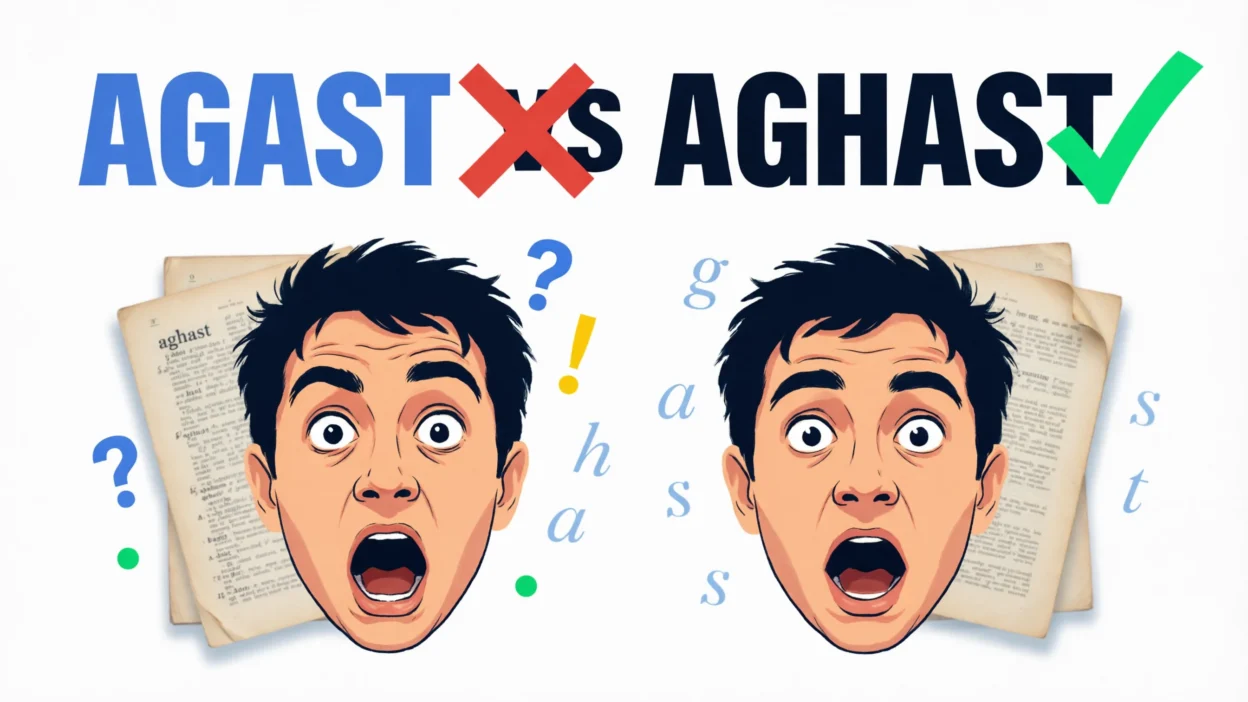
Have you ever come across the words agast and aghast and wondered which one is actually correct? You’re not alone. Many writers, students, and English learners accidentally use agast because it sounds similar to aghast, especially in casual conversation.
The truth is that only one of these spellings is considered correct in modern English. Understanding the difference can help you avoid spelling mistakes and communicate more clearly in academic, professional, and everyday writing.
In this guide, you’ll learn the meaning of aghast, why agast is usually incorrect, common mistakes people make, and practical examples to help you remember the correct usage.
Quick Answer
The correct spelling is “aghast.”
- ✅ Aghast = Correct spelling
- ❌ Agast = Incorrect spelling in modern English
Aghast is an adjective that means extremely shocked, horrified, astonished, or filled with dismay.
Example:
- She was aghast when she saw the damage.
- The audience looked aghast after hearing the news.
In modern English, agast is generally considered a misspelling of aghast.
What Does “Aghast” Mean?
The word aghast describes a strong feeling of shock, horror, disbelief, or amazement.
It is often used when someone reacts to something unexpected, disturbing, or surprising.
Common Meanings of Aghast
- Extremely shocked
- Horrified
- Appalled
- Astonished
- Filled with disbelief
Examples
- I was aghast at the size of the bill.
- The teacher looked aghast when she heard the excuse.
- They were aghast at the destruction caused by the storm.
- His family was aghast after learning the truth.
Agast vs Aghast: Which Is Correct?
| Word | Correct? | Meaning |
|---|---|---|
| Aghast | ✅ Yes | Extremely shocked, horrified, or astonished |
| Agast | ❌ Usually No | Common misspelling of aghast |
| Appalled | ✅ Yes | Deeply shocked or upset |
| Astonished | ✅ Yes | Greatly surprised |
For modern English writing, always use aghast.
The spelling agast may occasionally appear in historical texts or older language forms, but it is not considered standard usage today.
Why Is “Aghast” the Correct Spelling?
The word aghast has existed in English for centuries and evolved from older forms connected to fear, terror, and shock.
Over time, aghast became the accepted spelling in dictionaries and modern style guides.
Today, major dictionaries list:
✅ Aghast
and do not recognize agast as the standard modern form.
Because the “h” is often silent in pronunciation, many people mistakenly omit it when writing.
Examples of “Aghast” in Sentences
Everyday Examples
- I was aghast when I saw my phone bill.
- She looked aghast after hearing the announcement.
- We were aghast at the unexpected outcome.
Workplace Examples
- The manager was aghast at the costly mistake.
- Executives were aghast when profits dropped unexpectedly.
- The team appeared aghast after the project failed.
Academic Examples
- The professor was aghast at the level of plagiarism.
- Students were aghast when the exam schedule changed.
- Researchers were aghast at the data error.
News and Media Examples
- Citizens were aghast at the shocking report.
- Viewers were aghast after watching the documentary.
- The public was aghast at the scandal.
Common Mistakes People Make
1. Writing “Agast” Instead of “Aghast”
This is by far the most common mistake.
❌ Agast
✅ Aghast
Always include the letter h.
2. Confusing Pronunciation With Spelling
Because the “h” is not strongly pronounced, many people spell the word exactly how they think it sounds.
However, English spelling often preserves historical forms that may not perfectly match pronunciation.
3. Using “Aghast” for Mild Surprise
The word implies a strong emotional reaction.
❌ I was aghast that my coffee was slightly cold.
✅ I was aghast by the shocking news.
Use aghast when the situation involves significant shock, horror, or disbelief.
4. Confusing Aghast With Other Emotion Words
Although related, these words have slightly different meanings:
- Aghast = Shocked and horrified
- Surprised = Unexpected reaction
- Astonished = Extremely surprised
- Appalled = Deeply disturbed
- Horrified = Filled with horror
Aghast vs Similar Words
| Word | Meaning |
|---|---|
| Aghast | Shocked and horrified |
| Astonished | Extremely surprised |
| Appalled | Deeply upset or shocked |
| Horrified | Filled with horror |
| Surprised | Unexpected reaction |
| Stunned | Temporarily unable to react due to shock |
Example Comparison
- She was surprised by the gift.
- She was astonished by the amount.
- She was aghast by the tragic news.
The emotional intensity generally increases from surprised to astonished to aghast.
American vs British English
One advantage of this word is that there is virtually no spelling difference between American and British English.
American English
✅ Aghast
British English
✅ Aghast
Both varieties use the same spelling and meaning.
Therefore, if you’re writing for an international audience, aghast is the correct choice.
Why Correct Spelling Matters
Using the correct spelling improves:
- Professional writing quality
- Academic credibility
- Reader trust
- Communication clarity
- Search engine optimization
Misspelling words such as aghast can distract readers and reduce the perceived quality of your content.
For students, bloggers, writers, and professionals, accurate spelling helps establish authority and expertise.
Easy Trick to Remember the Correct Spelling
Use this simple memory tip:
Aghast starts with “agh” because shock often makes people gasp.
Think:
Agh! I’m shocked!
The beginning sound “agh” can help remind you that the word includes an h.
Whenever you see agast, ask yourself:
“Am I forgetting the h?”
Most of the time, the answer is yes.
Frequently Asked Questions
Is “agast” a real word?
In modern English, agast is generally considered a misspelling of aghast and should be avoided.
Which is correct: agast or aghast?
Aghast is the correct spelling.
What does aghast mean?
It means extremely shocked, horrified, astonished, or filled with disbelief.
Can I use aghast in formal writing?
Yes. The word is appropriate for academic, professional, journalistic, and literary writing.
Is aghast an adjective?
Yes. Aghast is an adjective used to describe a person’s emotional state.
How do you use aghast in a sentence?
Example: “She was aghast when she discovered the mistake.”
Is there a difference between American and British English?
No. Both American and British English use aghast.
What are some synonyms for aghast?
Common synonyms include:
- Shocked
- Appalled
- Astonished
- Horrified
- Stunned
- Dismayed
- Alarmed
Summary
When comparing agast vs aghast, the correct modern English spelling is aghast. The word describes a strong feeling of shock, horror, disbelief, or astonishment. While agast occasionally appears as a misspelling or historical variation, it is not accepted as standard modern English and should generally be avoided.
Whether you’re writing an essay, article, business document, or social media post, using aghast correctly helps your writing appear more professional and accurate. Remember that the word contains a silent h, which is the source of most spelling mistakes.
Actionable Takeaway
Whenever you need a word that means deeply shocked or horrified, use aghast. If you accidentally type agast, add the missing h before publishing. A simple spelling check can improve the accuracy and credibility of your writing.

Shan Waston is a skilled writer at Symboliy.com, producing clear, engaging content on language, communication, and everyday expressions to help readers understand meaning and usage confidently in modern digital contexts.