
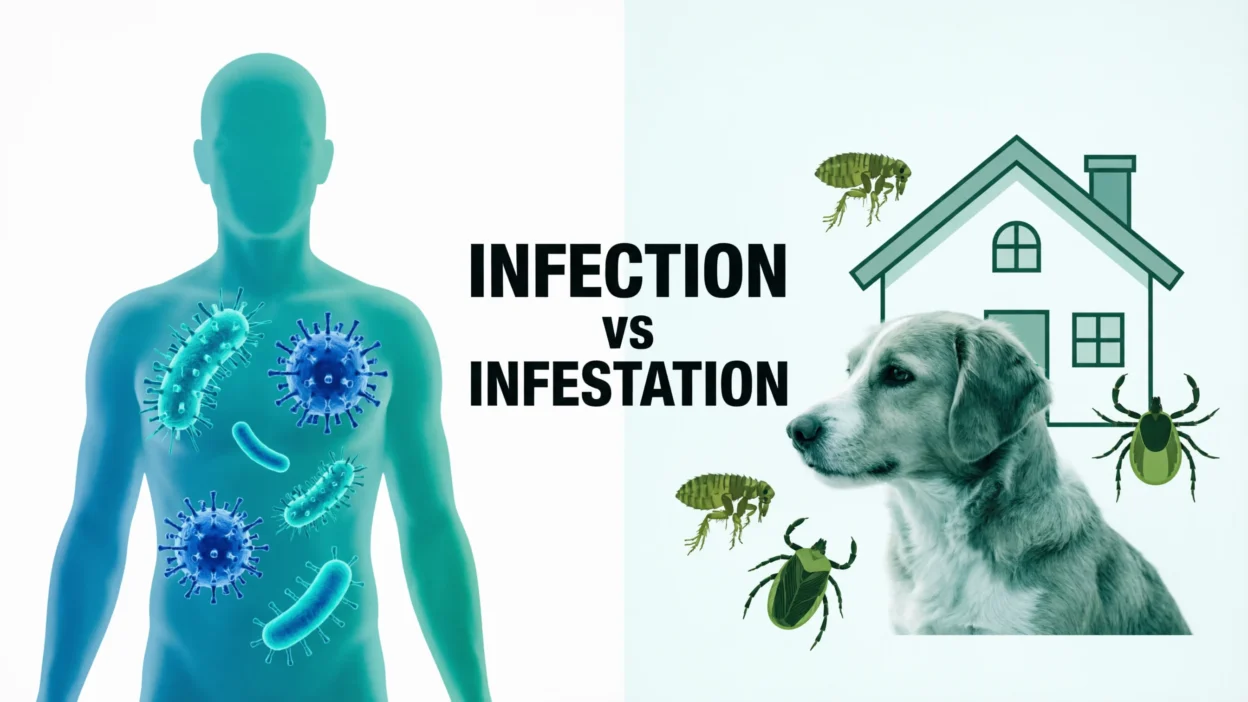
The terms infection and infestation are often confused because both involve harmful organisms affecting a person, animal, or plant.
However, they describe two very different medical and biological conditions. Using the wrong word can lead to misunderstandings, especially in healthcare, education, or everyday conversations.
If you’ve ever wondered about the difference between infection vs infestation, this guide has you covered.
You’ll learn what each term means, when to use it, real-world examples, common mistakes to avoid, and simple memory tricks. By the end, you’ll be able to use both words accurately and confidently.
Quick Answer
The difference between infection and infestation is simple:
- Infection occurs when microorganisms such as bacteria, viruses, fungi, or certain parasites invade and multiply inside the body or tissues, causing disease.
- Infestation occurs when larger parasites or pests live on or in the body—or when pests overrun a place—without necessarily invading body tissues in the same way as an infection.
Examples:
- She took antibiotics to treat a bacterial infection.
- The dog was treated for a flea infestation.
Although both involve harmful organisms, they are not interchangeable.
What Does “Infection” Mean?
An infection happens when disease-causing microorganisms enter the body, multiply, and trigger an immune response. Infections can affect almost any part of the body and may range from mild to severe.
Common causes of infection include:
- Bacteria
- Viruses
- Fungi
- Some parasites that invade body tissues
Examples of Infection
- The cut became infected, leading to a skin infection.
- She recovered from a viral infection after a week.
- A urinary tract infection can cause painful urination.
- Ear infections are common in young children.
- The doctor prescribed medication for the fungal infection.
Common Uses of Infection
- Bacterial infection
- Viral infection
- Fungal infection
- Skin infection
- Ear infection
- Respiratory infection
- Bloodstream infection
What Does “Infestation” Mean?
An infestation refers to the presence of parasites or pests living on the surface of a host or invading a home, building, crop, or environment in large numbers.
Common organisms associated with infestations include:
- Fleas
- Lice
- Ticks
- Bed bugs
- Mites
- Cockroaches
- Rats
- Termites
Examples of Infestation
- The cat had a severe flea infestation.
- The hotel closed because of a bed bug infestation.
- Farmers struggled with a locust infestation.
- The attic had a rat infestation.
- The child was treated for a head lice infestation.
Common Uses of Infestation
- Flea infestation
- Lice infestation
- Bed bug infestation
- Tick infestation
- Rodent infestation
- Insect infestation
- Pest infestation
Infection vs Infestation Comparison Table
| Feature | Infection | Infestation |
|---|---|---|
| Meaning | Invasion of the body by disease-causing microorganisms | Presence of parasites or pests on a host or in a place |
| Common Causes | Bacteria, viruses, fungi, some parasites | Fleas, lice, ticks, mites, bed bugs, rodents, insects |
| Affects | Body tissues or organs | Skin, hair, body surface, animals, homes, crops, buildings |
| Typical Treatment | Antibiotics, antivirals, antifungals, or other medicines depending on the cause | Pest control, antiparasitic treatments, cleaning, environmental management |
| Example | A bacterial throat infection | A flea infestation on a dog |
Why People Confuse Infection and Infestation
Many people mix up these terms because both involve unwanted organisms and both can make people or animals sick.
The confusion usually happens because:
- Both involve living organisms.
- Some parasites can be linked to both infections and infestations.
- The words appear in medical and veterinary discussions.
- Both may require treatment.
The key difference is this:
Infection is about microorganisms invading the body.
Infestation is about parasites or pests living on the body or overrunning an environment.
Easy Memory Trick
Here’s a simple way to remember the difference.
Infection = Inside
Think of the letters IN in infection as reminding you that germs are often inside the body or tissues.
Infestation = Insects
Many common infestations involve insects or other visible pests like fleas, lice, or bed bugs.
Example Sentences
Infection
- The patient developed a chest infection.
- Good hygiene helps prevent many infections.
- The doctor confirmed that the wound showed signs of infection.
- Antibiotics are effective only against bacterial infections.
- The child stayed home because of a viral infection.
Infestation
- The apartment required professional treatment for a cockroach infestation.
- The veterinarian quickly treated the puppy’s flea infestation.
- The garden suffered from an aphid infestation.
- Campers checked for ticks to avoid an infestation.
- The warehouse experienced a rodent infestation.
Common Mistakes
These words should not replace each other.
Incorrect
- The doctor diagnosed a flea infection.
Correct
- The doctor diagnosed a flea infestation.
Incorrect
- She needed antibiotics for a bacterial infestation.
Correct
- She needed antibiotics for a bacterial infection.
Incorrect
- The hotel closed because of a bed bug infection.
Correct
- The hotel closed because of a bed bug infestation.
Always consider whether you’re describing microorganisms causing disease or parasites and pests living on a host or in a location.
American vs. British English
There is no spelling difference between American English and British English for infection and infestation.
Both varieties of English use:
- Infection
- Infections
- Infestation
- Infestations
The meanings are also the same. Medical terminology remains consistent across both forms of English.
When Should You Use Infection?
Use infection when referring to:
- Bacterial diseases
- Viral illnesses
- Fungal diseases
- Infected wounds
- Organ or tissue infections
- Medical diagnoses involving microorganisms
When Should You Use Infestation?
Use infestation when talking about:
- Fleas
- Lice
- Bed bugs
- Ticks
- Mites
- Cockroaches
- Rodents
- Pest outbreaks in homes, farms, or buildings
Related Words and Synonyms
Synonyms for Infection
- Illness
- Disease
- Contamination
- Medical condition
- Pathogenic invasion
- Microbial infection
Synonyms for Infestation
- Pest invasion
- Pest outbreak
- Parasite infestation
- Bug problem
- Vermin invasion
- Pest presence
Frequently Asked Questions
1. What is the difference between infection and infestation?
An infection is caused by microorganisms invading and multiplying in the body, while an infestation involves parasites or pests living on the body or overrunning a place.
2. Is lice an infection or an infestation?
Head lice are considered an infestation because the insects live on the scalp and hair rather than invading body tissues.
3. Are fleas an infection?
No. Fleas cause an infestation. However, fleas can sometimes transmit organisms that lead to infections or other diseases.
4. Can parasites cause infections?
Yes. Some parasites invade body tissues and cause infections, while others remain on the body’s surface and are described as causing infestations. The correct term depends on the organism and how it affects the host.
5. Is athlete’s foot an infection?
Yes. Athlete’s foot is a fungal infection caused by fungi growing on the skin.
6. Can a house have an infection?
Generally, no. Homes experience infestations, such as termite, cockroach, or rodent infestations.
7. Are bed bugs an infection or an infestation?
Bed bugs cause an infestation because they live in furniture, bedding, and other areas while feeding on humans.
8. Is the spelling different in American and British English?
No. Both American and British English use the same spelling and meanings for infection and infestation.
Summary
Understanding infection vs infestation is essential because the two terms describe different biological situations. Infection refers to microorganisms such as bacteria, viruses, fungi, or certain parasites invading and multiplying in the body, while infestation refers to parasites or pests living on a host or overrunning a place. Choosing the correct word makes your communication more accurate, whether you’re discussing health, pets, or pest control.
Whenever you’re unsure, ask yourself what’s causing the problem. If it’s microorganisms affecting body tissues, use infection. If it’s visible parasites or pests living on a person, animal, or property, use infestation. Remembering this distinction will help you write and speak with greater precision.
Actionable Takeaway
Use this simple rule every time:
- Infection = Germs invading the body
- Infestation = Parasites or pests living on a host or in a place
This quick reminder will help you choose the correct term in medical, veterinary, academic, and everyday contexts.

Mike Poop is a dedicated writer at Symboliy.com, creating clear, practical content about language, communication, and everyday expressions to help readers understand meaning and usage confidently in professional contexts worldwide.