Spelling mistakes are common in everyday writing, especially with contractions. One confusion many English learners and native speakers face is havnt vs havent. These spellings may look acceptable at first glance, but both are actually incorrect in standard English grammar.
If you’ve ever typed “havnt” or “havent” in a message, email, or social media post, you’re not alone. The correct form is easy to learn once you understand how contractions work in English.
This guide explains the difference, correct spelling, examples, grammar rules, and common mistakes so you can avoid this error confidently.
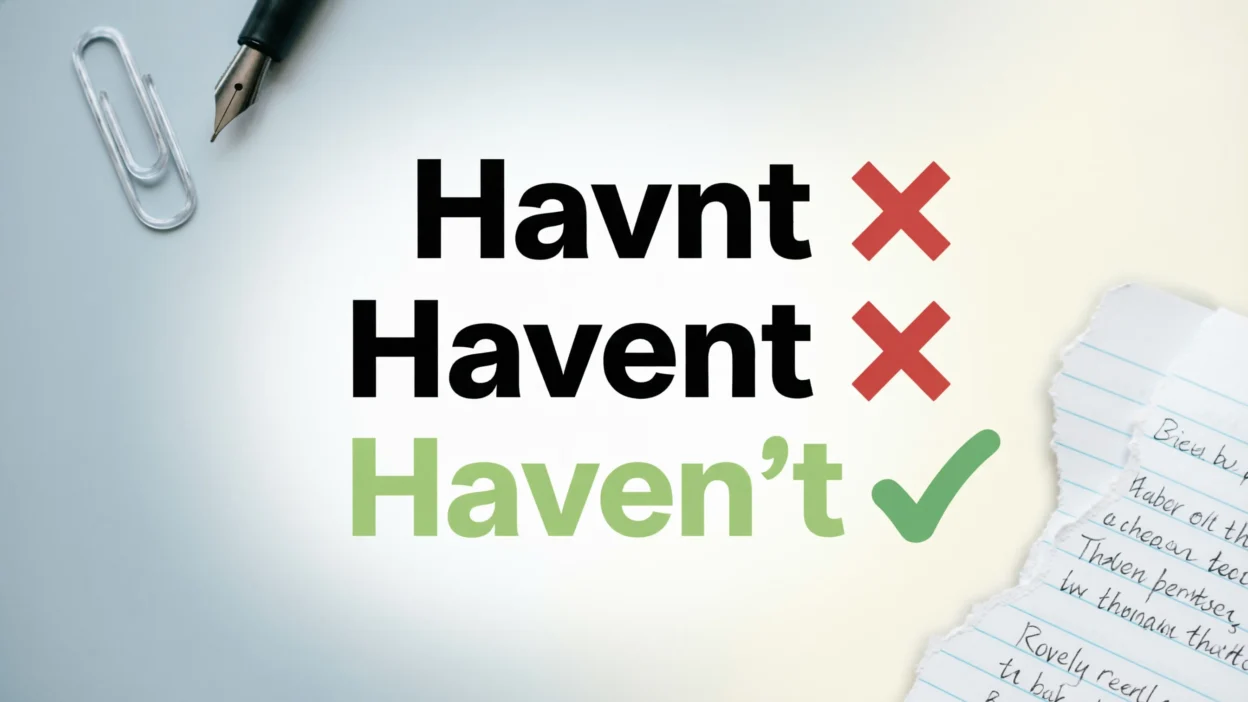
Quick Answer
- Havnt → Incorrect spelling
- Havent → Incorrect spelling
- Haven’t → Correct spelling
Simple Rule
The correct contraction of “have not” is always:
✅ Haven’t
It must include the apostrophe (’).
What Does “Haven’t” Mean?
Haven’t is a contraction of:
- Have + not
It is used in negative sentences.
Examples of “Haven’t”
- I haven’t finished my homework.
- They haven’t arrived yet.
- We haven’t seen that movie before.
In all these examples, “haven’t” means “have not.”
Why “Havnt” Is Incorrect
The spelling havnt is missing:
- The letter e
- The apostrophe
Incorrect Example
❌ I havnt eaten lunch.
Correct Version
✅ I haven’t eaten lunch.
“Havnt” is considered an informal typo and should not be used in proper writing.
Why “Havent” Is Incorrect
The spelling havent includes all letters but still misses the apostrophe.
Incorrect Example
❌ They havent called me.
Correct Version
✅ They haven’t called me.
Without the apostrophe, the contraction is grammatically incorrect in formal English.
Havnt vs Havent vs Haven’t Comparison Table
| Word | Correct or Incorrect | Meaning | Example |
|---|---|---|---|
| Havnt | Incorrect | Misspelling | ❌ I havnt slept |
| Havent | Incorrect | Missing apostrophe | ❌ We havent gone |
| Haven’t | Correct | Contraction of “have not” | ✅ We haven’t gone |
Why Apostrophes Matter in Contractions
In English grammar, contractions combine two words by replacing omitted letters with an apostrophe.
Examples
| Full Form | Contraction |
|---|---|
| Do not | Don’t |
| Cannot | Can’t |
| Have not | Haven’t |
| Will not | Won’t |
The apostrophe shows that letters were removed.
In:
- Have not → Haven’t
The apostrophe replaces the missing “o.”
Common Mistakes People Make
Mistake 1: Forgetting the Apostrophe
❌ I havent finished.
✅ I haven’t finished.
Mistake 2: Removing Letters Incorrectly
❌ They havnt arrived.
✅ They haven’t arrived.
Mistake 3: Using Informal Texting Habits
People often skip apostrophes in casual texting, but this should be avoided in professional or academic writing.
Examples of Correct Usage
Everyday Conversation
- I haven’t eaten yet.
- We haven’t decided.
- You haven’t called me back.
Professional Writing
- The team hasn’t completed the report yet.
- We haven’t received your application.
Academic Writing
- Researchers haven’t found conclusive evidence.
- Students haven’t submitted their assignments.
Formal vs Informal Writing
Formal Writing
In highly formal writing, some writers prefer:
- “have not”
Instead of:
- “haven’t”
Example:
- Formal: We have not completed the study.
- Informal: We haven’t completed the study.
Both are grammatically correct, but contractions sound more conversational.
American vs British English Difference
There is no difference between American and British English here.
Both use:
- ✅ Haven’t
- ❌ Havent
- ❌ Havnt
The contraction rule remains exactly the same.
Helpful Tips to Remember the Correct Form
Always Check for Apostrophes
If you combine two words into one contraction, you usually need an apostrophe.
Read the Full Form
Ask yourself:
- Does this mean “have not”?
If yes, use:
- Haven’t
Use Grammar Tools
Most spell checkers instantly flag:
- Havnt
- Havent
Slow Down While Typing
Quick typing causes many contraction mistakes.
Common Contractions Similar to “Haven’t”
| Correct Contraction | Full Form |
|---|---|
| Isn’t | Is not |
| Aren’t | Are not |
| Didn’t | Did not |
| Couldn’t | Could not |
| Shouldn’t | Should not |
Learning contraction patterns improves overall English grammar skills.
Mini Practice Quiz
Choose the correct answer.
1. I _____ finished my project.
Answer: haven’t
2. They _____ arrived yet.
Answer: haven’t
3. Which spelling is correct?
Answer: haven’t
4. Havnt is:
Answer: Incorrect
5. Havent is:
Answer: Incorrect
FAQs About Havnt vs Havent
Is “havnt” a real English word?
No. “Havnt” is an incorrect spelling and should not be used.
Is “havent” acceptable without an apostrophe?
No. Standard English requires the apostrophe in contractions.
What is the correct form of “have not”?
The correct contraction is haven’t.
Why do people write “havent”?
Mostly because of fast typing, texting habits, or forgetting apostrophes.
Is “haven’t” formal English?
Yes, although some formal documents prefer the full form “have not.”
Do British and American English use different spellings?
No. Both use “haven’t.”
Can grammar checkers detect this mistake?
Yes. Most writing tools identify “havnt” and “havent” as errors.
Should contractions be avoided in academic writing?
Some academic styles prefer full forms, but contractions are acceptable in many modern contexts.
Final Summary
Understanding havnt vs havent is simple once you know the grammar rule. Both “havnt” and “havent” are incorrect spellings, while “haven’t” is the only correct contraction of “have not.” The apostrophe is essential because it replaces omitted letters in the contraction.
Using proper contractions improves clarity, professionalism, and readability in your writing. Whether you’re writing emails, essays, blog posts, or social media captions, paying attention to small grammar details makes a big difference.
Actionable Takeaway
Before publishing or sending your writing:
- Use haven’t with an apostrophe
- Avoid havnt and havent
- Proofread contractions carefully
Correct grammar helps your writing appear polished, trustworthy, and easier to understand.

Shan Waston is a skilled writer at Symboliy.com, producing clear, engaging content on language, communication, and everyday expressions to help readers understand meaning and usage confidently in modern digital contexts.