If you’ve ever searched for villain vs villian, you’re probably wondering which spelling is correct. This is one of the most common spelling mistakes in English because the words look nearly identical. Even experienced writers occasionally type the wrong version when writing quickly.
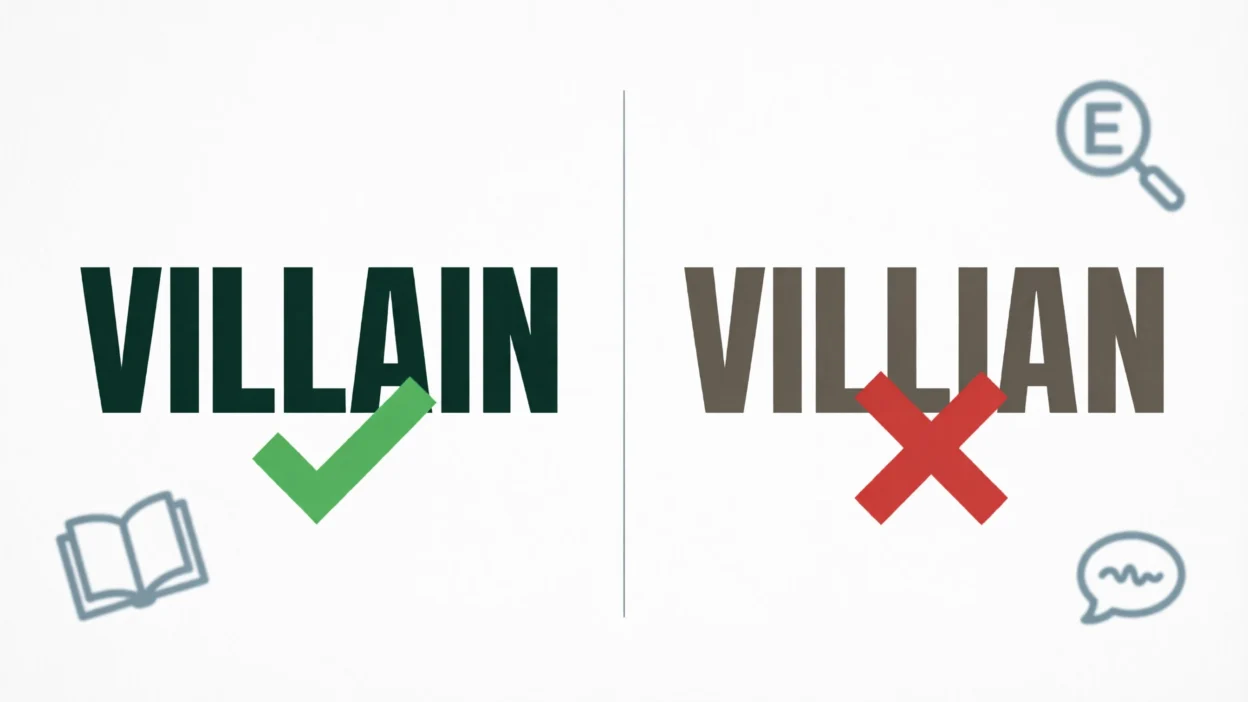
The simple answer is that villain is the correct spelling, while villian is a misspelling. Understanding the difference can help you write more confidently and avoid embarrassing grammar errors in school assignments, professional documents, blog posts, and social media content.
Quick Answer
Villain is the correct English spelling.
Villian is a common misspelling and is not recognized as a standard English word.
Correct: The villain tried to take over the kingdom.
Incorrect: The villian tried to take over the kingdom.
What Does Villain Mean?
A villain is a person who is evil, wicked, dishonest, or responsible for harmful actions. In stories, movies, books, and television shows, the villain is typically the main antagonist who opposes the hero.
Definition of Villain
Villain (noun): A character or person who deliberately does harmful, immoral, or criminal acts.
The term is commonly used in literature, entertainment, and everyday conversation to describe someone viewed as the “bad guy.”
Simple Examples of Villain
- The villain plotted to destroy the city.
- Every superhero needs a powerful villain.
- The movie’s villain was more interesting than the hero.
- The villain kidnapped the prince.
- Many classic fairy tales feature an evil villain.
In each example, the word refers to someone causing problems or acting against others.
Is Villian a Real Word?
No, villian is not a standard English word.
When people write “villian,” they almost always mean “villain.” The mistake happens because many English speakers assume the ending follows a more familiar spelling pattern.
Why People Misspell Villain
Common reasons include:
- Typing too quickly.
- Confusing letter order.
- Pronunciation influences spelling.
- Lack of familiarity with the correct spelling.
- Autocorrect may not always catch the error.
For accurate writing, always use villain.
Villain vs Villian: Side-by-Side Comparison
| Feature | Villain | Villian |
|---|---|---|
| Correct English spelling? | Yes | No |
| Dictionary recognized? | Yes | No |
| Part of speech | Noun | N/A |
| Meaning | Evil person or antagonist | None in standard English |
| Suitable for formal writing? | Yes | No |
| Common usage | Correct spelling | Misspelling |
The comparison makes it clear that villain is the only accepted spelling in modern English.
How to Use Villain Correctly
The word villain is typically used as a noun to describe a bad character, criminal, antagonist, or morally corrupt person.
In Fiction
- The villain created a dangerous plan.
- The hero finally defeated the villain.
In Movies and Television
- The villain became the most memorable character.
- Audiences loved how intelligent the villain was.
In Everyday Conversation
- He acted like the villain during the argument.
- The media portrayed him as the villain.
In Literature
- Shakespeare created several unforgettable villains.
- The villain’s motives were revealed at the end of the novel.
Common Mistakes People Make
Many writers accidentally misuse or misspell this word. Here are the most frequent errors.
Mistake #1: Writing Villian Instead of Villain
Incorrect: The villian escaped from prison.
Correct: The villain escaped from prison.
Mistake #2: Forgetting the Letter Order
The correct sequence is:
V-I-L-L-A-I-N
Not:
V-I-L-L-I-A-N
A simple memory trick is to remember that “AI” comes before “IN” in the ending.
Mistake #3: Using Villain for Any Opponent
A villain is more than just an opponent.
Opponent: Someone competing against another person.
Villain: Someone acting immorally, maliciously, or harmfully.
Not every rival is a villain.
Mistake #4: Assuming Villian Is an Alternative Spelling
Unlike some words that have regional spelling variations, villian is never correct.
Synonyms of Villain
Using synonyms can improve writing variety and strengthen SEO relevance.
Common Synonyms
- Antagonist
- Criminal
- Wrongdoer
- Rogue
- Scoundrel
- Evil-doer
- Offender
- Malefactor
- Nemesis
- Bad guy
Example Comparisons
- The villain threatened the town.
- The antagonist threatened the town.
- The villain was finally captured.
- The criminal was finally captured.
The best synonym depends on the context.
When Should You Use Villain?
Use villain when describing someone who intentionally causes harm, creates conflict, or opposes the protagonist in a story.
Common Situations
- Fiction writing
- Movie reviews
- Literature discussions
- Storytelling
- Character analysis
- Everyday conversations
Examples
- The villain manipulated everyone around him.
- The story’s villain had a tragic backstory.
- Many readers sympathized with the villain.
Villain in Popular Culture
The concept of the villain appears across nearly every form of storytelling.
Movies
Many successful films are remembered because of their villains.
Examples include:
- The Joker
- Darth Vader
- Lord Voldemort
Books
Literary villains often drive the plot forward and create tension.
Television
Modern TV shows frequently feature complex villains who possess both good and bad qualities.
Video Games
Many games center around defeating a villain to complete the story.
The role of the villain remains one of the most important elements in storytelling.
American vs British English: Is There a Difference?
No. The spelling villain is the same in both American English and British English.
American English
- The villain escaped before the police arrived.
British English
- The villain escaped before the police arrived.
There are no regional spelling differences.
This means villain is universally accepted across English-speaking countries.
Why Is Villain Often Misspelled as Villian?
The confusion usually occurs because English contains many words ending in similar patterns.
Writers often assume the spelling should follow a more familiar arrangement and accidentally swap the final letters.
Helpful Memory Trick
Remember:
A villain is an “AIN” ending word.
Think of:
Vill-AIN
The ending “ain” is always correct.
If you see villian, the letters are in the wrong order.
Real-Life Examples of Villain
Literature
- The villain deceived the entire kingdom.
Movies
- The villain’s plan nearly succeeded.
Comics
- Every superhero faces a villain at some point.
Education
- Students analyzed the villain’s motivations.
Everyday Speech
- He became the villain of the story after the incident.
These examples demonstrate the wide range of situations where the word is used.
Frequently Asked Questions
Is villain or villian correct?
Villain is correct. Villian is a misspelling.
Is villian in the dictionary?
No. Standard English dictionaries recognize villain, not villian.
What does villain mean?
A villain is a person or character who performs evil, harmful, dishonest, or immoral actions.
Why do people spell villain as villian?
People often reverse the final letters because the spelling can be difficult to remember.
Is villain a noun?
Yes. Villain is a noun used to describe an evil person or antagonist.
What is the opposite of villain?
Common opposites include:
- Hero
- Protagonist
- Savior
- Protector
Is villain used in American and British English?
Yes. Both American and British English use the same spelling: villain.
How can I remember the correct spelling?
Remember the phrase:
“The villain ends with AIN.”
This simple trick helps avoid writing villian.
Summary
When comparing villain vs villian, the correct choice is always villain. It refers to an evil character, antagonist, criminal, or wrongdoer in stories and real-life descriptions. The spelling villian is simply a common mistake caused by letter confusion.
Whether you’re writing fiction, reviewing movies, discussing literature, or creating professional content, using the correct spelling improves credibility and ensures clear communication. Since there are no American or British spelling variations, villain remains the accepted form everywhere English is spoken.
Actionable Takeaway
Whenever you’re unsure, remember that the correct spelling ends with “AIN”: villain.
Before publishing or submitting your writing, quickly search for villian and replace it with villain to eliminate this common spelling error.

Mike Poop is a dedicated writer at Symboliy.com, creating clear, practical content about language, communication, and everyday expressions to help readers understand meaning and usage confidently in professional contexts worldwide.