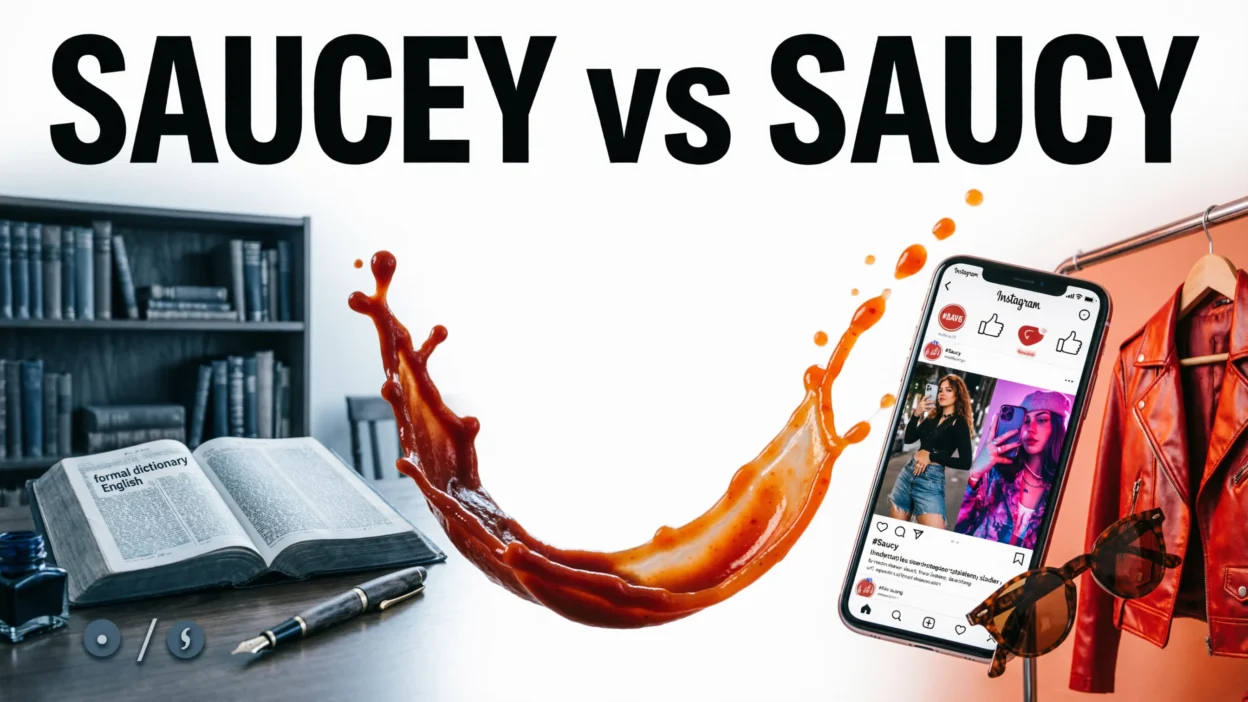
If you’ve ever come across the words saucey and saucy, you may have wondered whether they mean the same thing or if one spelling is incorrect. This confusion is common because both words look similar, sound alike, and often appear in casual conversations online.
Understanding the difference between saucey vs saucy can help you write more confidently and avoid spelling mistakes. Whether you’re learning English, creating content, or simply curious about modern language trends, this guide explains everything you need to know in a simple and practical way.
Quick Answer
Saucy is the standard and correct dictionary spelling in English.
Saucey is an alternative, non-standard spelling often used in slang, branding, social media, and informal writing.
In most professional, academic, and formal situations, you should use saucy. However, saucey may appear in modern internet culture, business names, and creative branding.
What Does Saucy Mean?
The word saucy has been part of the English language for centuries. Traditionally, it describes someone or something that is bold, cheeky, playful, or slightly disrespectful in a humorous way.
Depending on the context, saucy can have several meanings:
- Cheeky or impudent
- Flirtatious or provocative
- Bold and confident
- Spicy or exciting
- Containing a lot of sauce (when discussing food)
Examples of Saucy
- The child gave a saucy reply to his teacher.
- She made a saucy joke during dinner.
- That pasta has a rich and saucy texture.
- His saucy attitude made everyone laugh.
In modern usage, the word often carries a playful and positive tone.
What Does Saucey Mean?
Saucey is generally considered a creative variation of saucy rather than a separate dictionary word.
In slang, sauce can refer to:
- Style
- Confidence
- Swagger
- Personal flair
- Charisma
Because of this, saucey is frequently used online to describe someone who has a lot of style or confidence.
Examples of Saucey
- That outfit looks really saucey.
- He posted a saucey photo on Instagram.
- The athlete arrived with a saucey sense of fashion.
- Her dance moves were incredibly saucey.
In these examples, the word emphasizes confidence, coolness, and personal style rather than cheekiness.
Saucey vs Saucy: Key Differences
Although the words are closely related, there are important distinctions.
| Feature | Saucy | Saucey |
|---|---|---|
| Dictionary word | Yes | Generally no |
| Standard spelling | Yes | No |
| Formal writing | Recommended | Not recommended |
| Informal writing | Yes | Yes |
| Internet slang | Sometimes | Very common |
| Professional content | Preferred | Usually avoided |
| Meaning | Cheeky, bold, playful | Stylish, confident, trendy |
The biggest difference is that saucy is recognized as the official spelling, while saucey is largely a slang-based variation.
Which Spelling Is Correct?
If your goal is grammatical accuracy, saucy is the correct spelling.
Most dictionaries, style guides, educational institutions, and professional editors recognize saucy as the standard English word.
Use saucy when writing:
- Blog posts
- Business documents
- Academic papers
- News articles
- Professional emails
- Marketing content
Use saucey only when:
- Reflecting slang language
- Quoting someone
- Creating a brand identity
- Writing social media content
- Targeting a younger audience
Why Do People Use Saucey Instead of Saucy?
Language constantly evolves, especially online.
The rise of social media, hip-hop culture, influencer marketing, and internet slang has expanded the meaning of the word sauce. Today, having “sauce” often means having confidence, originality, and style.
As a result, many people started spelling the adjective as saucey to visually connect it with the slang noun sauce.
This spelling became popular because:
- It looks modern.
- It emphasizes personal style.
- It feels more expressive.
- It aligns with internet culture.
- It stands out in branding.
While widely understood, it remains informal.
American vs British English
Interestingly, there is no major difference between American and British English regarding this word.
American English
- Standard spelling: Saucy
- Informal slang variant: Saucey
British English
- Standard spelling: Saucy
- Informal slang variant: Occasionally Saucey, but less common
In both regions, saucy remains the accepted dictionary spelling.
Common Mistakes People Make
Many writers accidentally misuse these words because they sound identical.
Mistake 1: Using Saucey in Formal Writing
❌ The company published a saucey report.
✅ The company published a saucy advertisement.
Formal writing should generally use saucy.
Mistake 2: Assuming Saucey Is the Official Spelling
Some people believe saucey is a newer correct version.
In reality, saucy is still the standard English spelling.
Mistake 3: Confusing Style With Attitude
Remember:
- Saucy often refers to cheeky behavior.
- Saucey often refers to confidence and style in slang.
The meanings overlap but are not always identical.
When Should You Use Saucy?
Choose saucy when you want to:
- Follow standard grammar rules
- Maintain professionalism
- Improve SEO writing quality
- Publish educational content
- Write for broad audiences
Example Sentences
- The comedian made several saucy remarks.
- She flashed a saucy smile.
- The recipe creates a rich and saucy dish.
- His response was surprisingly saucy.
When Should You Use Saucey?
Choose saucey when your audience understands modern slang and internet culture.
Example Sentences
- That new jacket is incredibly saucey.
- The influencer posted a saucey travel reel.
- His streetwear style looks very saucey.
- The artist has a uniquely saucey vibe.
For youth-oriented branding, this spelling may feel more authentic and engaging.
Related Words and Synonyms
If you’re searching for alternatives to saucey or saucy, consider these related terms:
Synonyms for Saucy
- Cheeky
- Impudent
- Bold
- Playful
- Sassy
- Flirtatious
- Insolent
Synonyms for Saucey
- Stylish
- Trendy
- Confident
- Cool
- Fashionable
- Charismatic
- Swagger-filled
These related terms can help diversify your writing and improve semantic SEO.
FAQs About Saucey vs Saucy
Is saucey a real word?
While many people use saucey online and in slang, it is generally not recognized as the standard dictionary spelling. Saucy remains the official form.
Which spelling should I use for SEO?
For most websites and professional content, saucy is the better choice because it is the recognized spelling. However, targeting both terms can capture additional search traffic.
Is saucey slang?
Yes. Saucey is commonly used as slang to describe someone who is stylish, confident, or full of swagger.
Can saucey and saucy mean the same thing?
Sometimes. Both can suggest confidence or boldness, but saucy traditionally refers to cheeky behavior while saucey often emphasizes style and attitude.
Is saucey used in dictionaries?
Most major dictionaries prioritize saucy and may not list saucey as a standard entry.
Is saucey popular on social media?
Yes. The spelling saucey appears frequently on platforms such as TikTok, Instagram, X, and other social media channels.
Is saucy old-fashioned?
Not at all. Although it has historical roots, saucy remains widely used in modern English.
Can businesses use saucey in branding?
Absolutely. Many brands intentionally choose saucey because it feels modern, memorable, and trendy.
Summary
The debate over saucey vs saucy comes down to standard English versus modern slang. Saucy is the correct dictionary spelling and is best suited for formal writing, professional communication, educational content, and situations where grammatical accuracy matters. It traditionally describes someone who is cheeky, bold, playful, or slightly impudent.
On the other hand, saucey has emerged as a popular slang variation connected to style, confidence, and personal flair. While it is widely recognized in internet culture and branding, it is generally considered informal. Understanding the difference helps you choose the right word for the right audience and communicate more effectively.
Actionable Takeaway
When in doubt, use saucy for professional and formal writing. Use saucey only when targeting modern slang audiences, social media users, or creative branding campaigns. Knowing when each spelling fits will improve clarity, credibility, and audience engagement.

Here is a professional 30-word author biography including your site name Symboliy.com:
Martin Hood is a professional writer at Symboliy.com, creating clear, informative content focused on language, communication, and meaningful expressions for everyday and professional use.