If you’ve ever described someone who loves food, you’ve probably come across the terms foody and foodie. At first glance, they seem interchangeable, but many writers and English learners wonder which spelling is actually correct.
Understanding the difference between foody vs foodie can help you communicate more naturally and avoid common writing mistakes.
In this guide, you’ll learn the correct meaning, usage, examples, grammar rules, and whether one spelling is preferred over the other in modern English.
Quick Answer
Foodie is the correct and widely accepted spelling in modern English.
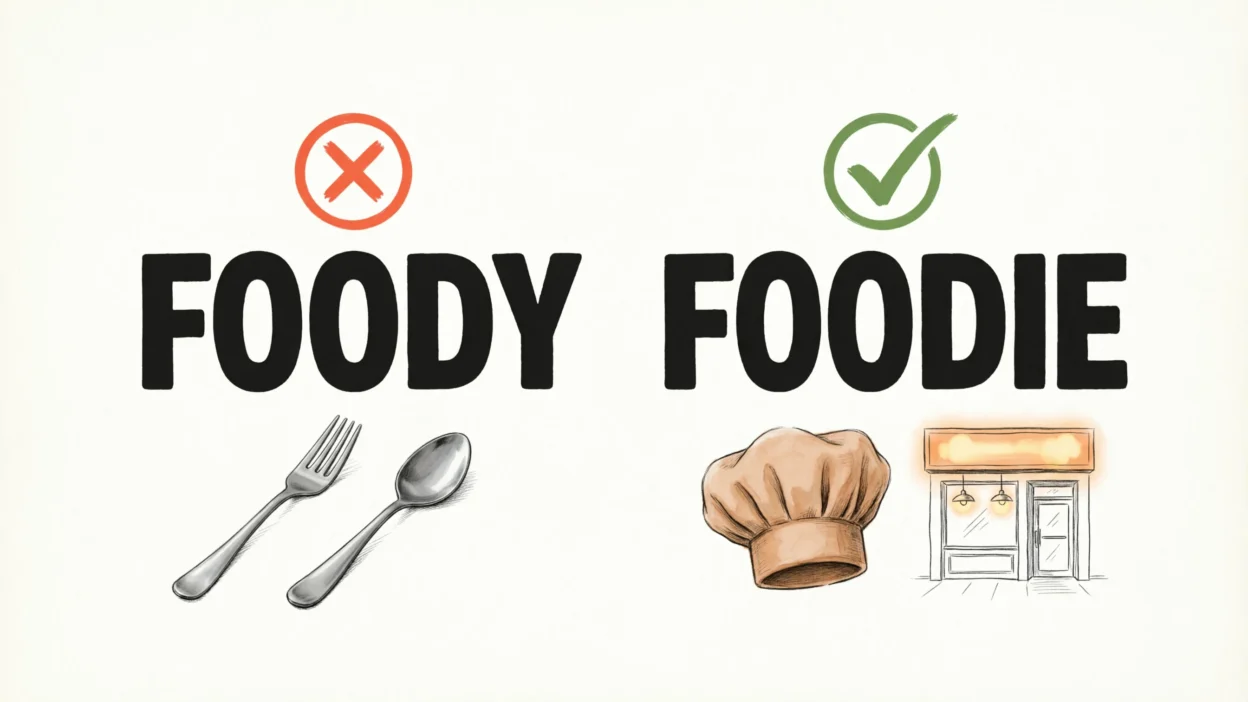
❌ Foody (less common and generally considered nonstandard)
✅ Foodie (standard and widely used)
A foodie is a person who has a strong interest in food, cooking, dining experiences, and discovering new cuisines. While foody occasionally appears online, foodie is the preferred spelling in dictionaries, publications, and everyday usage.
What Does “Foodie” Mean?
A foodie is someone who enjoys food beyond simply eating it. They often appreciate culinary experiences, explore different restaurants, try unique dishes, and stay interested in food culture.
A foodie may:
- Enjoy cooking at home
- Visit new restaurants regularly
- Follow food blogs and chefs
- Experiment with international cuisines
- Share food reviews and recommendations
Examples
- Sarah is a foodie who loves trying new restaurants.
- As a foodie, he travels to experience local cuisine.
- The city is perfect for foodies because of its diverse dining scene.
- She started a blog to share her foodie adventures.
Synonyms and Related Terms
Some LSI keywords and related phrases include:
- Food lover
- Culinary enthusiast
- Gourmet enthusiast
- Restaurant lover
- Food blogger
- Food critic
- Gastronomy enthusiast
- Cuisine explorer
- Cooking enthusiast
- Fine dining lover
Foody vs Foodie: What’s the Difference?
The main difference is that one spelling is standard and the other is uncommon.
| Term | Correct? | Meaning |
|---|---|---|
| Foodie | ✅ Yes | A person who loves food and culinary experiences |
| Foody | ⚠️ Rarely used | Alternative spelling, generally considered nonstandard |
Today, foodie is overwhelmingly preferred in dictionaries, media publications, travel guides, food blogs, and everyday conversation.
Why Do People Write “Foody”?
Although foodie is the standard spelling, some people still use foody.
1. Spelling Assumptions
People often assume that adding “-y” to “food” creates the correct noun.
For example:
- Food → Foody
However, English usage evolved differently, and foodie became the accepted form.
2. Informal Online Usage
Some social media users, usernames, and blogs use foody as a stylistic choice.
Examples:
- FoodyLife
- HappyFoody
- TravelFoody
3. Lack of Familiarity
Writers who have never encountered the term foodie may naturally assume foody is correct.
Is “Foody” Ever Correct?
While foody is not technically wrong in every situation, it is generally considered a variant spelling rather than the standard form.
You may encounter it in:
Brand Names
Businesses sometimes choose unique spellings for branding purposes.
Examples:
- Foody Market
- Foody Kitchen
- Foody Adventures
Usernames and Social Media Handles
Examples:
- @thefoodytraveler
- @urbanfoody
Outside branding and personal naming choices, foodie is the preferred spelling.
How to Use “Foodie” Correctly
In Everyday Conversation
- My sister is a foodie who loves street food.
- Every foodie should visit this restaurant.
In Travel Writing
- Paris is a dream destination for foodies.
- The city attracts foodies from around the world.
In Restaurant Reviews
- This hidden gem is perfect for adventurous foodies.
- Local foodies highly recommend this café.
In Social Media Content
- Calling all foodies!
- A foodie paradise awaits.
Common Mistakes to Avoid
Mistake #1: Using Foody in Formal Writing
❌ She is a passionate foody.
✅ She is a passionate foodie.
Mistake #2: Assuming Both Spellings Are Equally Common
❌ Most dictionaries prefer foody.
✅ Most dictionaries and style guides prefer foodie.
Mistake #3: Confusing Foodie With Chef
❌ Every foodie is a professional chef.
✅ A foodie enjoys food, but may not be a chef.
Mistake #4: Using Foodie as an Adjective Incorrectly
❌ The foodie restaurant was amazing.
✅ The restaurant is popular among foodies.
American vs British English
There is very little difference between American and British English regarding this word.
| Feature | American English | British English |
|---|---|---|
| Preferred spelling | Foodie | Foodie |
| Meaning | Food enthusiast | Food enthusiast |
| Common usage | Very common | Very common |
| Foody accepted? | Rarely | Rarely |
Both varieties overwhelmingly favor foodie.
Related Words and Alternatives
Formal Alternatives
- Culinary enthusiast
- Gastronomy enthusiast
- Food connoisseur
- Gourmet enthusiast
Informal Alternatives
- Food lover
- Restaurant enthusiast
- Food fan
- Cooking fan
Professional Alternatives
- Food critic
- Culinary expert
- Restaurant reviewer
- Gastronomy specialist
Grammar Tip
A useful tip is to remember that foodie functions as a noun referring to a person.
Examples:
- She is a foodie.
- He became a foodie after traveling abroad.
The suffix -ie is commonly used in English to create informal nouns describing people.
Similar examples include:
- Techie
- Groupie
- Moviegoer (different pattern but similar role)
- Selfie enthusiast communities often use similar formations
Because of this established usage pattern, foodie became the accepted spelling rather than foody.
Real-Life Examples
Example 1: Restaurant Visit
As a foodie, she always searches for hidden local restaurants.
Example 2: Travel Experience
The city attracts foodies because of its famous street food culture.
Example 3: Social Media Post
Every foodie should try this incredible dessert.
Example 4: Food Blog
His foodie blog reviews restaurants across the country.
FAQs
Is foodie or foody correct?
Foodie is the correct and widely accepted spelling.
What does foodie mean?
A foodie is someone who loves food, dining experiences, cooking, and exploring cuisines.
Is foody a real word?
Foody appears occasionally, but it is not the standard spelling preferred in modern English.
Why is foodie more popular than foody?
The spelling foodie became established through widespread usage in media, dictionaries, and food culture.
Is foodie informal?
Yes. Foodie is generally considered an informal but widely accepted word.
Can I use foody in branding?
Yes. Businesses and creators sometimes use foody as a stylistic brand name.
Is foodie used in both American and British English?
Yes. Both American and British English commonly use foodie.
What is another word for foodie?
Alternatives include food lover, culinary enthusiast, gourmet enthusiast, and food connoisseur.
Summary
When comparing foody vs foodie, the clear winner is foodie. It is the standard spelling recognized in dictionaries and commonly used across blogs, travel guides, restaurant reviews, and everyday conversation. While foody occasionally appears in branding or usernames, it is not the preferred form in standard English.
If you’re describing someone who loves exploring food, restaurants, cooking, and culinary experiences, foodie is the word you should choose. Using the accepted spelling helps your writing appear more professional, natural, and aligned with modern English usage.
Actionable Takeaway
Whenever you’re referring to a food enthusiast, remember: foodie is the standard spelling. Save foody for brand names or personal creative projects, and use foodie in everyday and professional writing.

Shan Waston is a skilled writer at Symboliy.com, producing clear, engaging content on language, communication, and everyday expressions to help readers understand meaning and usage confidently in modern digital contexts.