Have you ever wondered whether you should write goodmorning or good morning? It’s a common question, especially when sending emails, writing text messages, posting on social media, or communicating professionally. Many people use these forms interchangeably, but only one is considered correct in standard English.
Understanding the difference between goodmorning vs good morning can help you write more accurately and make a better impression in both personal and professional communication.
In this guide, you’ll learn the correct usage, meaning, examples, common mistakes, and practical tips to avoid confusion.
Quick Answer
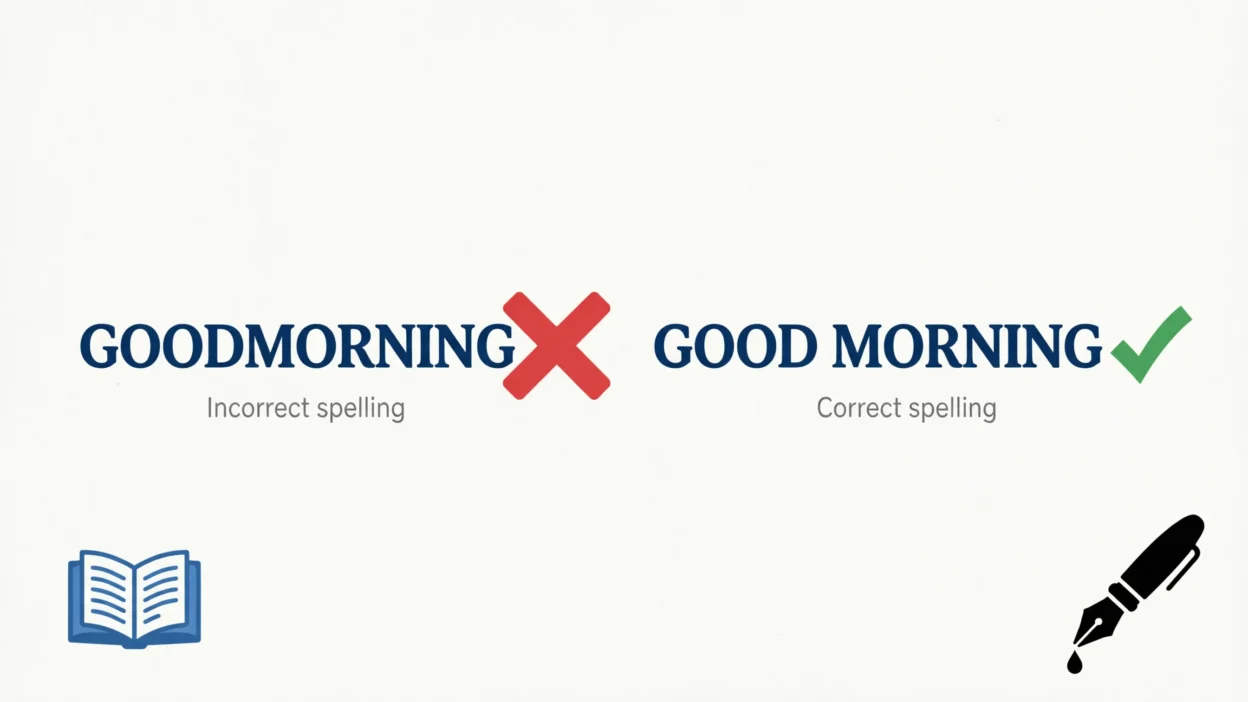
Good morning (two words) is the correct spelling and standard greeting in English.
❌ Goodmorning
✅ Good morning
Whether you’re writing in American English or British English, good morning is the accepted form. The single-word version, goodmorning, is generally considered incorrect in formal and standard written English.
What Does “Good Morning” Mean?
Good morning is a polite greeting used when meeting or speaking to someone during the morning hours. It is one of the most common greetings in the English language and is appropriate in both formal and informal situations.
The phrase combines:
- Good = pleasant, positive, or favorable
- Morning = the early part of the day
Together, the expression conveys a wish for someone to have a pleasant morning.
Examples
- Good morning, everyone.
- Good morning, Sarah. How are you today?
- I wanted to wish you a good morning before your meeting.
- Good morning, class. Let’s begin today’s lesson.
Goodmorning vs Good Morning: What’s the Difference?
The main difference is simple:
| Term | Correct? | Usage |
|---|---|---|
| Good morning | ✅ Yes | Standard English greeting |
| Goodmorning | ❌ No | Considered a spelling error in most contexts |
In modern English dictionaries and style guides, good morning is written as two separate words.
Many people accidentally write goodmorning because they type quickly or see it used informally on social media. However, it is not accepted as the standard form in professional writing, academic work, or formal communication.
Why Do People Write “Goodmorning”?
There are several reasons why people combine the words:
1. Fast Typing Habits
When sending messages or emails, users often type quickly and merge common phrases together.
Example:
- Goodmorning everyone!
Although common online, it is still considered incorrect.
2. Social Media Trends
Platforms like Instagram, Facebook, and X often feature hashtags such as:
- #goodmorning
- #goodmorningworld
- #goodmorningeveryone
In hashtags, combining words is normal because spaces are not allowed.
3. Autocorrect and Informal Usage
Some devices or apps may save frequently used expressions, leading users to believe the single-word version is acceptable.
Is “Goodmorning” Ever Correct?
In standard English grammar, goodmorning is generally not correct as a greeting.
However, there are a few exceptions:
Brand Names
Some companies, products, or campaigns may intentionally use:
- GoodMorning
- Goodmorning
as part of their branding.
Usernames and Hashtags
Examples include:
- @goodmorningdaily
- #goodmorning
These are stylistic choices rather than grammatical rules.
Outside of these special cases, use good morning.
How to Use “Good Morning” Correctly
As a Greeting
When greeting someone:
- Good morning, David.
- Good morning, team.
At the Beginning of an Email
Professional emails often begin with:
- Good morning, John,
- Good morning everyone,
During Presentations
Speakers frequently start with:
- Good morning, folks.
- Good morning, everyone. Thank you for joining us.
In Everyday Conversations
- Good morning! How did you sleep?
- Good morning! Ready for the day?
Common Mistakes to Avoid
Many writers make small errors when using this greeting.
Mistake #1: Writing It as One Word
❌ Goodmorning everyone.
✅ Good morning everyone.
Mistake #2: Incorrect Capitalization
❌ good Morning
✅ Good morning
Mistake #3: Omitting Punctuation in Formal Writing
❌ Good morning John
✅ Good morning, John.
Mistake #4: Using It at the Wrong Time
Although usage varies by culture, “good morning” is usually used before noon.
After that, people typically switch to:
- Good afternoon
- Good evening
Good Morning in American vs British English
One of the most reassuring aspects of this phrase is that there is no significant difference between American and British English.
| Feature | American English | British English |
|---|---|---|
| Correct spelling | Good morning | Good morning |
| Formal usage | Yes | Yes |
| Informal usage | Yes | Yes |
| One-word version accepted? | No | No |
Both language varieties follow the same spelling convention.
Whether you’re writing to someone in New York, London, Sydney, or Toronto, good morning remains the correct choice.
Related Greetings and Alternatives
Depending on the situation, you may choose other greetings.
Formal Alternatives
- Good morning
- Good afternoon
- Good evening
- Greetings
Friendly Alternatives
- Morning!
- Hey, good morning!
- Hope you’re having a great morning.
- Wishing you a wonderful morning.
Professional Email Alternatives
- Good morning, team.
- Good morning, everyone.
- Good morning, colleagues.
- Good morning, Mr. Smith.
Grammar Tip: Why It Stays Two Words
English contains many compound words, but not every frequently used phrase becomes a single word.
For example:
Correct:
- Good morning
- Good afternoon
- Good evening
Incorrect:
- Goodafternoon
- Goodevening
Because these greetings function as adjective-plus-noun phrases, standard English keeps them separated.
Examples in Real-Life Communication
Business Email
Good morning, Jennifer,
Thank you for your message. I will review the proposal and get back to you shortly.
Classroom Setting
Good morning, students. Please open your textbooks to page 45.
Casual Text Message
Good morning! Hope your day starts off great.
Meeting Introduction
Good morning, everyone. Thank you for attending today’s meeting.
FAQs
Is goodmorning one word or two?
The correct form is good morning, written as two words.
Is goodmorning grammatically correct?
No. In standard English, goodmorning is considered incorrect.
Why do people write goodmorning?
People often combine the words due to typing habits, social media usage, or informal communication.
Is good morning correct in professional emails?
Yes. It is one of the most common and professional email greetings.
Do Americans and British people write it differently?
No. Both American English and British English use good morning as two separate words.
Can I use goodmorning in a hashtag?
Yes. Hashtags typically combine words because spaces are not allowed.
Example:
- #goodmorning
- #goodmorningeveryone
Should good morning be capitalized?
Only when it begins a sentence, title, or greeting line.
Example:
- Good morning, Sarah.
What is the best alternative to good morning?
Depending on the context, alternatives include:
- Morning!
- Greetings
- Good afternoon
- Good evening
Summary
When comparing goodmorning vs good morning, the answer is clear: good morning is the correct spelling in standard English. It is accepted in formal, informal, academic, and professional communication, while goodmorning is generally considered a spelling mistake except in hashtags, usernames, or brand names.
Using the correct form helps improve your writing, communication skills, and professional image. Whether you’re drafting an email, greeting colleagues, sending a text message, or speaking in public, remember that the standard and universally accepted expression is good morning.
Actionable Takeaway
Before sending your next email, message, or social media post, quickly check your greeting. If you’ve written goodmorning, separate it into good morning. This small correction instantly makes your writing look more polished, professional, and grammatically accurate.

Here is a professional 30-word author biography including your site name Symboliy.com:
Martin Hood is a professional writer at Symboliy.com, creating clear, informative content focused on language, communication, and meaningful expressions for everyday and professional use.