
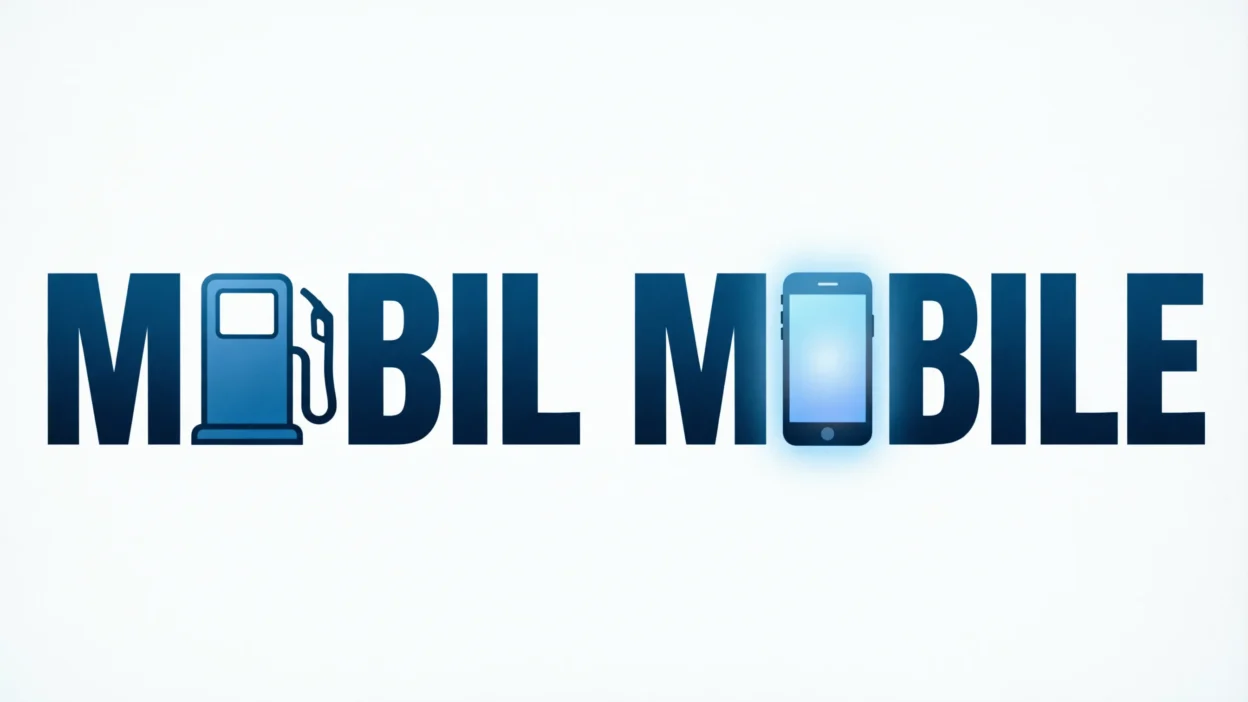
If you’ve ever come across the words mobil and mobile, you may have wondered whether they mean the same thing or if one is simply a spelling mistake. This confusion is common because the two words look nearly identical, yet they are used very differently in English.
Understanding the difference between mobil vs mobile is important for clear communication, professional writing, and avoiding embarrassing spelling errors.
In this guide, you’ll learn the meaning of each term, when to use them, common mistakes to avoid, and whether American and British English treat these words differently.
Quick Answer
Mobile is the correct English word in most situations and means movable, portable, or related to mobile phones.
Mobil is generally not a standard English word. However, it is recognized as a brand name, most notably associated with the petroleum company Mobil.
✅ Correct: I bought a new mobile phone.
❌ Incorrect: I bought a new mobil phone.
✅ Correct: Mobil is a well-known fuel brand.
What Does Mobile Mean?
The word mobile is an adjective and noun used in modern English.
It commonly means:
- Able to move freely
- Portable or easy to carry
- Related to mobile phones
- Capable of changing position
Examples of Mobile
- She uses a mobile phone for work.
- The hospital has a mobile medical unit.
- Modern employees need to be mobile and flexible.
- The app works perfectly on mobile devices.
- He checked his email using his mobile.
Today, the word mobile is heavily associated with smartphones, mobile technology, wireless communication, and portable devices.
What Does Mobil Mean?
Mobil is primarily known as a brand name rather than a standard English vocabulary word.
It is most commonly associated with:
- Mobil gasoline stations
- Mobil lubricants
- Mobil fuel products
The name became globally recognized through the petroleum company that later merged into ExxonMobil.
Examples of Mobil
- I stopped at a Mobil station to refuel.
- The company sells Mobil motor oils worldwide.
- Mobil products are available in many countries.
Outside of brand-related references, mobil is generally not used in standard English writing.
Mobil vs Mobile: Key Difference
The primary difference is simple:
| Feature | Mobil | Mobile |
|---|---|---|
| Standard English word | No | Yes |
| Commonly used in daily writing | No | Yes |
| Brand name | Yes | No |
| Refers to phones and devices | No | Yes |
| Dictionary word | Limited usage | Yes |
| Suitable in general sentences | Usually No | Yes |
For most writing situations, mobile is the word you need.
Why Do People Confuse Mobil and Mobile?
Several factors contribute to the confusion.
Similar Spelling
The words differ by only one letter, making them easy to mistype.
Brand Recognition
Many people recognize the Mobil fuel brand and mistakenly assume it is an alternative spelling of mobile.
Typing Errors
Fast typing on keyboards and smartphones often leads to accidentally dropping the final “e.”
Search Engine Queries
People frequently search for:
- mobil meaning
- mobil vs mobile
- mobile spelling
- is mobil a word
This indicates widespread confusion about the two terms.
Understanding Mobile in Modern English
The word mobile has become increasingly important in today’s digital world.
It appears in numerous contexts:
Mobile Phones
- Mobile phone
- Mobile device
- Mobile communication
Mobile Technology
- Mobile applications
- Mobile software
- Mobile payments
Mobile Workforce
- Mobile employees
- Mobile teams
- Mobile business operations
Mobile Services
- Mobile banking
- Mobile healthcare
- Mobile internet
Because technology has become central to daily life, mobile is now one of the most frequently used words in business and technology communication.
Examples of Mobile in Sentences
Here are some examples showing correct usage.
Technology
- The website is optimized for mobile users.
- Mobile applications dominate the digital marketplace.
Business
- Mobile solutions help companies improve productivity.
- The team relies on mobile communication tools.
Education
- Students can access lessons through mobile devices.
- Mobile learning continues to grow globally.
Daily Life
- I forgot my mobile at home.
- She spends too much time on her mobile phone.
These examples show why mobile is the correct choice in everyday communication.
Common Mistakes Related to Mobil vs Mobile
Many writers accidentally use the wrong word.
Mistake 1: Dropping the Final E
❌ I need a new mobil phone.
✅ I need a new mobile phone.
Mistake 2: Using Mobil as an Adjective
❌ The company launched a mobil app.
✅ The company launched a mobile app.
Mistake 3: Confusing the Brand With the Common Word
❌ Mobile fuel stations are owned by mobile.
✅ Mobil fuel stations are owned by Mobil.
The first refers to the brand name, while the second refers to the general English word.
Is Mobil Ever Correct?
Yes, but only in specific situations.
You should use Mobil when referring to:
- The Mobil fuel brand
- Mobil motor oils
- Historical references to the company
- Brand-related products and services
Examples:
- Mobil introduced a new lubricant product.
- The Mobil station was busy during the holiday weekend.
In all other contexts, use mobile.
American vs British English
Unlike many spelling comparisons, there is no significant difference between American and British English in this case.
Both versions use:
- Mobile phone
- Mobile device
- Mobile technology
Examples:
American English
- Mobile devices have transformed communication.
British English
- Mobile phones are widely used across the country.
The spelling remains mobile in both forms of English.
Related Words and Forms
Learning related vocabulary can help strengthen your understanding.
Mobile
The primary adjective and noun.
Example:
- Mobile technology continues to evolve.
Mobility
The ability to move freely.
Example:
- Improved mobility helps older people individuals remain independent.
Mobilize
To organize or prepare for action.
Example:
- The organization mobilized volunteers quickly.
Mobility Solutions
A common business and technology term.
Example:
- The company develops mobility solutions for enterprises.
These related terms often appear in discussions involving transportation, technology, and communication.
Tips to Remember the Correct Spelling
If you often confuse mobil and mobile, these tips can help.
- Think of “mobile phone” as the standard phrase.
- Remember that most English dictionaries list mobile, not mobil.
- Use Mobil only when discussing the fuel brand.
- Check whether you’re referring to a company or a general object.
- If it’s a phone, app, device, or technology, the answer is almost always mobile.
A simple memory trick:
Mobile ends with E because it is the Everyday English word.
When Should You Use Mobile?
Use mobile whenever you’re talking about:
- Smartphones
- Tablets
- Wireless communication
- Portable technology
- Movable objects
- Mobile services
- Mobile applications
- Mobile networks
Examples:
- Mobile banking is becoming more popular.
- The software is designed for mobile devices.
- Mobile internet usage continues to increase worldwide.
In nearly every non-brand context, mobile is the correct choice.
Frequently Asked Questions
Is mobil a real word?
Mobil is primarily recognized as a brand name rather than a standard English vocabulary word.
Which is correct: mobil or mobile?
For general English usage, mobile is correct.
Why do people spell mobile as mobil?
Most cases result from typing mistakes, brand familiarity, or confusion about spelling.
Is mobil accepted in dictionaries?
Some dictionaries recognize Mobil as a proper noun referring to the company or brand.
What does mobile mean?
Mobile means movable, portable, or related to mobile phones and wireless technology.
Is mobile used in both American and British English?
Yes. Both American and British English use the spelling mobile.
Can I write mobil phone?
No. The correct phrase is mobile phone.
Is Mobil a company name?
Yes. Mobil is a globally recognized petroleum and fuel brand.
Summary
When comparing mobil vs mobile, the distinction is straightforward. Mobile is the standard English word used to describe portable devices, movable objects, wireless communication, and modern technology. It appears in countless everyday phrases, including mobile phone, mobile app, mobile network, and mobile device.
Meanwhile, Mobil is primarily a brand name associated with fuel, gasoline stations, lubricants, and petroleum products. Unless you’re specifically referring to the company or its products, you should use mobile in your writing. Knowing this difference will help you avoid common spelling mistakes and communicate more accurately.
Actionable Takeaway
Whenever you write about phones, apps, technology, communication, or portability, use mobile. Reserve Mobil only for references to the fuel and petroleum brand. A quick check for the final “e” can save you from a common writing error.

Mike Poop is a dedicated writer at Symboliy.com, creating clear, practical content about language, communication, and everyday expressions to help readers understand meaning and usage confidently in professional contexts worldwide.