Have you ever stopped while writing and wondered whether the correct form is donts or don’ts? You’re not alone. This is one of the most common punctuation and spelling questions in English, especially when writing lists of rules, tips, or guidelines.
Whether you’re a student, professional writer, blogger, or business owner, using the correct form can improve your credibility and make your writing look polished.
In this guide, you’ll learn the difference between donts and don’ts, why one is correct, how to use it properly, common mistakes to avoid, and examples that make everything crystal clear.
Quick Answer
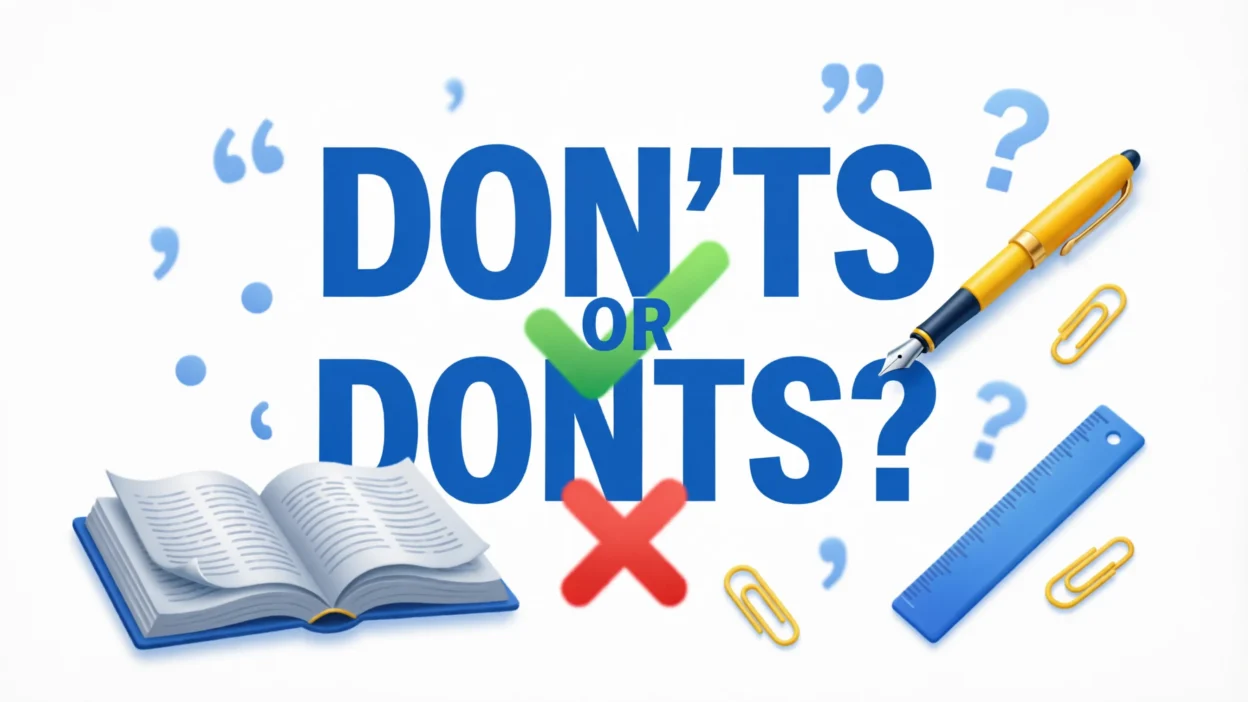
The correct spelling is “don’ts.”
- ✅ Don’ts = Correct
- ❌ Donts = Incorrect
The word don’ts is the plural form of don’t (do not) when it is used as a noun meaning things you should not do.
Example:
- Here are some important social media don’ts.
- The teacher explained the classroom don’ts.
The spelling donts without an apostrophe is considered incorrect in standard English.
What Does “Don’ts” Mean?
The word don’ts refers to actions, behaviors, or practices that should be avoided.
It is commonly paired with dos in phrases like:
- Dos and don’ts of business communication
- Dos and don’ts of job interviews
- Dos and don’ts of social media marketing
- Travel dos and don’ts
- Workplace dos and don’ts
In simple terms, don’ts means:
Things you should not do.
Example in Everyday Language
If someone says:
“Here are the dos and don’ts of driving.”
They mean:
- Dos = Recommended actions
- Don’ts = Actions to avoid
Why Is “Don’ts” Spelled With an Apostrophe?
Many people find this confusing because apostrophes are often used to show possession.
However, in this case, the apostrophe is retained because don’ts comes from the contraction don’t.
The base word is:
- Do not → Don’t
When making it plural as a noun, the apostrophe remains:
- One don’t
- Several don’ts
This follows a long-established English writing convention.
Don’ts vs Donts: Which Is Correct?
| Word | Correct? | Meaning |
|---|---|---|
| Don’ts | ✅ Yes | Things you should not do |
| Donts | ❌ No | Incorrect spelling |
Whenever you’re referring to prohibited actions or mistakes to avoid, use don’ts.
Correct Examples
- Learn the dos and don’ts of public speaking.
- The guide covers workplace don’ts.
- Parents should teach children important online safety don’ts.
- The article explains travel don’ts for first-time visitors.
Incorrect Examples
- Learn the dos and donts of public speaking.
- The guide covers workplace donts.
- Parents should teach children online safety donts.
Examples of “Don’ts” in Sentences
Seeing the word in context makes it easier to remember.
Business Writing
- Every employee should understand the company’s dos and don’ts.
- The training manual includes several workplace don’ts.
Education
- Teachers often discuss classroom don’ts at the beginning of the year.
- Students learned the exam-day don’ts before the test.
Travel
- Research local cultural don’ts before visiting another country.
- Understanding travel don’ts can prevent embarrassing situations.
Social Media
- The webinar covered social media marketing don’ts.
- Ignoring common social media don’ts can hurt your brand reputation.
Common Mistakes People Make
1. Writing “Donts” Without an Apostrophe
This is the most frequent mistake.
❌ Donts
✅ Don’ts
The apostrophe is required because the word originates from the contraction “don’t.”
2. Using “Don’ts” With Incorrect Capitalization
When used in the middle of a sentence, capitalization should follow normal grammar rules.
✅ The article lists several don’ts.
❌ The article lists several Don’ts.
3. Confusing Possessives and Plurals
Some writers assume apostrophes should never appear in plural words.
While that is generally true, don’ts is an exception because it comes from a contraction.
4. Mixing Up Dos and Do’s
Many style guides accept either:
- Dos and don’ts
- Do’s and don’ts
However, modern style guides often prefer:
Dos and don’ts
because it looks cleaner and avoids unnecessary punctuation.
Dos and Don’ts: The Most Common Pairing
The phrase dos and don’ts is extremely common in English.
It is used to describe:
- Best practices
- Guidelines
- Rules
- Recommendations
- Mistakes to avoid
Examples
Job Interview Dos and Don’ts
Dos:
- Arrive on time
- Dress professionally
- Research the company
Don’ts:
- Interrupt the interviewer
- Arrive late
- Speak negatively about former employers
Social Media Dos and Don’ts
Dos:
- Post consistently
- Engage with followers
- Share valuable content
Don’ts:
- Spam your audience
- Ignore comments
- Share misleading information
American vs British English: Is There a Difference?
Good news: there is virtually no difference between American English and British English regarding the spelling of don’ts.
Both varieties generally use:
✅ Don’ts
The primary difference may appear in editorial style preferences regarding dos versus do’s, but don’ts remains widely accepted in both American and British English.
American English
- Dos and don’ts
British English
- Dos and don’ts
Therefore, if you’re writing for an international audience, don’ts is the safest choice.
Why Correct Spelling Matters
Using proper punctuation and spelling improves:
- Professionalism
- Readability
- Search engine optimization (SEO)
- Academic credibility
- User trust
Small mistakes like writing donts instead of don’ts can distract readers and create an impression of carelessness.
For businesses and content creators, accurate language helps establish authority and expertise.
Easy Trick to Remember the Correct Form
A simple memory trick is:
If “don’t” has an apostrophe, “don’ts” keeps it too.
Think of it this way:
- Don’t → Don’ts
The apostrophe stays because the word comes directly from the contraction.
Whenever you’re tempted to write donts, remember:
No apostrophe = incorrect.
Frequently Asked Questions
Is “donts” ever correct?
No. In standard English grammar and spelling, donts is considered incorrect. The accepted form is don’ts.
Why does “don’ts” have an apostrophe?
The apostrophe remains because the word originates from the contraction don’t (do not).
Is it “dos and don’ts” or “do’s and don’ts”?
Both can be found in published writing, but many modern style guides prefer dos and don’ts.
Can I use “don’ts” in formal writing?
Yes. The word is widely accepted in professional, academic, and business writing.
Is “don’ts” a real dictionary word?
Yes. Major dictionaries recognize don’ts as the plural noun referring to things that should not be done.
Do American and British English spell it differently?
No. Both American and British English generally use don’ts.
What is the singular form of “don’ts”?
The singular form is don’t when used as a noun meaning a prohibited action.
What are some synonyms for “don’ts”?
Related words and phrases include:
- Prohibitions
- Restrictions
- Mistakes to avoid
- Rules against
- Things not to do
- Forbidden actions
- Negative practices
Summary
If you’ve been wondering whether to write donts or don’ts, the answer is straightforward: don’ts is the correct spelling, while donts is incorrect. The apostrophe remains because the word originates from the contraction don’t, and it has become the accepted plural noun used to describe actions that should be avoided.
Whether you’re writing about business etiquette, travel advice, classroom rules, social media best practices, or everyday guidelines, using don’ts correctly helps your writing appear more professional and trustworthy. Remember the simple rule: if don’t contains an apostrophe, don’ts keeps it too.
Actionable Takeaway
Before publishing any document, article, email, or social media post, quickly check your spelling. If you’re referring to actions people should avoid, always write don’ts, never donts. This small punctuation detail can make a big difference in the accuracy and professionalism of your writing.

Here is a professional 30-word author biography including your site name Symboliy.com:
Martin Hood is a professional writer at Symboliy.com, creating clear, informative content focused on language, communication, and meaningful expressions for everyday and professional use.