If you’ve ever wondered whether panic or panick is the correct spelling, you’re not alone. Many English learners, students, writers, and even native speakers get confused when using this word in different contexts.
A quick glance online reveals both versions appearing in searches, social media posts, and even casual writing.
The good news is that the answer is straightforward. Understanding the difference between panic vs panick can help you avoid common spelling mistakes and improve your writing accuracy.
In this guide, you’ll learn the correct spelling, why the confusion exists, examples of proper usage, common errors, and helpful grammar tips.
Quick Answer
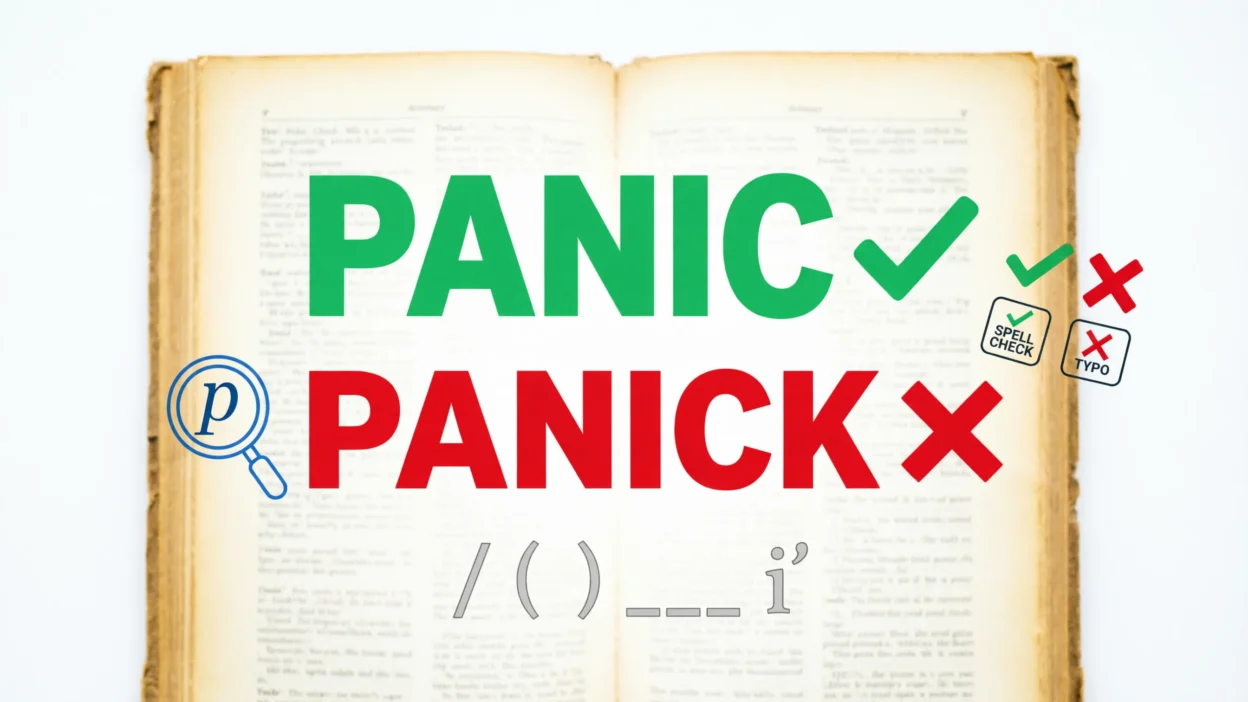
“Panic” is the correct spelling.
“Panick” is incorrect and is not recognized as a standard English word.
Examples:
- ✅ I began to panic when I couldn’t find my passport.
- ✅ The sudden noise caused widespread panic.
- ❌ I started to panick when the lights went out.
The confusion often occurs because some verb forms add a “k,” such as panicked and panicking.
What Does “Panic” Mean?
The word panic can function as both a noun and a verb.
Panic as a Noun
As a noun, panic refers to a sudden feeling of overwhelming fear, anxiety, or alarm.
Examples:
- A wave of panic spread through the crowd.
- She felt panic rising as the deadline approached.
- The emergency announcement caused public panic.
Panic as a Verb
As a verb, panic means to become frightened or lose control due to fear.
Examples:
- Don’t panic during the exam.
- He tends to panic under pressure.
- Many investors panicked during the market downturn.
The term is commonly associated with fear, anxiety, distress, alarm, nervousness, and emotional overwhelm.
Panic vs Panick: Understanding the Difference
The primary difference is simple:
| Word | Correct? | Meaning |
|---|---|---|
| Panic | ✅ Yes | A feeling of fear or the act of becoming frightened |
| Panick | ❌ No | Incorrect spelling |
In modern English dictionaries, panic is the accepted spelling. The word panick is considered a spelling mistake.
Writers sometimes assume that adding a “k” is necessary because of related forms like panicked and panicking, but the base word remains panic.
Why Do People Spell It as “Panick”?
The confusion comes from English spelling rules.
When adding endings such as -ed or -ing to words ending in c, English often inserts a k to preserve the hard “c” sound.
Examples:
- Panic → Panicked
- Panic → Panicking
- Mimic → Mimicked
- Mimic → Mimicking
- Picnic → Picnicked
- Picnic → Picnicking
Because people frequently see words like panicked and panicking, they mistakenly assume the root word should be panick.
However, the root form remains panic.
Correct Forms of the Word “Panic”
Here are the standard grammatical forms:
| Form | Correct Spelling |
|---|---|
| Base Form | Panic |
| Past Tense | Panicked |
| Past Participle | Panicked |
| Present Participle | Panicking |
| Noun | Panic |
| Adjective | Panicky |
Examples:
- She panicked when she lost her phone.
- The child became panicky during the storm.
- They were panicking about the results.
- Don’t panic; everything will be okay.
Common Mistakes with Panic
Many writers make similar errors when using this word.
Mistake 1: Writing “Panick”
Incorrect:
- I started to panick before the presentation.
Correct:
- I started to panic before the presentation.
Mistake 2: Writing “Panicing”
Incorrect:
- Everyone was panicing during the emergency.
Correct:
- Everyone was panicking during the emergency.
Mistake 3: Writing “Paniced”
Incorrect:
- She paniced when she heard the news.
Correct:
- She panicked when she heard the news.
Understanding these patterns can significantly improve your spelling accuracy.
Examples of Panic in Sentences
Here are some practical examples showing the correct usage.
Everyday Situations
- Don’t panic if your computer freezes.
- I began to panic when I missed my flight.
- The loud noise caused panic among the guests.
Workplace Examples
- Employees should not panic during organizational changes.
- The sudden announcement created panic across departments.
- Investors panicked after hearing the rumors.
Academic Examples
- Students often panic before final exams.
- Exam-related panic can affect performance.
- Learning relaxation techniques helps reduce panic.
Panic, Panicked, and Panicking Explained
Many people understand the word panic but become confused when it changes form.
Panic
Present form or noun.
Examples:
- Don’t panic.
- The situation caused panic.
Panicked
Past tense.
Examples:
- He panicked during the interview.
- The crowd panicked after hearing the alarm.
Panicking
Present participle.
Examples:
- She is panicking unnecessarily.
- People were panicking before official information arrived.
Remember: the extra “k” appears only when adding certain endings.
American vs British English: Is There Any Difference?
When comparing panic vs panick, there is no difference between American and British English.
Both varieties of English use:
- Panic
- Panicked
- Panicking
- Panicky
Neither American English nor British English recognizes panick as the standard spelling.
This means writers in the United States, United Kingdom, Canada, Australia, and other English-speaking countries follow the same spelling rules.
Related Words and Synonyms
Understanding related vocabulary can help improve your writing and SEO relevance.
Common synonyms for panic include:
- Fear
- Anxiety
- Alarm
- Terror
- Distress
- Dread
- Apprehension
- Nervousness
- Fright
- Worry
Example:
Instead of saying:
- She felt panic.
You might write:
- She felt intense anxiety.
- She experienced sudden fear.
- She was overwhelmed by alarm.
Memory Trick to Remember the Correct Spelling
A simple trick is:
The word starts and ends with “c” only.
Think:
Panic = Correct
Then remember:
Panicked and Panicking gain a “k” only because of the added endings.
Formula:
- Panic + ed = Panicked
- Panic + ing = Panicking
The base word never becomes panick.
FAQs About Panic vs Panick
Is panick a real word?
No. Panick is not considered a standard English word and is generally treated as a spelling error.
Which is correct: panic or panick?
Panic is the correct spelling in all major English dictionaries.
Why does panicked have a “k”?
The extra “k” preserves the hard “c” sound when adding -ed.
Is panicking spelled with one “k” or two?
It is spelled with one k: panicking.
Is paniced correct?
No. The correct past tense form is panicked.
Is there a British spelling of panick?
No. British English also uses panic.
Can panic be used as both a noun and a verb?
Yes. It can describe a feeling of fear (noun) or the act of becoming frightened (verb).
What is the adjective form of panic?
The adjective form is panicky.
Summary
When comparing panic vs panick, the correct choice is always panic. It is the accepted spelling in both American and British English and can function as either a noun or a verb. The word panick is simply a common misspelling that arises because related forms such as panicked and panicking contain an added “k.”
To avoid mistakes, remember that the base word is always panic, while the “k” only appears when certain endings are added. Whether you’re writing an essay, email, blog post, or professional document, using the correct spelling helps improve clarity, credibility, and overall writing quality.
Actionable Takeaway
Whenever you are unsure, ask yourself: Am I using the base word or adding an ending? If it’s the base form, write panic. If you’re using past tense or continuous tense, write panicked or panicking. This simple rule will help you avoid one of the most common English spelling mistakes.

Here is a professional 30-word author biography including your site name Symboliy.com:
Martin Hood is a professional writer at Symboliy.com, creating clear, informative content focused on language, communication, and meaningful expressions for everyday and professional use.