Have you ever wondered whether you should write peeked or peaked? These two words sound exactly alike, making them common homophones that often confuse English learners and even native speakers.
Despite their similar pronunciation, they have completely different meanings and are used in different situations.
In this guide, you’ll learn the difference between peeked or peaked, see practical examples, discover common mistakes, and understand when to use each word correctly.
By the end, you’ll be able to choose the right word with confidence in both writing and conversation.
Quick Answer
The difference between peeked and peaked is simple:
- Peeked means looked quickly or secretly at something.
- Peaked means reached the highest point, looked pale or ill (less common), or formed a peak.
In short:
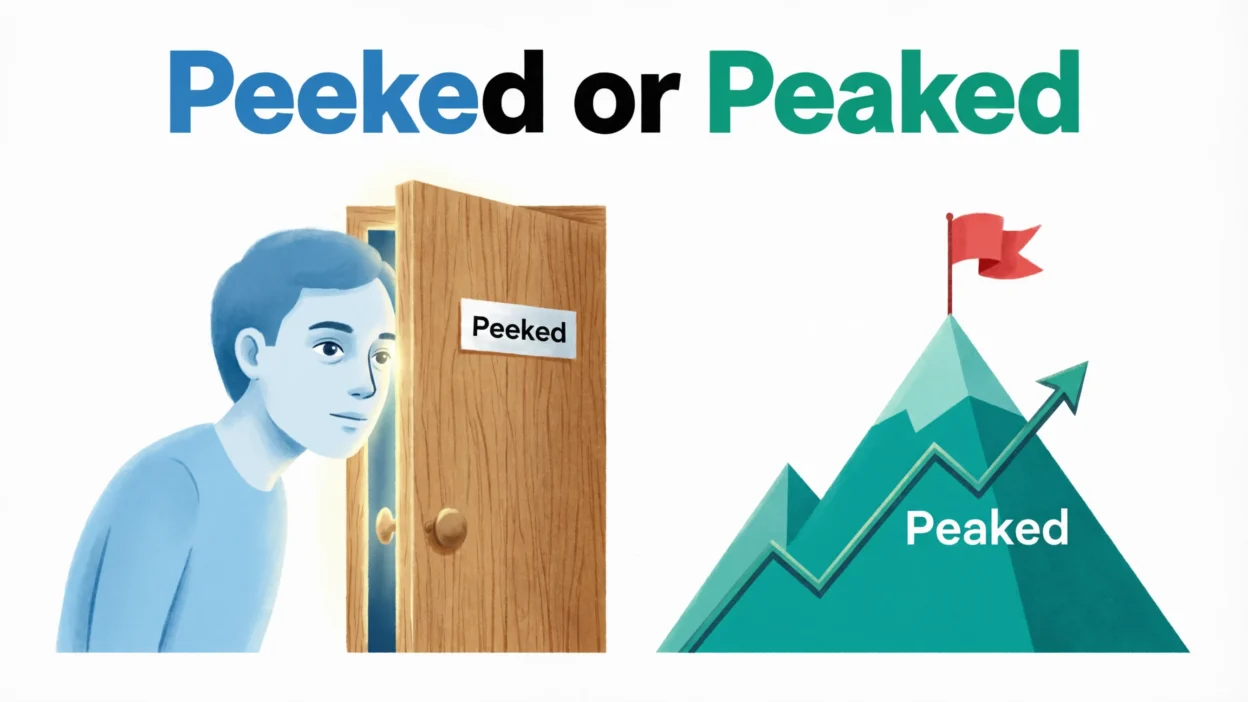
- Peeked = Took a quick look
- Peaked = Reached the top
What Does Peeked Mean?
Peeked is the past tense of peek, which means to take a quick, brief, or secret look at something.
People often peek when they are curious, surprised, or trying not to be noticed.
Examples of Peeked
- She peeked through the window before knocking.
- I peeked inside the gift box.
- The child peeked around the corner.
- He peeked at his phone during the meeting.
Common Uses of Peeked
- Peeked through the door
- Peeked out the window
- Peeked at the answers
- Peeked inside the box
- Peeked around the corner
What Does Peaked Mean?
Peaked is the past tense of peak. It usually means reaching the highest point or maximum level.
It can describe performance, numbers, emotions, popularity, or physical features.
In British English, peaked can also describe someone who looks pale, tired, or unwell, although this usage is less common today.
Examples of Peaked
- Sales peaked during the holiday season.
- Her confidence peaked after winning the competition.
- The mountain peaked above the clouds.
- His heart rate peaked during the workout.
- She looked rather peaked after the long journey.
Peeked vs Peaked: Key Differences
| Feature | Peeked | Peaked |
|---|---|---|
| Meaning | Looked quickly or secretly | Reached the highest point |
| Part of Speech | Verb (past tense of peek) | Verb (past tense of peak) |
| Common Context | Looking | Growth, performance, numbers |
| Everyday Usage | Very common | Very common |
| Alternate Meaning | None | Looking pale or ill (mainly British English) |
Simple Way to Remember the Difference
A quick memory trick can help:
- Peeked contains “ee,” like eyes looking.
- Peaked contains “peak,” like the peak of a mountain.
Remember:
- Peeked = Eyes
- Peaked = Peak (Highest Point)
Real-Life Examples of Peeked vs Peaked
Example 1: Looking Through a Door
- She peeked through the keyhole.
Not:
- She peaked through the keyhole.
Example 2: Business Growth
- Company profits peaked in December.
Not:
- Company profits peeked in December.
Example 3: Curiosity
- He peeked at the surprise before opening it.
Example 4: Sports
- The athlete peaked just before the championship.
Common Mistakes People Make
Because peeked and peaked are pronounced the same, many writers accidentally choose the wrong spelling.
Here are some common mistakes:
- Using peaked when talking about taking a quick look.
- Writing peeked when describing the highest point.
- Relying only on pronunciation instead of meaning.
- Confusing the words in spellcheck because both are correctly spelled.
Incorrect
- I peaked inside the present.
Correct
- I peeked inside the present.
Incorrect
- Website traffic peeked last month.
Correct
- Website traffic peaked last month.
American vs British English
Both American English and British English use peeked and peaked with the same primary meanings.
However, one difference exists:
- In British English, peaked is more commonly used to describe someone who looks pale, tired, or sick.
- In American English, this meaning exists but is less common in everyday conversation.
Examples:
- British English: You look a bit peaked today.
- American English: You look tired today.
Related LSI Keywords and Synonyms
Using related terms naturally helps improve understanding and supports SEO.
Relevant keywords include:
- peek meaning
- peak meaning
- peeked definition
- peaked definition
- peek vs peak
- peaked or peeked
- homophones in English
- common spelling mistakes
- reached the highest point
- took a quick look
- English grammar tips
- confusing English words
- peak performance
- sneak a peek
- spelling differences
When Should You Use Each Word?
Use peeked when talking about:
- Taking a quick look
- Looking secretly
- Curiosity
- Brief glances
- Looking through a window or door
Use peaked when talking about:
- Highest levels
- Maximum performance
- Growth or popularity
- Mountains or physical peaks
- Looking pale or unwell (especially in British English)
Why Are Peeked and Peaked So Often Confused?
These words are frequently confused because they are homophones—words that sound the same but have different meanings and spellings. In spoken English, there is no difference in pronunciation, so writers must rely on context to choose the correct word.
Understanding the meaning behind each word is more reliable than memorizing the spelling alone. Once you connect peeked with looking and peaked with reaching the top, the distinction becomes much easier to remember.
Frequently Asked Questions
1. What is the difference between peeked and peaked?
Peeked means looked quickly or secretly, while peaked means reached the highest point or maximum level.
2. Is “I peeked at the answers” correct?
Yes. Peeked is the correct word because it refers to taking a quick look.
3. Is “Sales peaked in July” correct?
Yes. Peaked is correct because sales reached their highest point.
4. Can peaked mean someone looks sick?
Yes. In British English, peaked can describe someone who looks pale, tired, or unwell.
5. Are peeked and peaked pronounced the same?
Yes. They are homophones and have identical pronunciation.
6. Which word is more common?
Both are common, but they appear in different contexts. Peeked is common when describing looking, while peaked is common when discussing growth, performance, or maximum levels.
7. How can I remember the difference?
Think of Peeked = Eyes and Peaked = Mountain Peak. This simple association helps you choose the correct spelling.
Summary
Understanding peeked or peaked is easier once you focus on the meaning instead of the pronunciation. Peeked always relates to taking a quick or secret look, while peaked refers to reaching the highest point or, less commonly in British English, looking pale or unwell. Although they sound identical, they are never interchangeable.
Using the correct word improves the clarity and accuracy of your writing. Whether you’re describing someone sneaking a glance or explaining that sales reached their highest level, choosing peeked or peaked based on context ensures your message is clear and professional.
Actionable Takeaway
Whenever you’re unsure which word to use, remember this simple rule:
- Peeked = Took a quick look
- Peaked = Reached the highest point
Keeping this distinction in mind will help you avoid one of the most common spelling mistakes in English.

Here is a professional 30-word author biography including your site name Symboliy.com:
Martin Hood is a professional writer at Symboliy.com, creating clear, informative content focused on language, communication, and meaningful expressions for everyday and professional use.