Have you ever been unsure whether to use wore or worn in a sentence? You’re not alone.
These two words come from the same verb—wear—but they have different grammatical roles. Because they are closely related, many English learners and even native speakers mix them up.
In this guide, you’ll learn the difference between wore or worn, understand when to use each one, explore practical examples, avoid common mistakes, and discover simple memory tricks. By the end, you’ll know exactly which form is correct in any situation.
Quick Answer
The difference between wore and worn is simple:
- Wore is the simple past tense of wear.
- Worn is the past participle of wear and must usually be used with a helping verb such as has, have, had, was, were, or been.
In short:
- Wore = Simple Past
- Worn = Past Participle (Needs a Helping Verb)
What Does Wore Mean?
Wore is the simple past tense of the verb wear. It describes something someone wore at a specific time in the past.
It does not need a helping verb.
Examples of Wore
- She wore a beautiful blue dress to the wedding.
- I wore my favorite jacket yesterday.
- They wore uniforms at school.
- He wore sunglasses during the trip.
Common Uses of Wore
- Wore a dress
- Wore a suit
- Wore glasses
- Wore a uniform
- Wore a hat
- Wore sneakers
What Does Worn Mean?
Worn is the past participle of wear. It is used with helping verbs to form perfect tenses and passive constructions.
It can also function as an adjective, meaning something is old, damaged, or no longer in good condition because of use.
Examples of Worn
- She has worn that coat many times.
- I had worn my boots before the hike.
- The necklace was worn every day.
- His shoes are worn and need replacing.
Common Uses of Worn
- Has worn
- Have worn
- Had worn
- Was worn
- Well-worn book
- Worn-out shoes
Wore vs Worn: Key Differences
| Feature | Wore | Worn |
|---|---|---|
| Verb Form | Simple past | Past participle |
| Needs a Helping Verb | No | Yes (usually) |
| Example | I wore a jacket. | I have worn that jacket. |
| Can Be an Adjective | No | Yes |
| Everyday Usage | Very common | Very common |
Simple Way to Remember the Difference
A quick memory trick can help:
- Wore works by itself.
- Worn usually works with a helping verb.
Remember:
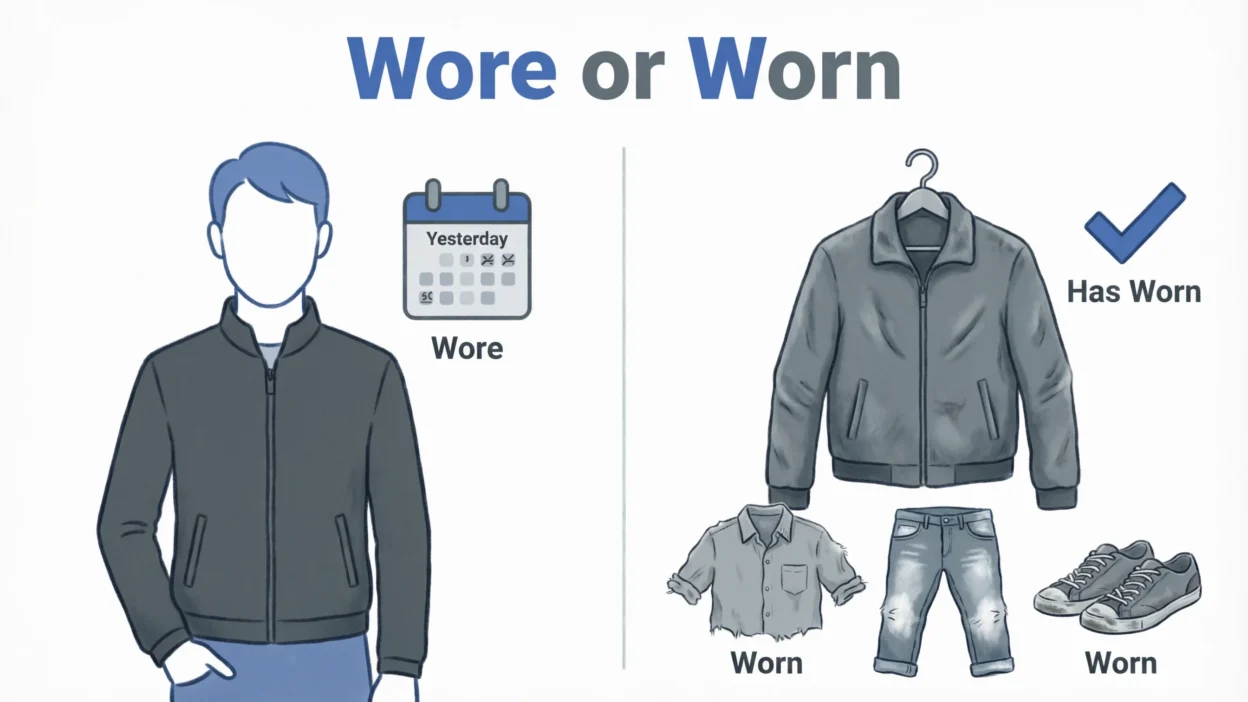
- Yesterday → Wore
- Has/Have/Had → Worn
Examples:
- Yesterday I wore my new shoes.
- I have worn these shoes many times.
Real-Life Examples of Wore vs Worn
Example 1: Yesterday
- She wore a red sweater yesterday.
Not:
- She worn a red sweater yesterday.
Example 2: Present Perfect
- She has worn that sweater before.
Not:
- She has wore that sweater before.
Example 3: Past Perfect
- They had worn their raincoats before the storm arrived.
Example 4: Passive Voice
- The medal was worn during the ceremony.
Common Mistakes People Make
Because wore and worn both refer to the past, many writers accidentally use the wrong form.
Here are some common mistakes:
- Using worn without a helping verb.
- Using wore after has, have, or had.
- Forgetting that worn can also describe something that is old or damaged.
- Mixing up simple past and perfect tenses.
Incorrect
- I have wore this shirt before.
Correct
- I have worn this shirt before.
Incorrect
- She worn a beautiful dress yesterday.
Correct
- She wore a beautiful dress yesterday.
American vs British English
There is no difference between American English and British English in the grammar of wore and worn.
Both varieties use:
- Wore as the simple past tense.
- Worn as the past participle and adjective.
The meanings and grammatical rules are the same in both forms of English.
Related LSI Keywords and Synonyms
Using related terms naturally helps improve understanding and supports SEO.
Relevant keywords include:
- wore meaning
- worn meaning
- wore vs worn
- wear past tense
- wear past participle
- grammar rules
- English verb forms
- irregular verbs
- present perfect tense
- past perfect tense
- passive voice
- worn-out meaning
- English grammar tips
- common grammar mistakes
- confusing English words
When Should You Use Each Word?
Use wore when talking about:
- A completed action in the past
- Yesterday
- Last week
- A specific past event
- Simple past tense
Use worn when talking about:
- Present perfect tense
- Past perfect tense
- Passive voice
- Something used many times
- Clothing or objects that are old or damaged
Why Are Wore and Worn So Often Confused?
Wore and worn are commonly confused because they are both past forms of the irregular verb wear. Unlike regular verbs that simply add -ed, irregular verbs change form, making them harder to remember.
The easiest way to avoid mistakes is to look for a helping verb. If the sentence includes has, have, had, was, were, or been, the correct choice is usually worn. If there is no helping verb and you’re describing a completed action in the past, use wore.
Frequently Asked Questions
1. What is the difference between wore and worn?
Wore is the simple past tense of wear, while worn is the past participle and is usually used with a helping verb.
2. Is it “I have wore” or “I have worn”?
The correct phrase is I have worn because worn is the past participle used after have.
3. Is “She wore a blue dress yesterday” correct?
Yes. Wore is correct because the sentence describes a completed action in the simple past.
4. Can worn be used as an adjective?
Yes. Worn can describe something that is old, faded, or damaged from frequent use.
5. Is it “had wore” or “had worn”?
The correct form is had worn because had must be followed by the past participle.
6. Are wore and worn used differently in British and American English?
No. Both follow the same grammatical rules in American and British English.
7. How can I remember the difference?
Think of Wore = Yesterday and Worn = Has/Have/Had. This simple rule helps you choose the correct verb form.
Summary
Understanding wore or worn is easy once you know the difference between the simple past tense and the past participle. Wore is used on its own to describe a completed action in the past, while worn is used with helping verbs or as an adjective to describe something that has been used extensively.
Using the correct form improves both your grammar and your confidence in English. Whether you’re talking about what someone wore yesterday or what they have worn many times, choosing the right word makes your writing clear, accurate, and professional.
Actionable Takeaway
Whenever you’re unsure which word to use, remember this simple rule:
- Wore = Simple Past (Yesterday)
- Worn = Past Participle (Has, Have, Had, Was, Were)
Keeping this distinction in mind will help you avoid one of the most common grammar mistakes involving the verb wear.

Mike Poop is a dedicated writer at Symboliy.com, creating clear, practical content about language, communication, and everyday expressions to help readers understand meaning and usage confidently in professional contexts worldwide.