Have you ever come across the phrases “past away” and “passed away” and wondered which one is correct?
This is a common confusion because the words past and passed sound very similar in spoken English, leading many people to mix them up in writing.
Understanding the difference between past away vs passed away is especially important because the phrase is often used in sensitive situations involving someone’s death.
Using the correct expression helps ensure your writing is respectful, accurate, and grammatically correct. In this guide, you’ll learn the meaning of each phrase, proper usage, examples, common mistakes, and easy memory tricks.
Quick Answer
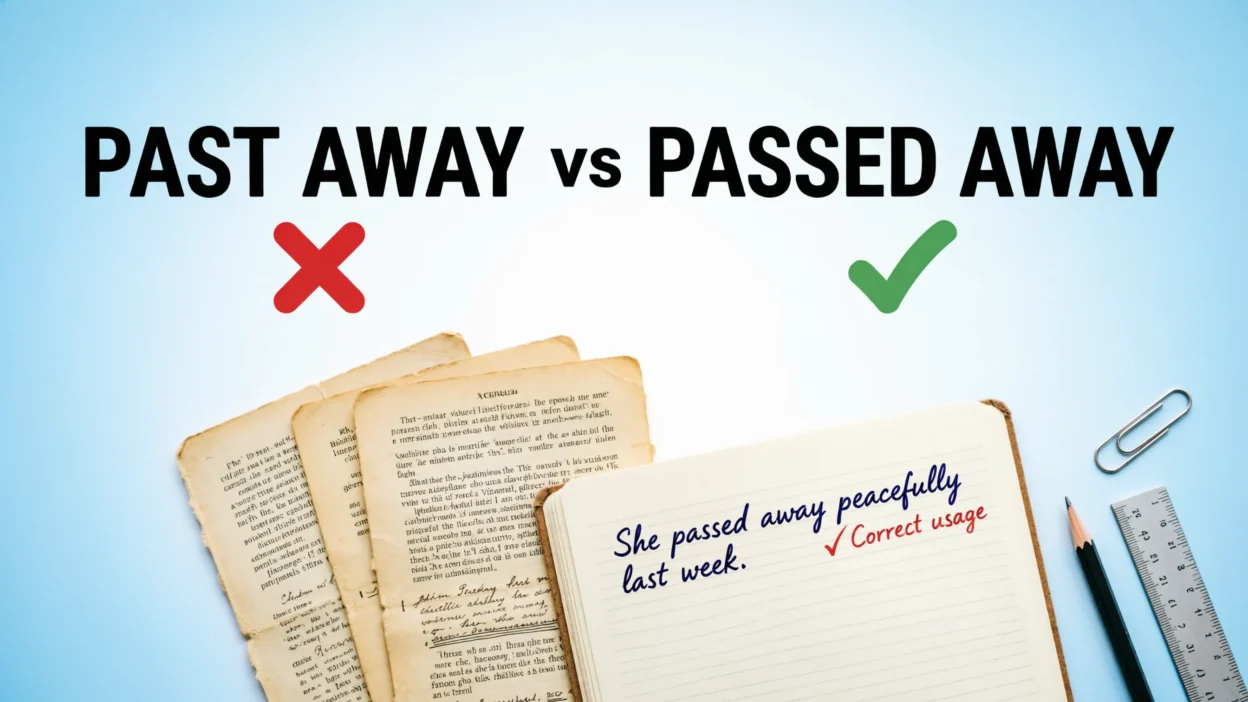
“Passed away” is the correct phrase when referring to someone’s death.
✅ My grandfather passed away last year.
❌ My grandfather past away last year.
The phrase passed away is a widely accepted euphemism for dying. The phrase past away is grammatically incorrect and should not be used in standard English.
What Does “Passed Away” Mean?
Passed away is a polite and gentle way of saying that someone has died. It is commonly used in conversations, obituaries, news reports, and formal announcements to express sympathy and respect.
Examples
- Her grandmother passed away peacefully.
- We were saddened to hear that he passed away.
- The beloved actor passed away at the age of 82.
- My neighbor passed away after a long illness.
Because the phrase sounds softer than the word died, many people prefer it when discussing loss.
Past Away vs Passed Away: What’s the Difference?
The difference comes down to the words past and passed.
| Phrase | Correct? | Meaning |
|---|---|---|
| Past Away | ❌ No | Grammatically incorrect |
| Passed Away | ✅ Yes | A polite way to say someone died |
Correct Phrase
✅ Passed Away
Incorrect Phrase
❌ Past Away
The confusion occurs because past and passed are pronounced similarly in many accents, but they have different meanings and grammatical functions.
What Does “Passed” Mean?
Passed is the past tense of the verb pass.
It can mean:
- To move by something
- To complete something
- To transfer something
- To die (in the phrase “passed away”)
Examples
- She passed the exam.
- We passed the old church on the way home.
- He passed the ball to his teammate.
- Her uncle passed away last month.
In the phrase passed away, the word passed acts as a verb.
What Does “Past” Mean?
Past is usually a noun, adjective, adverb, or preposition. It relates to time, position, or something that has already happened.
Examples
- The past cannot be changed.
- It is past midnight.
- Walk past the supermarket.
- We learned from our past mistakes.
Notice that past is not used as a verb in these examples.
Why “Passed Away” Is Correct
The phrase passed away comes from the verb pass, meaning to move from one state to another.
Historically, it developed as a gentle expression suggesting a person has moved on from life.
Because the phrase requires a verb, the correct form is:
Pass → Passed → Passed Away
Examples
- She passed away peacefully.
- His father passed away unexpectedly.
- The author passed away in 2024.
Why People Write “Past Away”
The mistake typically happens because:
Similar Pronunciation
In many English accents, past and passed sound nearly identical.
Typing Errors
Writers often type quickly and choose the wrong word without noticing.
Grammar Confusion
Some people understand the phrase verbally but have never seen it written correctly.
As a result, they mistakenly write:
❌ Past away
instead of:
✅ Passed away
Examples of Correct Usage of “Passed Away”
Everyday Examples
- My aunt passed away last week.
- We were shocked when we heard he passed away.
- Her dog passed away after many happy years.
Formal Examples
- The chairman passed away surrounded by family.
- The organization expressed condolences after the founder passed away.
News Examples
- The celebrated musician passed away at age 76.
- The former president passed away following a brief illness.
Examples of Incorrect Usage
The following examples are grammatically incorrect:
❌ My grandfather past away yesterday.
✅ My grandfather passed away yesterday.
❌ She past away peacefully.
✅ She passed away peacefully.
❌ We heard that he past away.
✅ We heard that he passed away.
❌ The actor past away last year.
✅ The actor passed away last year.
Common Mistakes With Passed Away
Mistake #1: Using “Past Away”
❌ Past away
✅ Passed away
This is the most common error.
Mistake #2: Mixing Up Past and Passed
Remember:
- Passed = Verb
- Past = Time or position
Mistake #3: Using the Wrong Tense
❌ He pass away last year.
✅ He passed away last year.
Because the event happened in the past, use passed.
Passed Away vs Died
Both phrases refer to death, but they differ in tone.
| Expression | Tone |
|---|---|
| Died | Direct |
| Passed Away | Gentle and respectful |
Examples
Direct:
- He died yesterday.
More Gentle:
- He passed away yesterday.
Neither is incorrect, but passed away is often preferred in sensitive conversations.
Memory Trick to Remember the Correct Phrase
A simple trick is:
Passed Away Contains a Verb
The phrase describes an action.
Since actions require verbs, use:
Passed Away
Think:
- Passed the test
- Passed the ball
- Passed away
All three use the verb passed.
American vs British English
There is no difference between American and British English regarding this phrase.
American English
- Her father passed away last year.
British English
- Her father passed away last year.
Both varieties use passed away and consider past away incorrect.
Related Words, Synonyms, and LSI Keywords
Related words and phrases include:
- Died
- Deceased
- Departed
- Late
- Lost their life
- No longer with us
- Funeral
- Bereavement
- Condolences
- Memorial
- Obituary
- Passing
- Death announcement
- Mourning
These terms often appear in discussions about loss and remembrance.
Why Correct Usage Matters
Using the correct phrase is important because:
- It shows respect in sensitive situations.
- It improves professional writing.
- It avoids grammatical errors.
- It enhances clarity.
- It strengthens credibility.
Mistakenly writing past away can distract readers and appear careless, especially in formal announcements or condolence messages.
Frequently Asked Questions (FAQs)
Is past away correct?
No. Past away is grammatically incorrect in standard English.
Is passed away correct?
Yes. Passed away is the correct phrase used to mean someone died.
Why do people confuse past and passed?
The words sound very similar when spoken, leading to spelling mistakes.
What does passed away mean?
It is a respectful and gentle way of saying someone has died.
Is passed away formal or informal?
It can be used in both formal and informal situations and is commonly seen in obituaries and announcements.
Is passed away used in American English?
Yes. It is widely used in American English.
Is passed away used in British English?
Yes. British English also uses the phrase passed away.
What is another way to say passed away?
Alternatives include:
- Died
- Deceased
- Departed
- No longer with us
Summary
When comparing past away vs passed away, the correct phrase is always passed away. The word passed is the past tense of the verb pass, making it grammatically suitable for the expression. The phrase passed away is a respectful and widely accepted way to refer to someone’s death.
The phrase past away is simply a spelling mistake caused by confusion between the words past and passed. Whether you’re writing a condolence message, obituary, article, or personal note, using passed away ensures your communication remains accurate, respectful, and professional.
Actionable Takeaway
Remember this simple rule:
If you’re referring to someone’s death, always use “passed away.”
Think of passed as the verb form, just like:
- Passed the exam
- Passed the ball
- Passed away
Whenever you see past away, replace it with passed away for correct English usage.

Mike Poop is a dedicated writer at Symboliy.com, creating clear, practical content about language, communication, and everyday expressions to help readers understand meaning and usage confidently in professional contexts worldwide.