If you’ve ever seen the words lovie and lovey and wondered whether they mean the same thing, you’re not alone.
These affectionate terms often appear in text messages, social media posts, romantic conversations, and family interactions.
Because they sound identical when spoken, many people struggle to determine which spelling is correct and when each one should be used.
The good news is that both lovie and lovey are valid words in English, but their meanings, usage, and popularity can vary depending on context.
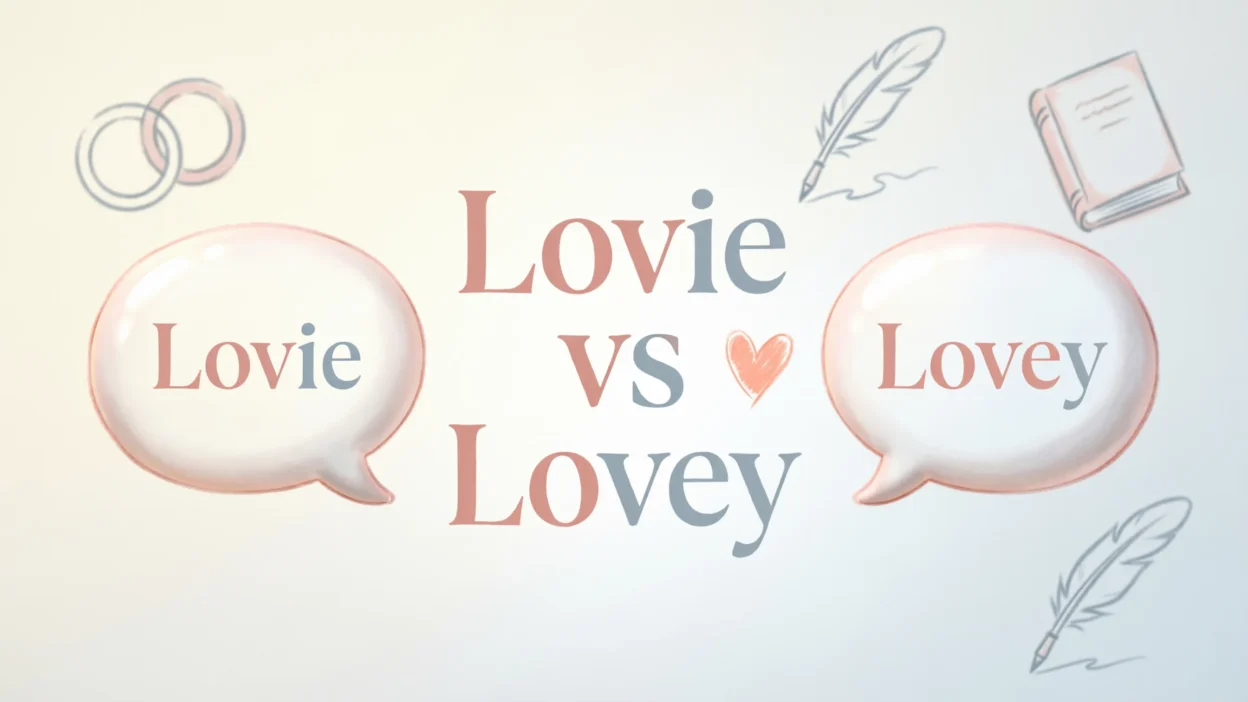
In this guide, you’ll learn the difference between lovie vs lovey, discover common examples, avoid frequent mistakes, and understand how these terms are used in American and British English.
Quick Answer
Lovey is the more common and widely accepted spelling for an affectionate nickname meaning “dear,” “sweetheart,” or “beloved.” Lovie is also used as a term of endearment, but it is less common and is often considered an alternative spelling or a personal nickname.
In most everyday situations, lovey is the safer and more recognized choice.
What Does “Lovey” Mean?
The word lovey is an affectionate term used to address someone you care about. It functions similarly to words like:
- Sweetheart
- Darling
- Honey
- Dear
- Babe
- Love
People commonly use lovey in romantic relationships, family settings, and friendly conversations.
Examples of Lovey
- Good morning, lovey! I hope you have a wonderful day.
- Thanks for helping me, lovey.
- Come here, lovey, and give me a hug.
The tone is warm, caring, and affectionate. In many cases, parents use it with children, and couples use it with each other.
What Does “Lovie” Mean?
Lovie is also a term of endearment. It carries nearly the same affectionate meaning as lovey. However, it appears less frequently in standard dictionaries and everyday writing.
Many people use lovie as:
- A personal nickname
- A unique spelling preference
- A pet name for a loved one
- A customized version of “lovey”
Examples of Lovie
- You’re my favorite person, lovie.
- Sleep well, lovie.
- Thank you for always being there, lovie.
In casual communication, readers generally understand lovie as another way of writing lovey.
Lovie vs Lovey: Key Differences
Although both words express affection, there are subtle distinctions worth noting.
| Feature | Lovie | Lovey |
|---|---|---|
| Meaning | Term of endearment | Term of endearment |
| Popularity | Less common | More common |
| Dictionary Recognition | Limited | Widely recognized |
| Everyday Usage | Alternative spelling | Standard spelling |
| Formal Acceptance | Less common in published writing | More accepted |
| Emotional Tone | Warm and affectionate | Warm and affectionate |
The biggest difference is not meaning but frequency of use. Lovey appears more often in books, articles, and general communication.
Which Spelling Is Correct?
Both spellings can be correct depending on context.
Choose lovey when:
- Writing for a broad audience
- Creating professional or published content
- Following standard English usage
- Looking for the most recognizable form
Choose lovie when:
- Using a personal nickname
- Following a family tradition
- Matching someone’s preferred spelling
- Adding a unique personal touch
For most writers, lovey is the recommended choice.
Why Do People Confuse Lovie and Lovey?
The confusion comes from pronunciation. Both words are pronounced almost exactly the same:
LUHV-ee
Because English contains many words with multiple acceptable spellings, writers often choose whichever version feels natural.
Other examples of spelling variations include:
- Grey vs Gray
- Mum vs Mom
- Jewellery vs Jewelry
- Theatre vs Theater
Similarly, lovie and lovey can coexist, although one is more commonly used than the other.
American vs British English Differences
Unlike some English words that differ significantly between American and British English, the distinction between lovie and lovey is relatively minor.
American English
In American English:
- Lovey is generally more common.
- It is often used as a pet name.
- It may appear in family conversations and romantic messages.
British English
In British English:
- Lovey is also widely recognized.
- The word may occasionally carry a slightly playful or theatrical tone.
- Some British speakers use it as a casual term of affection.
Overall, lovey remains the dominant spelling in both American and British English.
Common Situations Where People Use Lovey
You may hear or read lovey in several contexts.
Romantic Relationships
Couples often use it as a sweet nickname.
Example:
- I miss you already, lovey.
Family Conversations
Parents and grandparents frequently use affectionate names.
Example:
- How was school today, lovey?
Friendly Communication
Close friends sometimes use it jokingly or affectionately.
Example:
- Thanks for your help, lovey.
Text Messages
Short affectionate messages commonly include the word.
Example:
- Good night, lovey ❤️
Common Mistakes to Avoid
Many writers make small errors when using these terms.
Mistake 1: Assuming One Is Always Wrong
Some people believe lovie is incorrect.
Correct: Both spellings exist.
Mistake 2: Using Different Spellings Inconsistently
If you’re writing a story, article, or book, stick with one spelling throughout.
Incorrect:
- Good morning, lovey.
- See you later, lovie.
Better:
- Good morning, lovey.
- See you later, lovey.
Mistake 3: Using Them in Formal Business Writing
These terms are affectionate and informal.
Avoid:
- Dear Client, thank you, lovey.
Use:
- Dear Client, thank you for your business.
Mistake 4: Assuming They Have Different Meanings
Most of the time, lovie and lovey express the same affection and warmth.
Synonyms for Lovey and Lovie
If you’re looking for similar expressions, consider these alternatives:
- Sweetheart
- Darling
- Honey
- Dear
- Babe
- Baby
- Love
- Angel
- Sweetie
- Beloved
These terms convey similar feelings of affection and closeness.
When Should You Use Lovey Instead of Lovie?
Choose lovey when:
- Writing blog posts
- Creating online content
- Publishing books or articles
- Communicating with a wide audience
- Following common English usage
Because it is more recognizable, readers are less likely to question the spelling.
When Should You Use Lovie Instead of Lovey?
Choose lovie when:
- It is someone’s preferred nickname
- You want a personalized spelling
- Family members traditionally use it
- You’re writing informal messages
Personal preference often determines the choice.
FAQs About Lovie vs Lovey
Is lovey a real word?
Yes. Lovey is a recognized English word used as a term of affection for someone you care about.
Is lovie a real word?
Yes. While less common, lovie is used as an alternative spelling and personal nickname.
Which spelling is more common, lovie or lovey?
Lovey is significantly more common in everyday English and published content.
Do lovie and lovey mean the same thing?
In most contexts, yes. Both are affectionate terms meaning dear, sweetheart, or beloved.
Is lovey used in American English?
Yes. Americans frequently use lovey as a warm and affectionate nickname.
Is lovey formal or informal?
Lovey is informal and best suited for personal conversations.
Can I call my partner lovey?
Absolutely. Many couples use lovey as a loving pet name.
Should writers use lovie or lovey?
Most writers should use lovey because it is more familiar and widely accepted.
Summary
When comparing lovie vs lovey, the difference is primarily one of spelling and popularity rather than meaning. Both words function as affectionate terms of endearment used for partners, family members, and close friends. However, lovey is the more common, recognized, and widely accepted spelling across both American and British English.
If you’re writing for a general audience, choosing lovey is usually the best option. If you’re using a personal nickname or following a specific preference, lovie works perfectly well. Understanding the distinction helps you communicate clearly while maintaining the warmth and affection these charming terms are meant to express.
Actionable Takeaway
When in doubt, use lovey for blogs, articles, social media content, and everyday writing. Reserve lovie for personal nicknames or situations where a unique spelling is preferred. Consistency matters more than the choice itself, so pick one spelling and use it throughout your writing.

Here is a professional 30-word author biography including your site name Symboliy.com:
Martin Hood is a professional writer at Symboliy.com, creating clear, informative content focused on language, communication, and meaningful expressions for everyday and professional use.