
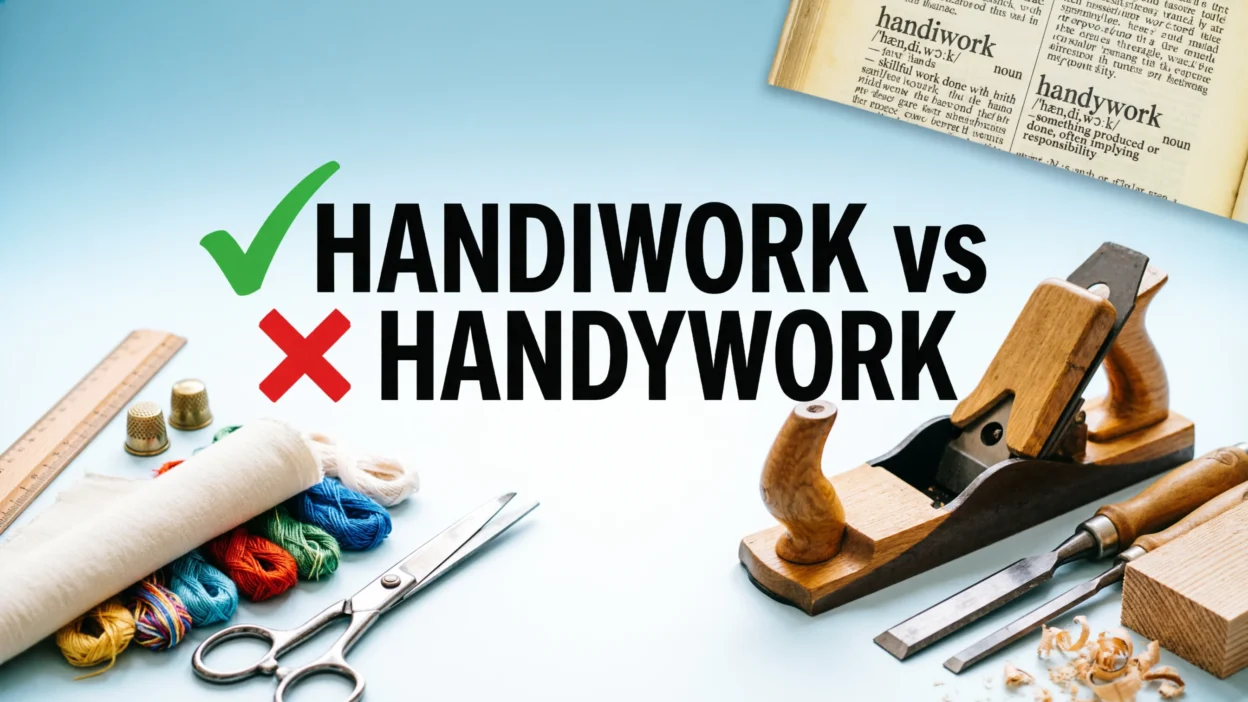
Have you ever seen both handiwork and handywork and wondered which spelling is actually correct?
Since the words look and sound similar, many writers assume they are interchangeable. However, only one spelling is considered standard English in modern writing.
Understanding the difference between handiwork vs handywork can help you avoid spelling mistakes and communicate more clearly.
In this guide, you’ll learn the correct spelling, meaning, examples, common errors, historical usage, and easy tricks to remember the right word.
Quick Answer
“Handiwork” is the correct and standard spelling in modern English.
✅ The beautiful quilt is an example of her handiwork.
❌ The beautiful quilt is an example of her handywork.
The word handiwork refers to something made by hand or the result of a person’s work, skill, or craftsmanship. While handywork occasionally appears in older texts or as a misspelling, handiwork is the preferred spelling in both American and British English.
What Does “Handiwork” Mean?
Handiwork is a noun that refers to:
- Something made by hand.
- A product of skillful craftsmanship.
- The result of someone’s actions or efforts.
The term is often used when talking about crafts, artwork, woodworking, sewing, and creative projects.
Examples
- The intricate embroidery is her handiwork.
- Visitors admired the artisan’s handiwork.
- The damaged fence was clearly the handiwork of vandals.
- The sculpture displayed exceptional handiwork.
The word can be used positively or negatively depending on context.
Handiwork vs Handywork: What’s the Difference?
The difference is simple.
| Word | Correct? | Meaning |
|---|---|---|
| Handiwork | ✅ Yes | Something made by hand or the result of someone’s work |
| Handywork | ❌ Usually No | Misspelling or rare variant of handiwork |
In modern dictionaries and professional writing, handiwork is the accepted spelling.
Why Is “Handiwork” Correct?
The word handiwork has existed in English for centuries and comes from older forms of the language referring to work done by hand.
Over time, handiwork became the standard spelling recognized in dictionaries, educational materials, and style guides.
Correct Usage
- Beautiful handiwork
- Skilled handiwork
- Fine handiwork
- Artisan handiwork
Incorrect Usage
- Beautiful handywork
- Skilled handywork
While some people mistakenly connect the word with handy, the standard form remains handiwork.
Why Do People Write “Handywork”?
There are several reasons.
Similar Sound
The pronunciation of handiwork can sound similar to handy work, leading people to assume the spelling should include handy.
Influence of the Word “Handy”
Because handy is a common English adjective meaning useful or convenient, many writers mistakenly create:
❌ Handywork
instead of:
✅ Handiwork
Typing and Autocorrect Errors
Sometimes the mistake appears because writers have never seen the word written correctly before.
Examples of Correct Usage of “Handiwork”
Everyday Examples
- The handmade blanket was her handiwork.
- Everyone admired his woodworking handiwork.
- This painting is the artist’s handiwork.
- The jewelry showcases remarkable handiwork.
Professional Examples
- The cathedral features impressive stone handiwork.
- The designer’s handiwork received international recognition.
- The restoration project highlighted centuries-old handiwork.
Creative Examples
- The costume was entirely her handiwork.
- The carved furniture demonstrated exceptional handiwork.
Examples of Incorrect Usage
The following examples are incorrect in modern English:
❌ The quilt is beautiful handywork.
✅ The quilt is beautiful handiwork.
❌ We admired the carpenter’s handywork.
✅ We admired the carpenter’s handiwork.
❌ The handywork of the artist was displayed.
✅ The handiwork of the artist was displayed.
❌ This statue is his finest handywork.
✅ This statue is his finest handiwork.
Common Mistakes With Handiwork
Mistake #1: Writing Handywork
❌ Handywork
✅ Handiwork
This is the most common spelling error.
Mistake #2: Confusing Handiwork With Homework
Although both end in -work, their meanings are completely different.
- Handiwork = Work created by hand
- Homework = School assignments
Mistake #3: Assuming Handywork Is a Modern Alternative
Some writers believe both spellings are equally acceptable.
In modern English:
Handiwork is strongly preferred.
Handiwork in Positive and Negative Contexts
Interestingly, handiwork can describe both good and bad results.
Positive Usage
- The pottery was beautiful handiwork.
- Her handiwork impressed the judges.
Negative Usage
- The graffiti was the handiwork of vandals.
- Investigators believed the damage was the handiwork of criminals.
In both cases, the word simply means the result of someone’s actions.
Handiwork vs Craftsmanship
These words are related but not identical.
| Word | Meaning |
|---|---|
| Handiwork | Something made by hand |
| Craftsmanship | The quality and skill involved in making something |
Examples
- The chair is his handiwork.
- The craftsmanship of the chair is outstanding.
The first refers to the object itself, while the second emphasizes the skill behind it.
Memory Trick to Remember the Correct Spelling
A simple trick is:
Think of “Handiwork” as One Complete Word
Remember:
Hand + i + work = Handiwork
Do not connect it to the adjective handy.
Another easy reminder:
- Dictionary spelling = Handiwork
- Common mistake = Handywork
American vs British English
There is no significant difference between American and British English regarding this word.
American English
- The quilt was her handiwork.
British English
- The quilt was her handiwork.
Both varieties strongly prefer handiwork.
Related Words, Synonyms, and LSI Keywords
Related terms include:
- Craftsmanship
- Handcrafted work
- Artisan work
- Manual labor
- Handmade creation
- Needlework
- Woodworking
- Craft work
- Artistic creation
- Skilled labor
- Handmade product
- Creative work
- Artisan craftsmanship
- Traditional craft
These related keywords help provide context and improve topical relevance.
Historical Background of Handiwork
The word handiwork has been used in English for hundreds of years. Historically, it referred to objects created through manual skill rather than machines.
Before industrial manufacturing became widespread, most products people owned were examples of someone’s handiwork.
Today, the term is often associated with:
- Handmade crafts
- Artisan goods
- Traditional skills
- Creative projects
- Custom-made items
Its historical roots contribute to its continued popularity in modern English.
Why Correct Spelling Matters
Using the correct spelling helps improve:
- Professional credibility
- Academic writing quality
- Reader trust
- Search engine optimization (SEO)
- Communication clarity
Misspelling handiwork as handywork may confuse readers and make content appear less polished.
Correct spelling demonstrates attention to detail and language proficiency.
Frequently Asked Questions (FAQs)
Is handywork a real word?
Handywork occasionally appears as a variant spelling, but it is generally considered a misspelling in modern English.
Which is correct: handiwork or handywork?
Handiwork is the standard and preferred spelling.
What does handiwork mean?
It refers to something made by hand or the result of someone’s skill and effort.
Is handiwork a noun?
Yes. Handiwork is a noun.
Example:
- The sculpture is her handiwork.
Can handiwork refer to damage or crime?
Yes. It can describe the result of someone’s actions, including negative actions.
Example:
- The broken windows were the handiwork of vandals.
Is handiwork used in American English?
Yes. It is commonly used in American English.
Is handiwork used in British English?
Yes. British English also uses handiwork.
What is a synonym for handiwork?
Common synonyms include:
- Craftsmanship
- Creation
- Workmanship
- Handmade work
- Artisan work
Summary
When comparing handiwork vs handywork, the correct spelling in modern English is handiwork. The word refers to something made by hand or the result of a person’s skill, craftsmanship, or effort. While handywork may occasionally appear as a variant or misspelling, it is not the preferred form in contemporary writing.
Whether you’re describing handmade crafts, artwork, woodworking, sewing, or even the result of someone’s actions, handiwork is the spelling you should use. Both American and British English recognize it as the standard form, making it the safest and most professional choice.
Actionable Takeaway
Remember this simple rule:
If you’re talking about something made by hand, use “handiwork.”
Avoid handywork, and stick with the dictionary-approved spelling handiwork for clear, accurate, and professional writing.

Here is a professional 30-word author biography including your site name Symboliy.com:
Martin Hood is a professional writer at Symboliy.com, creating clear, informative content focused on language, communication, and meaningful expressions for everyday and professional use.