Have you ever typed relieving when you meant reliving, or wondered whether the two words have similar meanings?
Since they look almost identical and differ by just one letter, it’s easy to confuse them. However, these words describe completely different ideas, and using the wrong one can make your writing confusing.
In this guide, you’ll learn the difference between relieving vs reliving, their meanings, practical examples, common mistakes, and simple tips to remember which word to use.
By the end, you’ll be able to use both words accurately in everyday conversations and professional writing.
Quick Answer
The difference between relieving and reliving is straightforward:
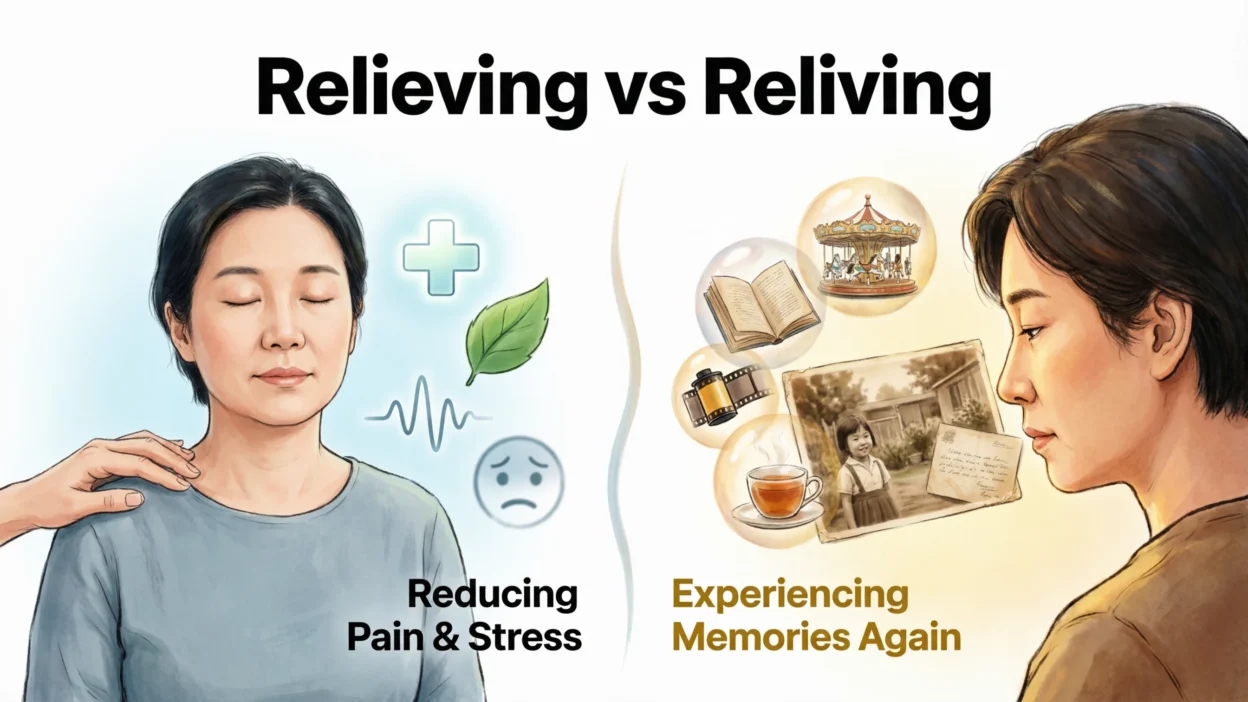
- Relieving means reducing pain, stress, discomfort, or responsibility, or making someone feel better.
- Reliving means experiencing a past event again in your mind or through memory.
Example:
- Taking a short walk was relieving after sitting for hours.
- Looking through old photos was like reliving my childhood.
If you’re talking about easing discomfort or stress, use relieving. If you’re talking about remembering or mentally experiencing the past again, use reliving.
What Does Relieving Mean?
Relieving is the present participle of relieve. It means to reduce or remove pain, stress, anxiety, pressure, or responsibility, making someone feel more comfortable or at ease.
The word is commonly used in health, emotions, work, and everyday situations where something becomes easier or less burdensome.
Examples of Relieving
- The medicine is relieving my headache.
- Talking to a close friend was incredibly relieving.
- Deep breathing exercises are helpful for relieving stress.
- The rain was relieving after days of intense heat.
- Sharing responsibilities is relieving for the whole team.
Common Synonyms of Relieving
- Easing
- Reducing
- Soothing
- Comforting
- Alleviating
- Lessening
What Does Reliving Mean?
Reliving is the present participle of relive. It means to experience a past event again through memories, thoughts, or emotions.
People often use this word when talking about memorable moments, childhood experiences, achievements, or even traumatic events.
Examples of Reliving
- Watching the wedding video felt like reliving our special day.
- He kept reliving the final moments of the championship.
- Visiting my hometown was like reliving my childhood.
- She spent the evening reliving happy memories with old friends.
- Some people struggle because they keep reliving painful experiences.
Common Synonyms of Reliving
- Remembering
- Recalling
- Revisiting
- Re-experiencing
- Reflecting on
- Looking back on
Relieving vs Reliving: Key Differences
| Feature | Relieving | Reliving |
|---|---|---|
| Meaning | Reducing pain, stress, or discomfort | Experiencing past events again |
| Focus | Comfort and relief | Memories and past experiences |
| Common Context | Health, emotions, responsibilities | Childhood, achievements, memories, trauma |
| Emotion | Makes something easier | Brings back past feelings |
| Example | Exercise is relieving stress. | She is reliving her graduation day. |
The easiest way to remember the difference is:
- Relieving = Providing Relief
- Reliving = Living Again
Relieving vs Reliving in Sentences
Here are practical examples to show the difference.
Using Relieving
- Stretching is excellent for relieving muscle tension.
- The vacation was relieving after months of hard work.
- Listening to calming music is relieving during stressful days.
- Her kind words were relieving during a difficult time.
- The cool breeze was relieving in the afternoon heat.
Using Reliving
- We spent the evening reliving our college memories.
- The documentary had him reliving his military service.
- Looking at family albums means reliving precious moments.
- She smiled while reliving her first day at school.
- Winning the trophy made the team feel like they were reliving history.
Common Mistakes People Make
Because these words are spelled similarly, writers often mix them up.
Incorrect
- Watching old vacation videos was relieving our childhood.
Correct
- Watching old vacation videos was reliving our childhood.
Reason: The sentence is about experiencing memories again, not reducing discomfort.
Incorrect
- This massage is reliving my back pain.
Correct
- This massage is relieving my back pain.
Reason: The massage is easing pain, so relieving is the correct word.
Incorrect
- She keeps relieving the accident in her mind.
Correct
- She keeps reliving the accident in her mind.
The event is being mentally experienced again, so reliving is correct.
Easy Trick to Remember Relieving vs Reliving
Here’s a simple memory trick.
Relieving = Relief
Both words share the root relief, making it easy to associate them with easing pain, stress, or discomfort.
Reliving = Living Again
Notice that reliving contains the word living. Think of it as living the experience again in your memory.
Whenever you’re talking about comfort, think relieving.
Whenever you’re talking about memories, think reliving.
American vs British English
There is no significant difference between American and British English regarding these words.
In both varieties:
- Relieving means reducing pain, stress, pressure, or discomfort.
- Reliving means mentally experiencing past events again.
The meanings and usage remain consistent across modern English, making these words easy to use regardless of your audience.
Related Words You Should Know
Understanding these related words can help you choose the right expression.
Relieve
Means to reduce pain, stress, anxiety, or responsibility.
Example:
- Drinking water can relieve dehydration symptoms.
Relief
The feeling of comfort after pain, worry, or difficulty has been reduced.
Example:
- She felt great relief after hearing the good news.
Relive
Means to experience a memory or event again.
Example:
- I love to relive my travel adventures through photographs.
Remember:
- Relieve = Reduce discomfort
- Relief = The comfort you feel
- Relive = Experience the past again
Tips for Using Relieving and Reliving Correctly
Keep these simple tips in mind.
- Use relieving when something eases pain, pressure, stress, or worry.
- Use reliving when discussing memories or past experiences.
- If you can replace the word with easing, choose relieving.
- If you can replace it with remembering or experiencing again, choose reliving.
- Think about whether the sentence is about comfort or memories before choosing the word.
Frequently Asked Questions (FAQs)
Is relieving the same as reliving?
No. Relieving means easing pain or stress, while reliving means experiencing a past event again in your mind.
Can relieving and reliving be used interchangeably?
No. They have different meanings and should be used in different contexts.
Which word relates to memories?
Reliving is used when talking about memories, past experiences, or important life events.
Which word relates to reducing pain?
Relieving is the correct word when discussing pain, stress, anxiety, or discomfort.
Is “reliving pain” correct?
Yes. If someone repeatedly remembers a painful event, they are reliving that experience emotionally.
Is “relieving memories” correct?
Usually not. Memories are generally relived, while pain or stress is relieved. However, remembering pleasant moments may be relieving if those memories help reduce stress.
How can I remember the difference?
Think Relieving = Relief and Reliving = Living Again. This simple trick works in nearly every situation.
Summary
Understanding the difference between relieving vs reliving helps make your writing clearer and more precise. Relieving is all about easing pain, stress, discomfort, or responsibility, while reliving refers to mentally experiencing past events and memories again. Although the words look similar, their meanings are entirely different.
Whenever you’re writing, consider the context before choosing either word. If something brings comfort or reduces pressure, use relieving. If you’re talking about remembering or emotionally revisiting the past, use reliving. Keeping this distinction in mind will improve your communication and help you avoid a common vocabulary mistake.
Actionable Takeaway
Before choosing between these two words, ask yourself one simple question:
“Am I talking about easing discomfort or experiencing a memory again?”
- If it’s about reducing pain, stress, or pressure, choose relieving.
- If it’s about revisiting memories or past experiences, choose reliving.
This quick habit will help you use both words confidently and correctly every time.

Mike Poop is a dedicated writer at Symboliy.com, creating clear, practical content about language, communication, and everyday expressions to help readers understand meaning and usage confidently in professional contexts worldwide.