
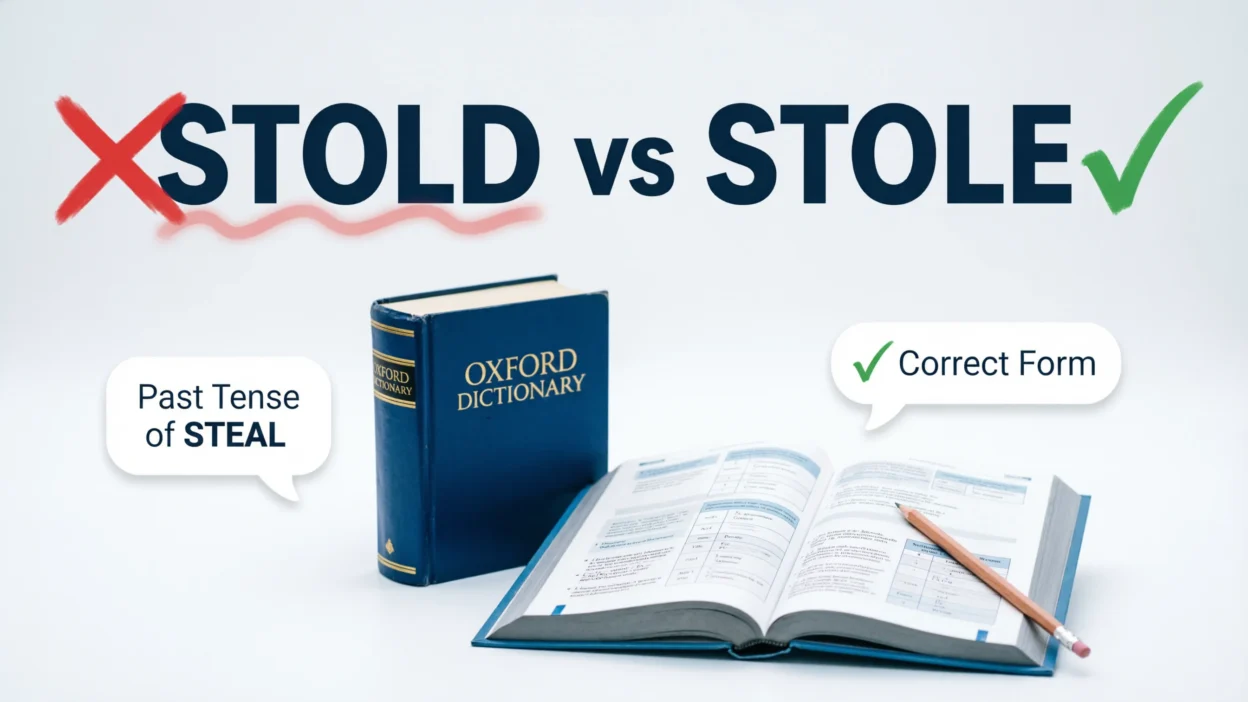
Have you ever wondered whether “stold” is a real word or if you should use “stole” instead? You’re not alone.
Many English learners and even native speakers occasionally get confused when talking about the past tense of the verb steal. A simple spelling mistake can make a sentence sound incorrect, especially in professional writing.
Understanding the difference between stold vs stole is important for clear communication. In this guide, you’ll learn the correct usage, meanings, examples, common mistakes, and practical tips to remember the right form every time.
Quick Answer
“Stole” is the correct past tense of the verb “steal.”
❌ Stold a wallet yesterday.
✅ Stole a wallet yesterday.
The word “stold” is not recognized as a standard English word in modern American or British English. Whenever you need the past tense of steal, use stole.
What Does “Steal” Mean?
The verb steal means to take something that belongs to another person without permission and with the intention of keeping it.
Examples
- Someone tried to steal my bicycle.
- The thief wanted to steal expensive jewelry.
- Don’t steal ideas without giving credit.
The word can also be used figuratively:
- Her performance stole the show.
- The beautiful view stole my attention.
Forms of the Verb “Steal”
| Verb Form | Word |
|---|---|
| Base Form | Steal |
| Past Tense | Stole |
| Past Participle | Stolen |
| Present Participle | Stealing |
Examples
- Present: I steal no one’s belongings.
- Past: He stole my pen.
- Past Participle: The car was stolen.
- Continuous: Someone is stealing packages.
Stold vs Stole: What’s the Difference?
The confusion usually comes from the fact that many English verbs form their past tense by adding -ed or by changing patterns that learners expect.
However, steal is an irregular verb.
Correct Form
✅ Steal → Stole → Stolen
Incorrect Form
❌ Steal → Stold → Stolen
The word stold does not follow English grammar rules and is considered incorrect in modern usage.
Why Do People Say “Stold”?
Many people accidentally create the word stold because English contains other irregular verbs with similar patterns.
For example:
- Tell → Told
- Sell → Sold
- Hold → Held
Because told and sold are common words, learners sometimes assume:
- Steal → Stold
But English doesn’t work that way for this verb.
The correct pattern remains:
- Steal → Stole → Stolen
Examples of Correct Usage of “Stole”
Here are some examples showing how to use stole correctly.
Everyday Sentences
- Someone stole my phone at the concert.
- The child stole a cookie from the jar.
- They stole valuable paintings from the museum.
- He stole the spotlight during the presentation.
- The company stole market share from its competitors.
Questions
- Who stole your bicycle?
- Did someone steal your package?
Negative Sentences
- She didn’t steal the money.
- They never stole anything.
Examples of Incorrect Usage
The following examples are grammatically incorrect:
❌ He stold my backpack.
✅ He stole my backpack.
❌ Someone stold the documents.
✅ Someone stole the documents.
❌ They stold my parking space.
✅ They stole my parking space.
Using stold can make writing appear unprofessional and may confuse readers.
Common Mistakes With Stole and Stolen
Many people confuse stole and stolen as well.
Use “Stole” for Simple Past Tense
✅ She stole my notebook.
✅ They stole the money.
Use “Stolen” With a Helping Verb
✅ The notebook was stolen.
✅ The money has been stolen.
Incorrect Examples
❌ She stolen my notebook.
✅ She stole my notebook.
❌ They have stole the money.
✅ They have stolen the money.
Memory Trick to Remember the Correct Form
A simple way to remember is:
Think of These Irregular Verbs
- Break → Broke → Broken
- Speak → Spoke → Spoken
- Steal → Stole → Stolen
Notice the pattern:
-eak → -oke → -oken
-eal → -ole → -olen
This makes it easier to remember that stole is the correct past tense.
Stold vs Stole Comparison Table
| Feature | Stold | Stole |
|---|---|---|
| Real English Word | No | Yes |
| Grammatically Correct | No | Yes |
| Past Tense of Steal | No | Yes |
| Used in Formal Writing | No | Yes |
| Accepted in American English | No | Yes |
| Accepted in British English | No | Yes |
American vs British English
When it comes to stold vs stole, there is no difference between American English and British English.
Both varieties use:
- Steal
- Stole
- Stolen
Examples:
American English
- Someone stole my car.
British English
- Someone stole my bicycle.
The spelling and grammar remain exactly the same.
Related Words and Synonyms
Depending on context, words related to steal include:
- Rob
- Take unlawfully
- Swipe
- Snatch
- Pilfer
- Burglarize
- Lift
- Shoplift
- Appropriate
These words may have slightly different meanings, but all relate to taking something without permission.
When “Steal” Is Used Figuratively
Not every use of steal refers to theft.
Examples
- Her smile stole my heart.
- The singer stole the show.
- The actor stole every scene.
In these expressions, stole means attracting attention or admiration rather than committing a crime.
Why Correct Grammar Matters
Using the correct past tense improves:
- Professional writing
- Academic assignments
- Business communication
- SEO content quality
- Reader trust
Even small grammar mistakes can reduce credibility. Choosing stole instead of stold helps ensure your writing sounds natural and fluent.
Frequently Asked Questions (FAQs)
Is stold a real word?
No. Stold is not considered a standard English word and should not be used as the past tense of steal.
What is the correct past tense of steal?
The correct past tense is stole.
Example:
- He stole my wallet.
Why do people say stold?
People often confuse it with verbs such as tell → told and sell → sold, leading them to incorrectly form stold.
Is stole correct in American English?
Yes. Stole is the correct form in American English.
Is stole correct in British English?
Yes. British English also uses stole as the past tense of steal.
What is the past participle of steal?
The past participle is stolen.
Example:
- My bicycle has been stolen.
Can I use stold in informal conversation?
No. Native speakers generally consider stold incorrect, even in casual speech.
How can I remember stole easily?
Remember this pattern:
- Speak → Spoke
- Break → Broke
- Steal → Stole
This helps reinforce the correct irregular verb form.
Summary
The debate over stold vs stole has a very simple answer: stole is correct, and stold is incorrect. The verb steal is an irregular verb that follows the pattern steal → stole → stolen. Whether you’re writing an email, an essay, a social media post, or professional content, using stole ensures your grammar is accurate and natural.
There is also no difference between American and British English regarding this word. Both use stole as the past tense and stolen as the past participle. By remembering the irregular verb pattern and practicing with examples, you’ll avoid this common mistake and communicate more confidently.
Actionable Takeaway
Whenever you’re unsure, remember:
Steal → Stole → Stolen
If you ever find yourself typing stold, replace it with stole immediately. This simple habit will improve your grammar, writing quality, and overall English fluency.

Here is a professional 30-word author biography including your site name Symboliy.com:
Martin Hood is a professional writer at Symboliy.com, creating clear, informative content focused on language, communication, and meaningful expressions for everyday and professional use.