Have you ever come across the words yea and nay and wondered what they actually mean? Although they look simple, these two words often confuse readers because they’re rarely used in everyday conversations.
You may encounter them in historical texts, parliamentary voting, legal documents, or classic literature, where they carry specific meanings.
In this complete grammar guide, you’ll learn the difference between yea vs nay, their meanings, origins, correct usage, examples, common mistakes, and whether they’re still used in modern English. By the end, you’ll know exactly when to use each word—and when to avoid them.
Quick Answer
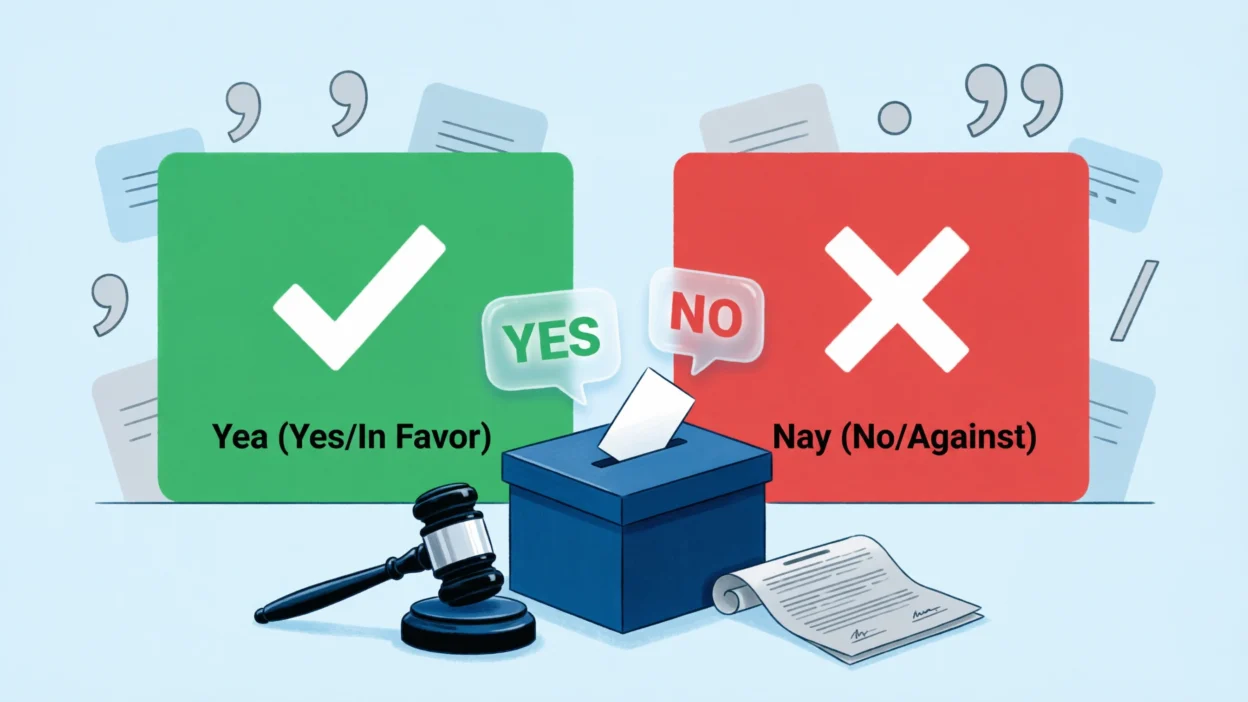
Yea means yes, in favor of, or affirmative.
Nay means no, against, or negative.
Both words are considered formal or archaic in modern English and are mainly used in voting procedures, historical writing, religious texts, and literature.
Correct Examples:
- The committee voted yea on the proposal. ✅
- Three members voted nay. ✅
What Do “Yea” and “Nay” Mean?
Although they resemble modern words like yeah and no, yea and nay have distinct meanings and traditional uses.
Yea Meaning
Yea means:
- Yes
- In favor of
- An affirmative vote
- Approval or agreement
It is most commonly heard during official voting or found in older English writings.
Examples
- The motion passed with 48 yea votes.
- Every member voted yea except one.
- Those in favor will say yea.
Nay Meaning
Nay means:
- No
- Against
- A negative vote
- Refusal or disagreement
It represents opposition or rejection.
Examples
- The proposal received five nay votes.
- All those opposed should vote nay.
- His answer was a firm nay.
Yea vs Nay: Comparison Table
| Feature | Yea | Nay |
|---|---|---|
| Meaning | Yes | No |
| Expresses | Approval | Rejection |
| Voting meaning | In favor | Against |
| Modern everyday use | Rare | Rare |
| Common in formal voting | Yes | Yes |
| Found in historical texts | Yes | Yes |
| Opposite of | Nay | Yea |
When to Use “Yea”
Use yea when expressing agreement, approval, or an affirmative vote.
During Official Voting
Many governments, councils, and organizations still use yea when recording votes.
Examples:
- Members voting yea should raise their hands.
- Twenty senators voted yea.
- The resolution passed after a majority voted yea.
In Historical or Literary Writing
Older English texts often use yea instead of yes.
Examples:
- “Yea, I shall follow.”
- The king answered with a confident yea.
When to Use “Nay”
Use nay when expressing disagreement, rejection, or a negative vote.
During Voting
Examples:
- Ten members voted nay.
- The amendment failed because most representatives voted nay.
- Those opposed should vote nay.
In Older English
Classical literature often uses nay to strengthen or emphasize disagreement.
Examples:
- “Nay, that cannot be true.”
- The knight replied, “Nay.”
Key Difference Between Yea and Nay
The easiest way to remember the difference is this:
- Yea = Yes = Approval
- Nay = No = Rejection
For example, imagine a school election:
- Students who support the proposal vote yea.
- Students who oppose it vote nay.
The two words are direct opposites.
Yea vs Yeah: Don’t Confuse Them
Many people mistakenly think yea and yeah are the same word.
They are not.
| Word | Meaning |
|---|---|
| Yea | Formal “yes,” especially in voting |
| Yeah | Informal version of “yes” used in conversation |
Examples
Correct:
- The council voted yea.
- Yeah, I’ll come with you.
Incorrect:
- The council voted yeah. ❌
Unless you’re writing dialogue or casual conversation, avoid replacing yea with yeah in formal contexts.
Examples in Everyday Contexts
Although these words aren’t common in daily speech, here are situations where they appear.
Government
- The bill passed with sixty yea votes and forty nay votes.
School Councils
- Students voted yea to approve the event budget.
Business Meetings
- Board members recorded their yea and nay votes.
Literature
- “Yea, though I walk through the valley…”
- “Nay, my friend, you are mistaken.”
Common Mistakes to Avoid
These words are often misunderstood because they are uncommon in modern English.
Mistake 1: Confusing “Yea” with “Yeah”
❌ Yeah votes: 30
✅ Yea votes: 30
Mistake 2: Using “Nay” in Casual Conversation
❌ Nay, I don’t want pizza.
✅ No, I don’t want pizza.
In everyday English, no sounds much more natural.
Mistake 3: Using Them Outside Formal Contexts
While they’re grammatically correct, yea and nay can sound outdated in normal conversations.
Reserve them for:
- Voting
- Historical writing
- Religious texts
- Literature
- Formal records
Easy Memory Trick
Here’s a simple trick:
- Yea starts with Y, just like Yes.
- Nay starts with N, just like No.
Think:
- Y = Yes
- N = No
This quick association makes remembering the difference much easier.
American vs British English
Both American English and British English recognize yea and nay.
There is no spelling difference between the two varieties.
However, both forms are considered formal, historical, or ceremonial rather than everyday vocabulary. In modern conversation, speakers in both regions almost always use yes and no instead.
Related Words and Phrases
Expanding your vocabulary can help you understand these terms in context.
- Yes
- No
- Yeah
- Nope
- Approval
- Opposition
- Affirmative
- Negative
- Vote
- Resolution
- Consent
- Rejection
These related words frequently appear in discussions about voting, grammar, and formal communication.
Why Understanding Yea and Nay Matters
Although yea and nay are not commonly used in everyday speech, they still appear in important contexts.
Understanding them helps you:
- Read historical documents more confidently.
- Interpret parliamentary and legislative votes.
- Understand legal and governmental records.
- Improve your English vocabulary.
- Avoid confusing yea with yeah.
Knowing the correct meaning also strengthens your grammar and reading comprehension.
Frequently Asked Questions
Is “yea” the same as “yeah”?
No. Yea is a formal word meaning yes, especially in voting. Yeah is an informal way of saying yes in conversation.
Does “nay” simply mean “no”?
Yes. Nay is a formal or traditional word meaning no or against.
Are “yea” and “nay” still used today?
Yes, but mainly in formal voting, government proceedings, legal settings, religious texts, and historical writing.
Can I use “yea” in everyday conversation?
You can, but it may sound old-fashioned. In most situations, yes is the better choice.
Why do governments use “yea” and “nay”?
These terms provide a clear and traditional way to record affirmative and negative votes in official proceedings.
Are “yea” and “nay” used in both American and British English?
Yes. Both varieties recognize and use these words in formal contexts.
What is the opposite of “yea”?
The opposite of yea is nay.
Summary
The difference between yea vs nay is straightforward once you understand their meanings. Yea means yes, in favor, or an affirmative vote, while nay means no, against, or a negative vote. Although both words are uncommon in everyday conversation, they remain important in government proceedings, formal voting, historical documents, and classic literature. It’s also important not to confuse yea with the informal word yeah, as they serve very different purposes.
Understanding when to use yea and nay improves your grammar, vocabulary, and comprehension of formal English. Whenever you’re reading official records or historical texts, recognizing these traditional terms will help you interpret the intended meaning accurately. For everyday communication, however, yes and no remain the preferred and more natural choices.
Actionable Takeaway
Whenever you encounter yea or nay, remember this simple rule: Yea means yes or in favor, while nay means no or against.
If you’re writing formal voting records or discussing historical texts, use these terms appropriately. In everyday conversations, stick with yes and no for clear and natural communication.

Shan Waston is a skilled writer at Symboliy.com, producing clear, engaging content on language, communication, and everyday expressions to help readers understand meaning and usage confidently in modern digital contexts.