Have you ever seen someone write “skiddish” and wondered whether it was the correct spelling of skittish? You’re not alone. This is a common spelling confusion, especially because the word is often heard in conversation more than it is seen in writing.
Whether you’re describing a nervous horse, a shy pet, or a person who seems easily frightened, choosing the correct word matters. In this guide, you’ll learn the difference between skiddish vs skittish, their meanings, examples, common mistakes, and why one spelling is accepted while the other is not.
Quick Answer
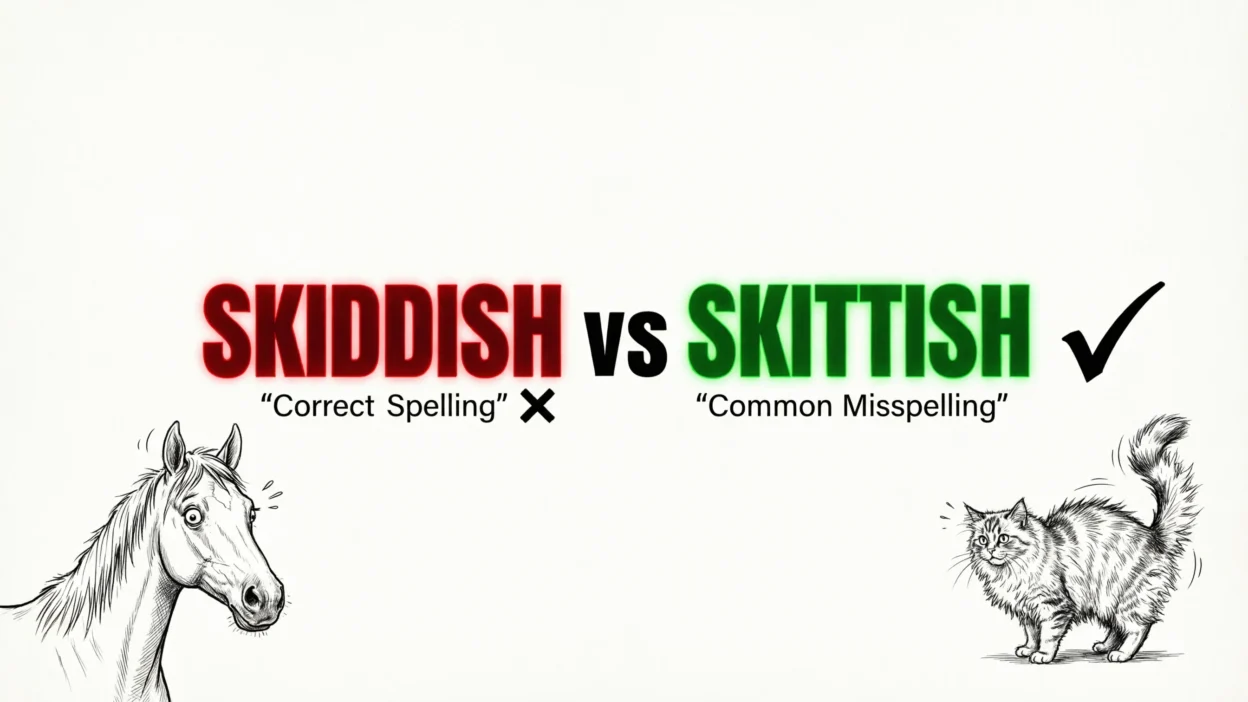
✅ Skittish is the correct spelling.
❌ Skiddish is a misspelling and is not recognized as a standard English word.
Skittish means nervous, easily frightened, jumpy, or reluctant to commit.
If you’re choosing between skiddish vs skittish, always use skittish.
What Does “Skittish” Mean?
The word skittish is an adjective used to describe someone or something that is easily startled, nervous, restless, or unpredictable.
It is commonly used for animals, especially horses, but it can also describe people, investors, customers, or anyone acting cautiously or nervously.
Definition
Skittish (adjective):
Easily frightened, nervous, excitable, hesitant, or difficult to control.
Synonyms and Related Terms
- Nervous
- Jumpy
- Timid
- Easily startled
- Fearful
- Restless
- Uneasy
- Apprehensive
- Fidgety
- Cautious
Example Sentences
- The horse became skittish during the thunderstorm.
- Investors remain skittish about market uncertainty.
- The rescue dog was initially skittish around strangers.
- She seemed skittish when discussing the new proposal.
- Loud noises can make cats become skittish.
In each example, skittish describes nervous or easily startled behavior.
Is “Skiddish” a Real Word?
No.
Skiddish is not considered a standard English word and does not appear as the accepted spelling in major dictionaries.
It is typically a misspelling of skittish.
Why Do People Write “Skiddish”?
Several factors contribute to this common error:
- The pronunciation of skittish can sound similar to skiddish in casual speech.
- Some regional accents soften the “t” sound.
- People often spell words based on how they hear them.
- The correct spelling is encountered less frequently in everyday writing.
Whenever you see skiddish, the intended word is almost always skittish.
Skiddish vs Skittish: Comparison Table
| Feature | Skittish | Skiddish |
|---|---|---|
| Correct English word? | Yes | No |
| Found in dictionaries? | Yes | No |
| Accepted in formal writing? | Yes | No |
| Meaning | Nervous or easily startled | None |
| Recommended usage | Always use | Avoid |
| Grammar status | Adjective | Misspelling |
The comparison is straightforward: skittish is correct, while skiddish is not.
Why Do People Confuse Skittish and Skiddish?
This confusion is largely driven by pronunciation.
1. Similar Pronunciation
In some accents, the “tt” sound in skittish may sound softer, leading people to hear it as “skiddish.”
2. Phonetic Spelling
Many people spell unfamiliar words exactly as they sound.
3. Limited Exposure in Writing
The word is commonly spoken but less frequently written, making spelling mistakes more likely.
4. Influence of Informal Speech
Casual conversations sometimes blur sounds, creating incorrect spellings that spread online.
Examples of Correct Usage of “Skittish”
When Describing Animals
- The horse grew skittish after hearing fireworks.
- Our new puppy is still skittish around visitors.
- The deer became skittish when it noticed movement.
When Describing People
- He appeared skittish during the interview.
- Some employees felt skittish about organizational changes.
- She became skittish after receiving unexpected news.
In Business and Finance
- Investors are skittish about economic uncertainty.
- Markets remained skittish following the announcement.
- Consumers became skittish about large purchases.
In Everyday Conversation
- My cat gets skittish around loud noises.
- The child was skittish around unfamiliar people.
- Travelers felt skittish during severe weather warnings.
Common Mistakes to Avoid
Mistake #1: Writing “Skiddish”
❌ The horse looked skiddish.
✅ The horse looked skittish.
Mistake #2: Assuming Skiddish Is an Alternative Spelling
❌ Both skiddish and skittish are correct.
✅ Only skittish is recognized as standard English.
Mistake #3: Using the Wrong Meaning
❌ Skittish means angry.
✅ Skittish means nervous, jumpy, or easily startled.
Understanding the meaning helps ensure proper usage.
Skittish vs Nervous
Although similar, these words are not always identical.
Skittish
Often suggests sudden reactions, jumpiness, or being easily startled.
Example:
- The horse was skittish after hearing thunder.
Nervous
A broader term for anxiety or worry.
Example:
- She felt nervous before the exam.
Comparison Table
| Word | Meaning | Example |
|---|---|---|
| Skittish | Easily startled or jumpy | The horse was skittish. |
| Nervous | Anxious or worried | He was nervous before speaking. |
Skittish usually implies visible, reactive behavior.
American vs British English
There is no spelling difference between American and British English for this word.
American English
- Skittish
Examples:
- Investors remain skittish.
- The horse seemed skittish.
British English
- Skittish
Examples:
- The animal became skittish.
- Markets appeared skittish.
Both versions of English use the same spelling.
Therefore:
✅ Skittish = Correct everywhere
❌ Skiddish = Incorrect everywhere
Tips to Remember the Correct Spelling
If you frequently confuse skiddish vs skittish, these tips can help.
Remember the Double “T”
The correct word contains two “t” letters:
Ski + tt + ish = skittish
Think of “Jittery”
Both jittery and skittish describe nervous behavior and contain double letters.
Read It Often
Exposure to the correct spelling helps reinforce memory.
Use Spell Check
Most grammar and spelling tools automatically flag skiddish as incorrect.
When Should You Use “Skittish”?
Use skittish whenever you want to describe someone or something that is:
Easily Frightened
- A skittish horse
- A skittish dog
Nervous or Hesitant
- A skittish employee
- A skittish investor
Easily Startled
- A skittish child
- A skittish animal
Unpredictably Cautious
- Skittish financial markets
- Skittish consumers
The word works well in both formal and informal contexts.
Frequently Asked Questions
Is skiddish a real word?
No. Skiddish is generally considered a misspelling of skittish.
Which is correct: skiddish or skittish?
Skittish is the correct spelling.
What does skittish mean?
It means nervous, jumpy, hesitant, or easily startled.
Is skittish used for people?
Yes. It can describe people who seem nervous or reluctant.
Can skittish describe animals?
Absolutely. It is commonly used for horses, dogs, cats, and other animals.
Is skittish a negative word?
Not necessarily. It simply describes cautious or nervous behavior.
Is there a British spelling of skittish?
No. British and American English use the same spelling.
How can I remember the correct spelling?
Remember that skittish contains a double “t,” similar to many words describing restless behavior.
Summary
When comparing skiddish vs skittish, the correct choice is skittish. It is a standard English adjective used to describe someone or something that is nervous, jumpy, easily frightened, or hesitant. The spelling skiddish is a common mistake that likely comes from pronunciation and phonetic spelling habits.
Whether you’re describing an anxious horse, a cautious investor, a shy pet, or a nervous person, skittish is the word you should use. Since both American and British English share the same spelling, you can confidently use skittish in any English-speaking context.
Actionable Takeaway
Whenever you’re unsure about skiddish vs skittish, remember that skittish is the only accepted spelling. Think of the double “t” as a reminder of a quick, jumpy reaction. Before publishing or submitting your writing, check for this common mistake to ensure your content remains polished, professional, and accurate.

Mike Poop is a dedicated writer at Symboliy.com, creating clear, practical content about language, communication, and everyday expressions to help readers understand meaning and usage confidently in professional contexts worldwide.