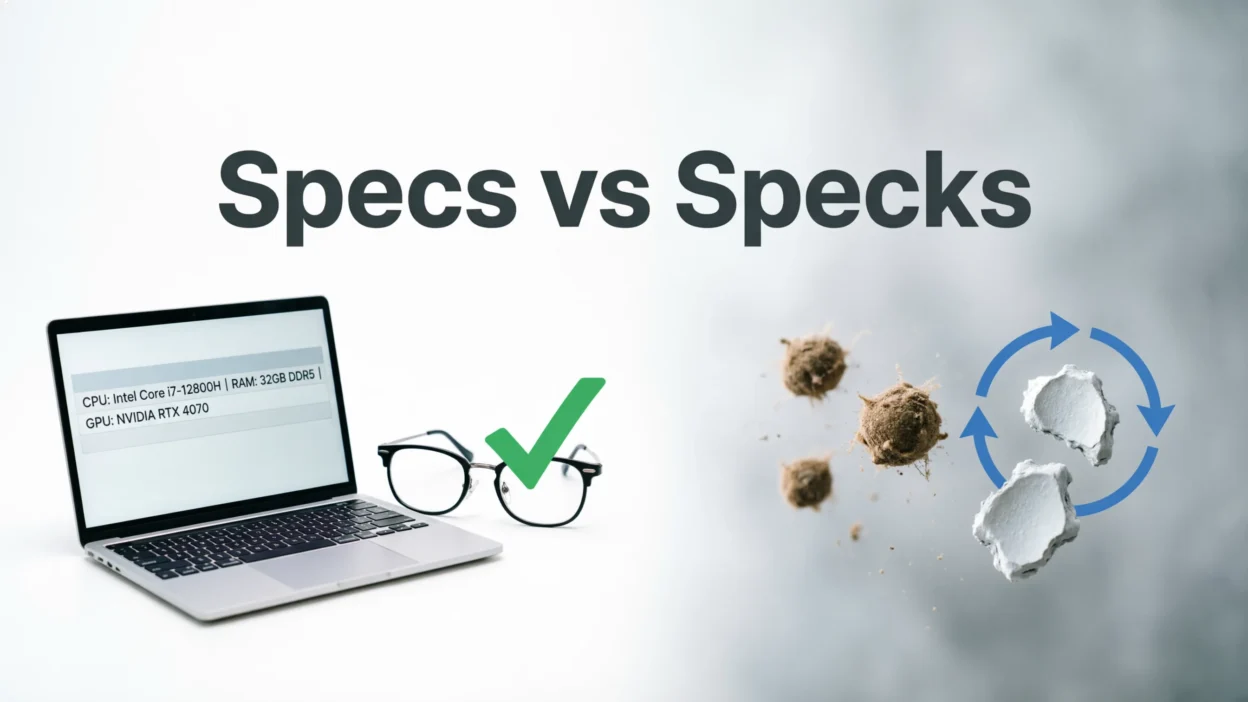
The difference between specs vs specks may seem minor because the two words sound very similar, but they have completely different meanings.
Whether you’re talking about product specifications, tiny particles of dust, or even eyeglasses, using the correct word makes your writing clearer and more professional.
If you’ve ever wondered whether to write specs or specks, this guide explains everything you need to know.
You’ll learn the meaning of each word, see practical examples, avoid common mistakes, and discover simple memory tricks to remember the difference.
Quick Answer
Both specs and specks are correct English words, but they have different meanings.
- ✅ Specs = Short for specifications or an informal word for eyeglasses.
- ✅ Specks = Tiny spots, particles, or small pieces of something.
- ❌ They are not interchangeable.
A simple way to remember the difference is that specks contain “eck,” reminding you of tiny flecks or spots, while specs often refers to details or glasses.
What Does “Specs” Mean?
Specs is the plural form of spec, which commonly has two meanings.
1. Specifications
In technology, engineering, shopping, and product descriptions, specs is short for specifications. These are the technical details or features of a product.
Examples:
- Check the laptop specs before buying.
- The phone’s specs include 12GB of RAM.
- These camera specs are impressive.
- Read the product specs carefully.
2. Eyeglasses
In informal British English and some other English-speaking regions, specs also means eyeglasses or glasses.
Examples:
- I can’t find my specs.
- She wears reading specs every day.
- His new specs look stylish.
The meaning depends on the context.
What Does “Specks” Mean?
Specks is the plural of speck, which means a very small spot, particle, or tiny piece of something.
It usually refers to something so small that it is barely noticeable.
Examples:
- There were specks of dust on the table.
- Tiny specks of paint covered the floor.
- I noticed black specks in the flour.
- The sky was filled with tiny specks of light.
Unlike specs, specks always refers to small particles or spots.
Specs vs Specks: The Key Difference
| Feature | Specs | Specks |
|---|---|---|
| Meaning | Specifications or eyeglasses | Tiny spots or particles |
| Part of Speech | Plural noun | Plural noun |
| Related to Technology | ✅ Yes | ❌ No |
| Related to Dust or Small Particles | ❌ No | ✅ Yes |
| Informal Meaning | Eyeglasses | None |
| Grammatically Correct | ✅ Yes | ✅ Yes |
Although the words sound similar, their meanings are completely unrelated.
Why Do People Confuse Specs and Specks?
The confusion happens because the words are almost identical in pronunciation.
Other reasons include:
- Only one extra letter separates them.
- They are both plural nouns.
- Fast typing can easily result in a spelling mistake.
- Spell check may not catch the error because both words are correctly spelled.
The key is to think about the context before choosing the word.
Examples of “Specs” in Sentences
Use specs when referring to specifications or eyeglasses.
- Compare the phone specs before making a purchase.
- These gaming PC specs are excellent.
- I forgot my specs at home.
- The project specs changed after the meeting.
- Her new specs fit perfectly.
In each example, specs refers to technical details or glasses.
Examples of “Specks” in Sentences
Use specks when referring to tiny spots or particles.
- Small specks of dirt covered the window.
- I saw specks of snow in the air.
- The microscope revealed tiny specks of bacteria.
- There were chocolate specks throughout the cookie.
- A few specks of dust settled on the screen.
Each sentence refers to very small particles or spots.
Common Mistakes to Avoid
Many writers accidentally use one word instead of the other.
Avoid these mistakes:
- ❌ Check the laptop specks before buying.
- ✅ Check the laptop specs before buying.
- ❌ My new specks help me read better.
- ✅ My new specs help me read better.
- ❌ There were specs of dust on the shelf.
- ✅ There were specks of dust on the shelf.
- ❌ Tiny specs floated through the air.
- ✅ Tiny specks floated through the air.
Always consider whether you’re talking about technical details or glasses versus tiny particles.
A Simple Memory Trick
Here’s an easy way to remember the difference.
- Specs = Specifications. Both words begin with spec.
- Specks = Tiny flecks or spots. Notice that specks and flecks share similar endings and both describe small particles.
Memory tip:
Product details? Choose specs.
Tiny spots? Choose specks.
Specs vs Specks in Everyday Writing
You’ll commonly see specs in:
- Product reviews
- Technology articles
- Shopping guides
- Engineering documents
- Casual conversations about glasses
You’ll commonly see specks in:
- Cleaning guides
- Science writing
- Nature articles
- Cooking recipes
- Descriptions of dust, dirt, paint, or snow
Understanding the topic of your sentence makes choosing the correct word much easier.
American vs British English
Both American English and British English use specs and specks, but there is one notable difference.
- In British English, specs is a very common informal word for eyeglasses.
- In American English, people usually say glasses instead of specs, although specs is widely understood.
The meaning of specks is the same in both varieties of English.
Related Words and Synonyms
Depending on the context, you may also use these related words.
For specs:
- Specifications
- Technical details
- Features
- Requirements
- Glasses
- Eyeglasses
- Spectacles
For specks:
- Flecks
- Particles
- Spots
- Grains
- Dots
- Fragments
- Tiny pieces
Choosing the right synonym depends on your sentence and audience.
Frequently Asked Questions
Are “specs” and “specks” the same?
No. Specs refers to specifications or eyeglasses, while specks means tiny particles or spots.
Is “specs” short for “specifications”?
Yes. In technology and product descriptions, specs is the common abbreviation for specifications.
Can “specs” mean glasses?
Yes. Especially in British English, specs is an informal word for eyeglasses.
What does “specks” mean?
Specks are very small spots, particles, or tiny pieces of something.
Which word is used in product reviews?
Specs is the correct word because product reviews discuss technical specifications and features.
Is “specks of dust” correct?
Yes. Specks of dust is the correct and commonly used expression.
Do American and British English use these words differently?
The main difference is that specs is a much more common word for glasses in British English. Otherwise, both varieties use the words in the same way.
How can I remember the difference?
Think of specs as specifications and specks as tiny flecks. This simple association makes choosing the correct word much easier.
Summary
Understanding the difference between specs vs specks is straightforward once you know their meanings. Specs refers to technical specifications or, informally, eyeglasses, while specks refers to tiny spots or particles such as dust, paint, or dirt. Although the words sound similar, they are used in completely different contexts.
Whenever you’re writing, think about what you’re describing. If you’re discussing product features or glasses, use specs. If you’re referring to tiny particles or small spots, use specks. Choosing the correct spelling will make your writing more accurate, professional, and easier to understand.
Actionable Takeaway: Before finalizing your writing, ask yourself whether you’re talking about technical details or glasses or tiny particles. This quick check will help you choose specs or specks correctly every time.

Mike Poop is a dedicated writer at Symboliy.com, creating clear, practical content about language, communication, and everyday expressions to help readers understand meaning and usage confidently in professional contexts worldwide.